


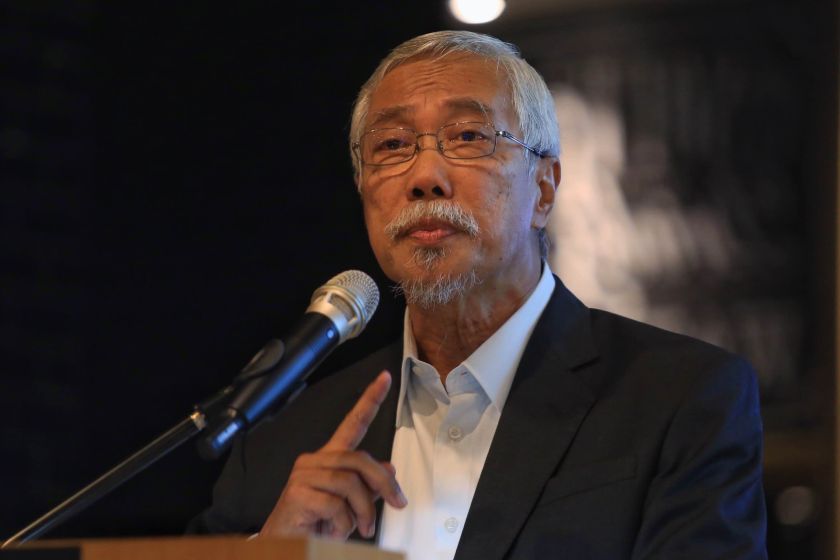


KUALA LUMPUR, May 12 — The media has greater freedom under Datuk Seri Najib Razak’s administration than the previous Tun Dr Mahathir Mohamad government, Sinar Harian said today.
The local daily’s chief editor, Datuk Abdul Jalil Ali, told a forum that Sinar Harian is free to publish news with their own angles, noting that both the opposition and the government are alternately featured on the paper’s front pages.
“If you ask me, between the Najib administration and the previous administration, Najib is open and fair as far as the media is concerned,” Abdul Jalil told the Journalism Now forum here organised by the Institute of Journalists Malaysia, the Foreign Correspondents Club and the European Union.
“Those days during Tun Mahathir, even more stringent,” he added.
Abdul Jalil pointed out that the Mahathir administration did not renew the permit of one of his weeklies, Eksklusif, then and the newspaper was forced to shut down.
According to the New York-based non-profit Committee to Protect Journalists, Eksklusif was banned in 2000 when its annual publishing permit expired.
After taking office, Najib removed the requirement for annual printing licences previously mandated by the Printing Presses and Publications Act 1984.
Steven Gan, editor-in-chief and co-founder of news portal Malaysiakini, told the forum, however, that Malaysia is increasingly following Singapore’s footsteps in suing the press.
“The law is there, which allows anyone who feel aggrieved to sue them and to seek redress in court. But that has to be the very last resort,” Gan said.
He pointed out that before Najib sued Malaysiakini for defamation, the news portal had offered the prime minister the right to reply and even told him that it would be published ad verbatim, but Najib did not exercise it and went ahead with the suit.
“That’s another layer of attack on press freedom,” said Gan.
Najib filed the civil suit in May last year over a series of readers’ posts published on the Malaysiakini website related to the Terengganu mentri besar saga.
Endy Bayuni, senior editor of Indonesian paper Jakarta Post, said journalists’ loyalty should be to the public, even if their salaries may come from the government or business groups.
“We’re not neutral. We have to take sides. And we have to take sides with people who are being oppressed, discriminated against,” he told the forum.
Lum Chih Feng, editor (E-News) of local Chinese-language paper Oriental Daily, said the local Chinese press is guided by the three-pillar concept which the Chinese community generally upholds: Chinese media, associations and schools.
“The community believes Chinese media should be community first before profit. It’s a communal asset, not a profit driven product,” Lum told the forum.
When asked if the press should be allowed to criticise Islam and the royalty in the interest of independence, law professor Dr Azmi Sharom said the powers of the royals are bound by the Federal Constitution as Malaysia has a constitutional monarchy.
“So if they overstep their powers, they should be open to criticism,” Azmi told the forum.


