


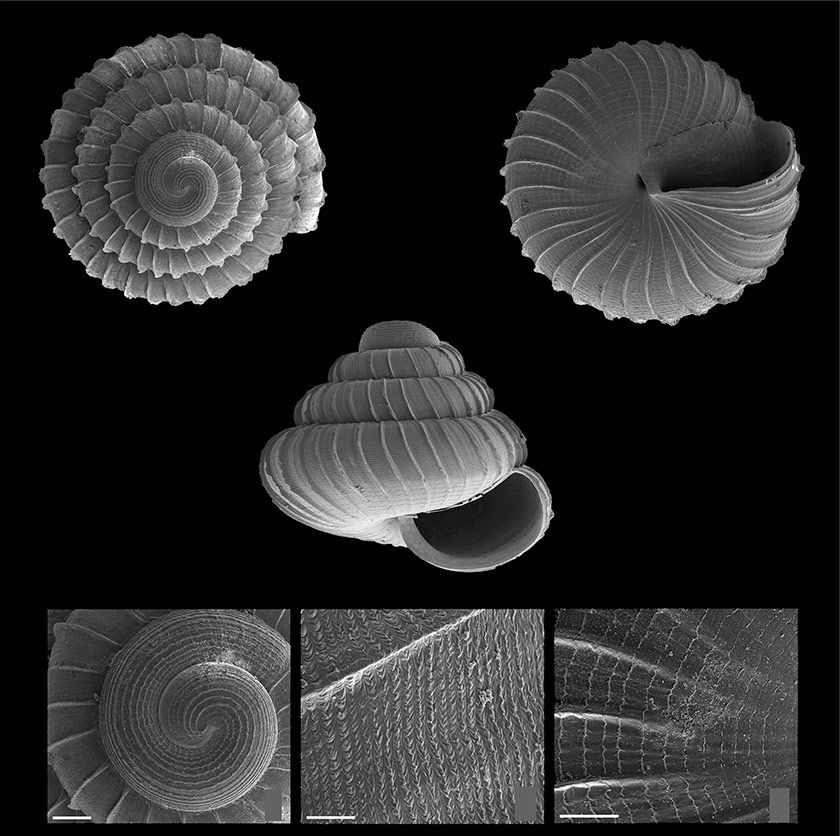


KUALA LUMPUR, Sept 2 ― An area around Perak’s Gunung Kanthan, where a new species of snail was found and named after Lafarge, is now protected, the cement giant said, adding that the discovery showed biodiversity “can thrive in close proximity to industrial activity”.
In a statement to Malay Mail Online last week, Lafarge Malaysia’s senior vice-president of industrial operations Jim Ruxton said the snails, Charopa Lafargei and Opisthostoma Trapezium were found in a specific “buffer zone” at the edge of the northern part of the Gunung Kanthan quarry, which the company manages.
“This area has been protected by Lafarge and there is no mining activity there.
“The presence of this rare biodiversity in this area demonstrates that biodiversity can thrive in close proximity to industrial activity,” he said in a brief statement.
Last week, Tony Juniper, a British environmentalist and an activist wrote on British daily The Guardian to recommend that Lafarge halt further mine expansion until a team of biologists complete a proper survey of the wildlife found in and around the quarry, and come up with a series of management recommendations to protect the species found there.
All of which should be made public and be peer reviewed, he said.
“Once there was agreement among biologists and executives as to a credible plan of action, allocate a budget to make sure these unique species had a long-term future.
“It’s neither complicated nor expensive and would be exactly the kind of thing the company would have to do were these rare animals and plants discovered in France, for example,” Juniper wrote.
The Malaysian Nature Society (MNS) has been pushing for the conservation of Gunung Kanthan, which it listed among the four most important hills in the Kinta Valley for conservation based on geological, zoological, botanical and recreational aspects.
Acknowledging Lafarge’s response, MNS conservation chief Balu Perumal said it is not enough to acknowledge having rare and threatened species in the vicinity or within their area.
“It is equally important to make sure that whatever one’s activity is (mining in this case) that it do not impact upon the livelihood and the existence of the species.
“Just like humans living close to their area, we may tolerate the disturbance but it doesn’t mean that we have to live with it forever,” Balu said in an e-mail interview with Malay Mail Online.
MNS recommended Lafarge develop a biodiversity action plan, for general conservation of the biodiversity, and prepare a threatened species action plan for critically endangered species protection for their mining concession.
Balu also suggested the company to put more effort in protecting critical sites that is known to maintain unique biodiversity, and make it their corporate responsibility to educate the general public on the need for protection and conservation of sensitive habitats like the limestones.
“It is about time that large corporations/ industries take stock of the impact that they would have on the environment and the live on earth (biodiversity)”.
He explained that Gunung Kanthan has been divided to five areas and at the moment, Lafarge has quarried areas A and B and is preparing to go into areas C and D, which environmentalists said contain the most diverse and rare species of animals and plants.
“It’s not just the snail, we have found a total of eight other species also critically endangered and threatened.
“The area they are mining at the moment is one of the most environmentally sensitive in Malaysia,” he said.
The nature conservation activist said MNS is recommending that mining activities moved underground where there would be less damage to the biological system.
“We are looking at the whole of Ipoh with limestone background like in China, advocating the whole of Ipoh gazetted as a geosite.
“You don’t find many places like this in the world where there are limestone features in the town area,” Balu said.
MNS claimed that Lafarge seemed adamant to start mining activities in area C, while leaving area D untouched.
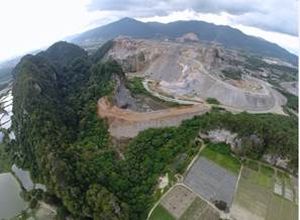
The company commissioned Universiti Malaya Institute of Biological Sciences head Prof Dr Rosli Hashim to conduct a six-month survey on area C and D.
On May 29, The Star reported that Dr Rosli said the list of species in area C was “not as impressive” as area D.
In a letter to Lafarge sighted by Malay Mail Online, MNS claimed Rosli did not present the findings of his biodiversity survey during a meeting to present his “final report” on June 12, but instead gave the general summarised presentation, which was already given to the media.
“We are therefore still in the dark about his actual scientific results.
“One point that did become clear though ― was that his research survey had concentrated on Area D and that he had hardly any results from Area C.
“His emphasizing the lack of biodiversity in Area C relative to Area D, as well as harping on the possibility of ‘ex situ’ conservation, is a dead giveaway of the intent of LaFarge Malaysia to only want to conserve Area D while targeting to blast and mine Area C,” according to a letter signed by MNS president Prof Dr Maketab Mohamed dated July 10.
Ex situ conservation means conserving an endangered species outside of its natural habitat.
After discovering a tiny, rare snail species at the corner of a limestone quarry in Gunung Kanthan, biologists made an unusual decision recently to name it after cement giant Lafarge, in hopes it would take ownership and execute a conservation plan.
The biologists named the new species Charopa lafargei after Lafarge because the company’s decision “will determine the future existence of this snail”, according to the most recent issue of the Basteria, the Journal of the Netherlands Malacological Society.
The Star daily reported that the global cement and aggregates company plans to spend more than RM200 million over the next two years to expand its Kanthan plant facilities and operations.
The report said the entire area spans some 150 hectares, with half already quarried by the company.


