










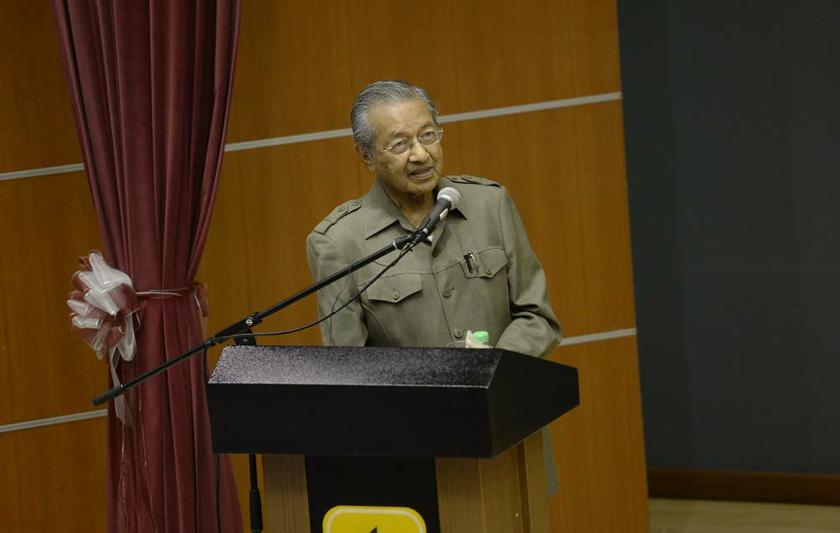


KUALA LUMPUR, June 22 — Tun Dr Mahathir Mohamad has finally conceded that the Approved Permit (AP) system introduced by his administration to help Malays rise in business has backfired, with some trading in the licences for a quick profit instead.
In an interview with Malay weekly Mingguan Malaysia, the former prime minister said he had stopped giving APs to people who did not use them to set up car dealerships after Malays just sold the APs, which allow permit holders to import cars, off instead as it could fetch profits as high as RM8,000 per car, or RM80,000 from 10 APs.
“We want to help the Malays, but they don’t want to help themselves,” Dr Mahathir was quoted as saying in the interview published today.
“We must review how far we can give these APs. It’s fine if people actually get into business. Like Naza, they succeeded. They’re big now because they got APs. If Malays really made full use of this opportunity, they’d be like Naza,” he added.
“The problem is, there are some Malays who just want to sell the APs to other people and get lots of money. They get it for free and they can sell it for RM8,000,” said Dr Mahathir.
The late Tan Sri SM Nasimuddin SM Amin founded the automotive conglomerate, the Naza Group, in 1975 at the age of 21 when he started importing used Japanese cars, according to Naza’s website.
The AP system was introduced as an extension of the New Economic Policy, an affirmative action policy that was implemented in 1970 to deal with the income disparity between the majority Malays and the economically strong Chinese community.
Bumiputera dealers hold the lion’s share of APs issued by the government, with open APs typically used to import used cars while franchise APs deal with new vehicles.
Dr Mahathir had previously said that without the AP system, foreign car manufacturers would flood the local car industry, leaving Proton and Perodua floundering.
Proton is regularly used as the prime example of Malaysia’s at-times fierce protection of its local industries.
The National Automotive Policy 2014 also contained no move to phase out the excise duties introduced to shield national carmaker Proton from competition and was likely to retain the controversial APs despite plans for its discontinuation.
Another Malay daily Berita Harian, reported Dr Mahathir saying in a separate interview that he longed to see Proton Holdings Bhd grow to be a quality carmaker instead of focusing on price.
The 88-year-old, who was appointed Proton chairman last May after serving as its adviser since 2003, said there was a price difference of RM40,000 when comparing Proton’s Suprima S, for example, to the cheapest foreign-made car of the same standard.
“People still buy that RM120,000 (foreign-made) car instead of the RM80,000 car. Suprima S has excellent design,” he was quoted saying by Berita Harian.
He added that the skills of Proton’s engineers needed to be improved, especially in the field of electronics, as well as the management of the company among other things if Proton wished to produce cars of exceptional quality.