


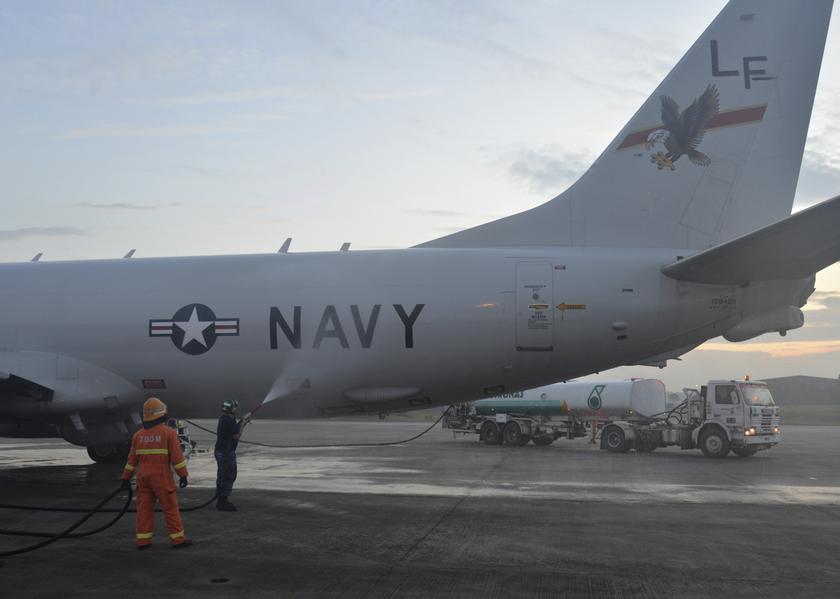


KUALA LUMPUR, March 24 — Australian authorities confirmed this evening that the highly advanced US search plane P-8 Poseidon was unable to locate the debris spotted by Chinese aircraft while on its way to Perth earlier today.
In a brief Twitter posting, the Australian Maritime Safety Authority (AMSA) said drift modelling was used to chart the possible movement of the debris but still, no clues were uncovered in the mystery of missing flight MH370.
“AMSA advised about reported objects sighted by Chinese aircraft. Reported objects in today’s search area. Attempts will be made to relocate,” AMSA wrote in its first tweet three hours ago.
“US Navy P8 Poseidon tasked to investigate reported object sightings by Chinese aircraft at 33,000ft,” it said later.
At 4pm, AMSA tweeted: “Objects spotted by Chinese aircraft as heading back to Perth. Drift modelling undertaken on sighting. P8 unable to relocate objects.”
Earlier today, Reuters reported that Chinese military aircraft on the hunt for the missing Boeing 777 jetliner spotted several “suspicious” objects floating in the Indian Ocean off Australia’s coast.
The discovery was added to several other promising leads that searchers have been clinging on to desperately as the search for the aircraft entered its 17th day today.
Over the weekend, French and Chinese satellite images spotted some debris within the search zone handled by the Australian maritime agency.
Last week, Australia announced that at least two images of possible debris from the plane were captured on US satellite DigitalGlobe. But despite the reports, searches within the area have turned up nothing so far.
Malaysia is under intense pressure over efforts to locate the missing plane, with accusations hurled against it for being slow in responding to the search and being uncooperative with investigative agencies from helping countries.
Western investigators maintain that Malaysia has snubbed offers for more manpower and aid to investigate the incident the country has classified as a criminal investigation.
Some countries also said Malaysia did not reply to their offers of experts and investigators until late into the search; France said it extended aid on March 9 but the French team that helped locate Air France flight AF447 was only sent on March 16 after Malaysia responded.
Criticism was also targeted at the country for failing to come forth with information captured from the flight’s Aircraft Communications Addressing and Reporting System (ACARS), which US investigators said indicated the plane’s flight deviation was programmed before the final radio transmission with Malaysian air traffic control.
The country insists, however, that it has been open and transparent from the start.
Malaysia also released confidential raw data from its military radars to investigators as part of the search.
But with the complexity of the search effort — there are now 26 countries trying to locate the missing plane — the persistent accusations against Malaysia risks undermining its role in coordinating the multinational effort.
MH370 and the 239 people on board disappeared less than an hour after the Beijing-bound flight left Kuala Lumpur International Airport at 12.41am on March 8. The plane and its passengers remain missing despite over two weeks of intensive searching by a multinational effort.


