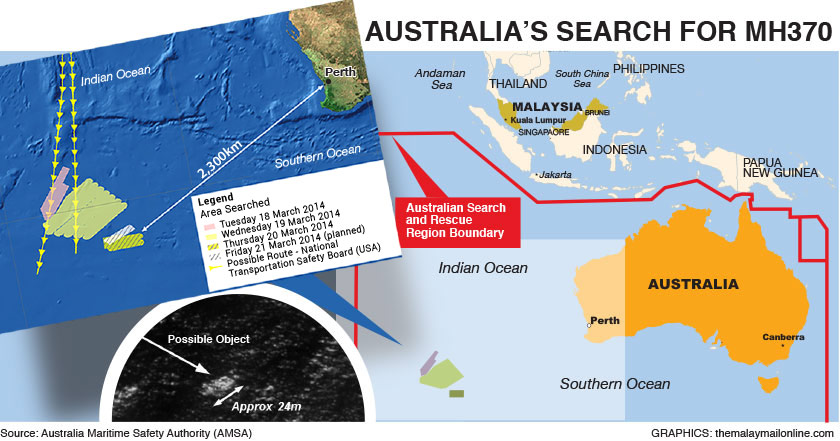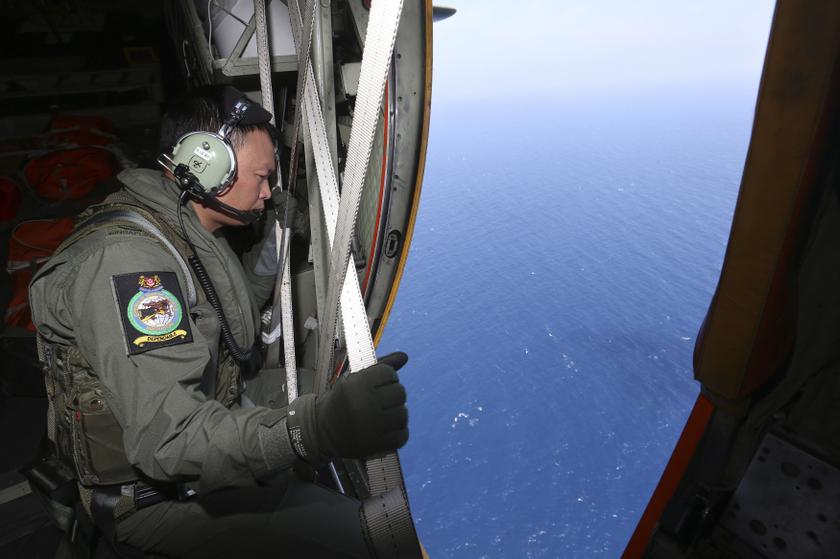


The Australian paper said if found, the debris would “eliminate” wilder theories about what happened to the missing plane and lean towards the likelihood that there was an attempt by the flight crew to turn back and “complications” occurred which caused them to become unconscious, leaving the plane on a ghost flight until it ran out of fuel.
“While some sort of botched hijacking that led to the pilots being killed cannot be ruled out entirely, it seems very unlikely given the location of the possible wreckage.
“The hijack theory would have more credence if MH370 was located along the north-western flight path towards the Middle East...The location also seems to rule out the hijack theories, because there are no airports along the southern flight path,” SMH said in its latest analysis on the incident.
The paper pointed out that a more plausible scenario favoured by professional pilots on blogs and chat sites was that something had happened on the plane which “took out communications” and led to a slow or rapid decompression which rendered the crew incapable of making an emergency landing.
“Pilots have only a few minutes to bring a plane down to below 4000 metres before the passengers and crew will become disoriented, then unconscious and eventually die,” the article added.
The paper recalled a 1999 case when a Lear jet carrying professional golfer Payne Stewart flew for several hours with its passengers and crew unresponsive, before it ran out of fuel and crashed in a field in South Dakota.
The paper said that speculation of a disaster on MH370 focused on several possibilities:
1) Corrosion around the satellite antenna which caused it to break, cutting off communications, and leading to slow decompression that left the crew confused by the time the cabin pressure alarm went off.
According to SMH, the satellite antennas on Boeing 777s had been the subject of an airworthiness directive issued by the National Transport Safety Bureau in November 2013 as Boeing has stated the antenna was not installed on MH370.
2) Explosion of the flight deck crew’s emergency oxygen supply in a bay under the floor, which also includes communications systems. In 2008 an emergency oxygen tank exploded on a Qantas 747, causing a hole in the fuselage, decompression, and an emergency landing.
3) A fire, which might explain why the plane initially climbed before descending. The crew may have been attempting to extinguish the fire by depriving it of oxygen, but then were overcome by smoke and fumes, leaving the plane to continue on autopilot.
“The notion of a pilot disabling the communications systems and waiting for the plane to run out of fuel in eight hours’ time seems far-fetched,” it concluded.
Malaysia Airlines flight MH370 was headed to Beijing with 239 people when it lost contact with ground control shortly after take-off on the morning of March 8.
The wide-body Boeing 777 aircraft was at the time believed to have disappeared from view at 1.30am when it was facing northeast to Vietnam, less than an hour after it left the Kuala Lumpur International Airport (KLIA) at 12.41am.
At 7.24am the same day, one hour after MH370 was due to arrive at the Beijing airport and over six hours after last contact, MAS issued a press statement to confirm the plane’s disappearance.
Malaysia has now become the target of criticisms from the world over as the search for MH370 continues to wield no answers, irking the Chinese especially, who have 153 of their own on board the missing aircraft.
China’s Premier Li Keqiang had asked Malaysia’s Prime Minister Datuk Seri Najib Razak to provide details about the missing flight “in a timely, accurate and comprehensive manner”
Some desperate relatives have threatened to go on hunger strike in an attempt to get answers about the missing aircraft from Malaysian officials.