




KUALA LUMPUR, Dec 3 — As Malaysians face an inevitable hike in the power tariff and growing inflation, a DAP lawmaker today renewed calls for Putrajaya to disclose details of its agreement with the country’s independent power producers (IPPs) following cronyism claims.
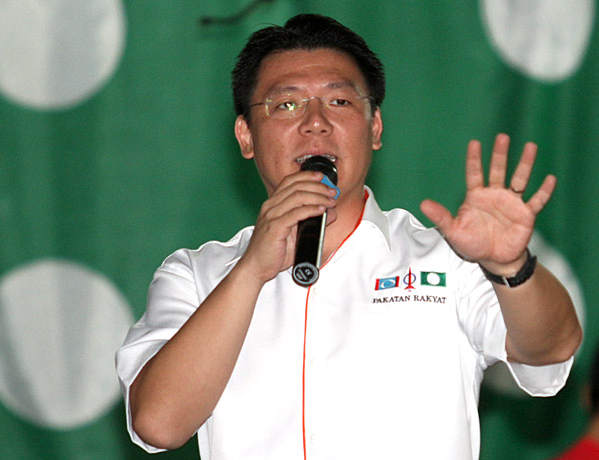
Taiping DAP lawmaker Nga Kor Ming (picture) said Malaysians have the right to know since more than half the power tariffs paid to the government end up in the pockets of the IPPs.
He demanded that Putrajaya be transparent about its deals with the power producing companies whose owners, he said, are seen to as close associates of the country’s ruling elite and have fuelled rumours of cronyism.
“The power tariff hike [is] unjustified... the statement that 70 per cent of consumers would not be affected is an understatement. There would be a chain reaction. The factories would be affected and prices will go up.
“The government must reveal the agreement with the IPPs. Who is benefiting from the tariff hike? The cronies? Is it the people?” Nga told reporters in Parliament here.
A utilities watchdog claimed on Sunday that consumers might not face as severe an increase in electricity tariffs next year if Putrajaya closed the loopholes in existing agreements that allowed IPPs to pass on their inefficiencies to the public.
Pointing out that IPPS took up 32 per cent of the power generation costs that account for nearly three quarters of the electricity tariff, Association of Water and Energy Research Malaysia (AWER) president S. Piarapkaran said this could be slashed by 8 per cent if the “lopsided” deals were renegotiated.
He also said a questionable delay in renegotiating previous power purchasing agreements has allowed older plants with 40 per cent power generation efficiencies, which were originally scheduled to be decommissioned in 2017, to get an extra 10 years of operations from then on.
Given that these IPPs are allowed to charge for the entire amount of fuel used to produce a 40 per cent equivalent in electricity, Piarapkaran pointed out the remaining 60 per cent in energy potential was simply going up in smoke.
Starting next year, the electricity tariff in the peninsula will increase by 14.9 per cent or 4.99 sen to 38.53 sen for every kilowatt per hour (kWh), and 5 sen for Sabah and Labuan.
Energy, Green Technology and Water Minister Datuk Seri Dr Maximus Ongkili, who made the announcement yesterday, did not discount the possibility of further increases next year.
When confirming the tariff hike that consumers and businesses have been bracing for since Putrajaya slashed fuel subsidies in September, Ongkili explained that there will be no increase for electricity usage below 300 kWh.
Rebates for those will monthly bills below RM20 will continue until December 31, he added.
Ongkili said the hike in Sabah and Labuan, which will average 16.9 per cent or 34.52 sen per kWh, was needed to narrow the gap between generation costs and current tariff rates to allow Sabah Electricity Sdn Bhd to maintain its service levels.
Of the 4.99 sen increase in the peninsula, the minister said 0.9 sen or 2.69 per cent will go towards covering Tenaga Nasional Berhad’s (TNB) increase in capital and other management costs; the rest was a reduction in fuel subsidies.
Sarawak’s power tariff is exempted from yesterday’s announcement because the state’s energy sector is regulated by a state enactment, so it runs power on its own, the minister said.
Ongkili said the reduction in subsidies meant an estimated RM4 billion in savings for Petronas, which in turn will translate into dividends for the government.
Despite the cut in subsidies, Ongkili said Putrajaya was still effectively losing RM14 billion each year on subsidies for power generation and rebates.
Manufacturers have pleaded with Putrajaya to reduce and delay the “huge” 16.85 per cent hike in electricity rates for the industrial sector that they say was already bracing for coming challenges.


