


HONG KONG, June 7 — Most people come to Hong Kong for the food, shopping (well, once upon a time) but very seldom cultural events.
The cultural/festival calendar in Hong Kong is quite a full one and one particularly interesting one is the annual Piu Sik parade featuring children “floating” in the air.
At Hong Kong’s outlying island Cheung Chau, the parade falls on the eighth day of the fourth lunar month that marks the celebration of Buddha’s birthday.
During the Piu Sik (飄色 or Floating Colours) parade, Cheung Chau’s residents dress up their children who appear to be standing in mid-air (almost one-storey high).
The “Sik Sum” (色芯 or floating children), who can be as young as five years old, are actually safely seated and securely supported on a metal rod.
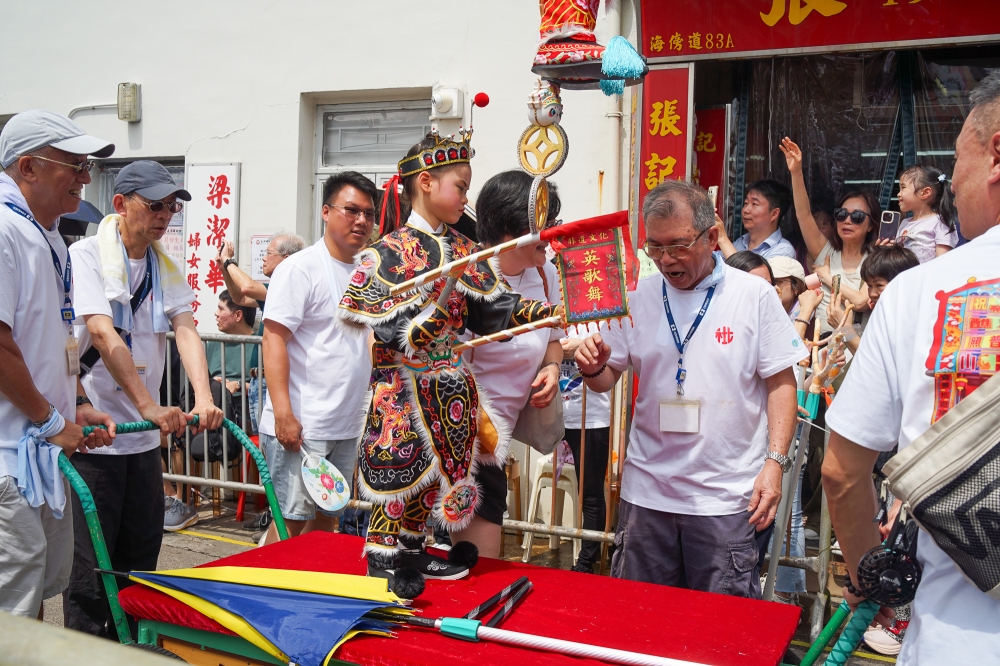
These supports are cleverly hidden under the children’s costumes, which change every year, based on what the “kaifong” or local neighbourhood associations choose.
The parade lasts a couple of hours and also sees deities being carried around the narrow streets of Cheung Chau.
You also get the chance to see other performances that are a part of Hong Kong’s intangible cultural heritage — lion dances, and dances featuring the mythical creature “qilin” (sometimes also known as the Chinese unicorn).
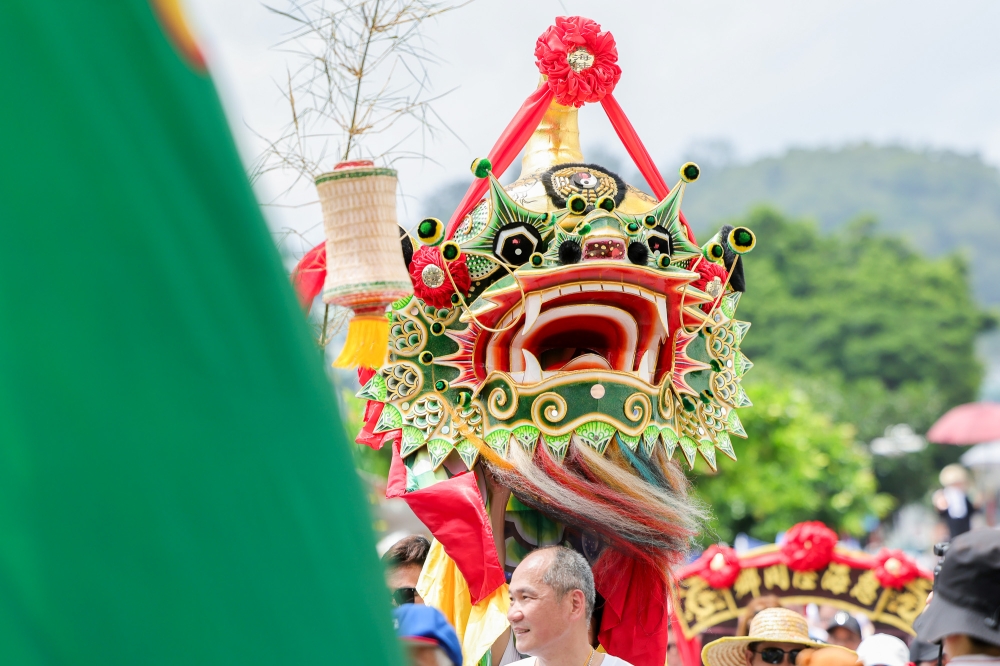
This parade is part of the century-old Taoist festival Cheng Chau Jiao Festival, which is now also known as the Cheung Chau Bun Festival and has been on China’s national list of intangible cultural heritage since 2011.
The festival gets its popular name from traditional white steamed buns, now typically stamped with the Chinese characters “平安” (pronounced as “Ping On” in Cantonese and signifying peace or safety).
Don’t rush off after the Piu Sik parade though as there is more to see and do on this island.
Buy a Ping On bun if you haven’t tried one before; have a dinner with fresh seafood and views of the harbour at one of the restaurants along Pak She Praya Road; and maybe have mango mochi or other mango-themed desserts at Wan Sing Dessert.
Then head over to Pak Tai temple to watch Cantonese opera which runs for four nights during the festival.
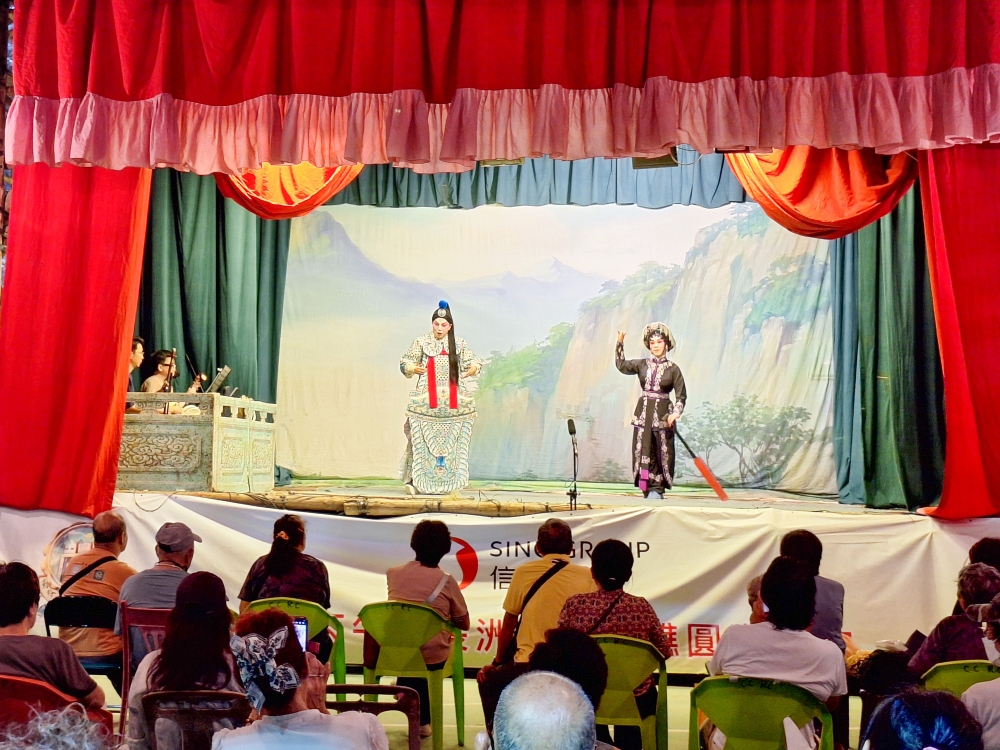
It’s a rare treat to see this traditional theatre performance, which became part of China’s national list of intangible cultural heritage in 2006 and also a similar list by Unesco in 2009.
A race to the top or grab all the buns you can
At midnight, it’s the bun scrambling race final that everyone has been waiting for — 12 of the fastest climbers (out of a maximum 200 participants) rush for the highest score or the most number of buns they can grab.
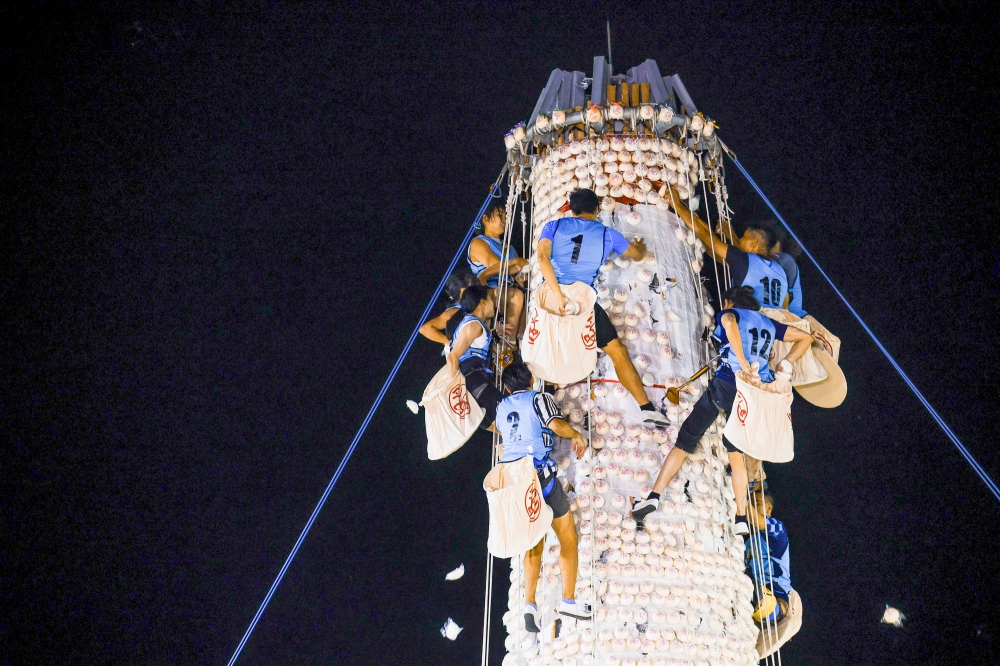
They climb up a 14 metre-tall tower mounted with 9,000 buns, with the buns having higher points the higher you climb (buns are worth nine, three points or one point each in the three zones).
Firefighter Kwok Ka-ming was the “Bun King” again this year as he won the men’s category with 999 points, his 11th win in the race.
Hong Kong’s ice-climbing athlete Janet Kung Tsz-shan was the “Bun Queen” again at 760 marks, having previously won the women’s division thrice in 2025, 2024 and 2019.
Ma Hok-ming won the “Full Pockets of Lucky Buns” award as he gathered 177 buns — which is also the highest number since this award’s introduction in 2013.
There is also the relay race, where teams of three climbers compete to be the fastest to scale up and down the tower — the winning team this year was the Shenzhen Mountaineering and Outdoor Sports Association which took just about two minutes 31 seconds.
The ‘Ping On’ bun: A sweet piece of culture and tradition
Second-generation owner Martin Kwok, 45, said Kwok Kam Kee bakery at Cheung Chau is an official supplier of the festival’s Ping On buns.
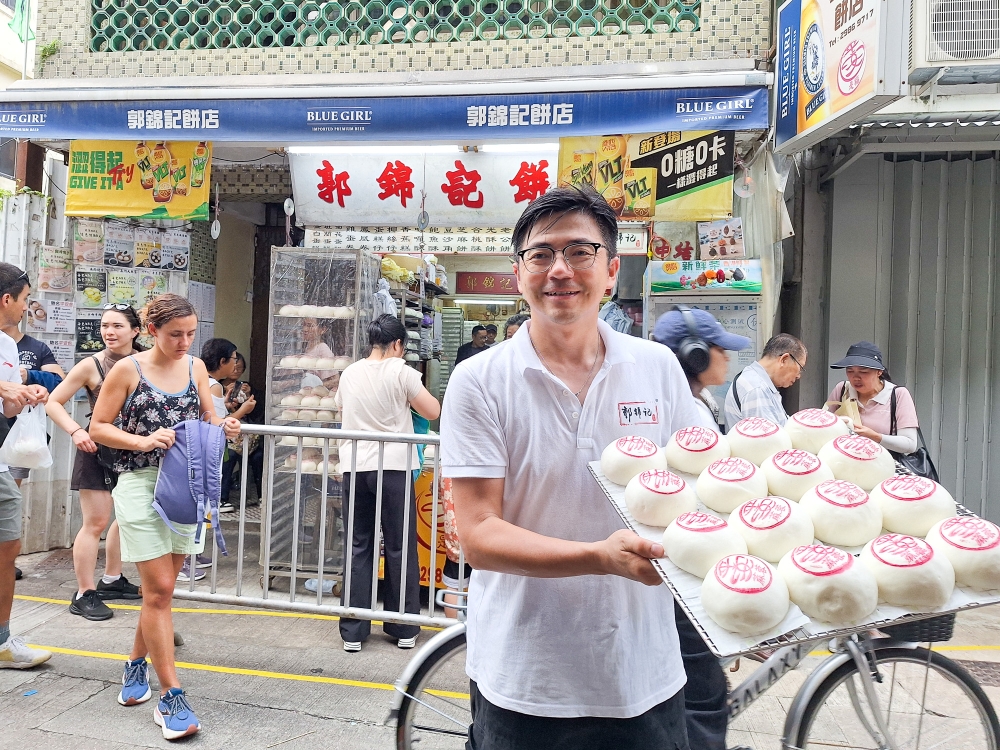
Before opening this bakery in 1972, Kwok’s father Kwok Kam Chuen learned baking from his uncle for about three years.
Kwok said his father’s late uncle had in the past supplied Ping On buns for the Cheung Chau Bun Festival, and that his father started doing the same about 30 to 40 years ago.
He said there are four types of bun towers at the festival (the bun scrambling tower, three large ones, three medium-height ones, and 36 smaller towers.)
When the bun scrambling competition resumed in 2005 after a 26-year hiatus, Kwok said Kwok Kam Kee supplied edible buns for the bun scrambling tower for the first two years.
But from the third year onwards, the festival organiser shifted to using plastic buns, as the tower was not sheltered and was exposed to the sun and rain, he explained.
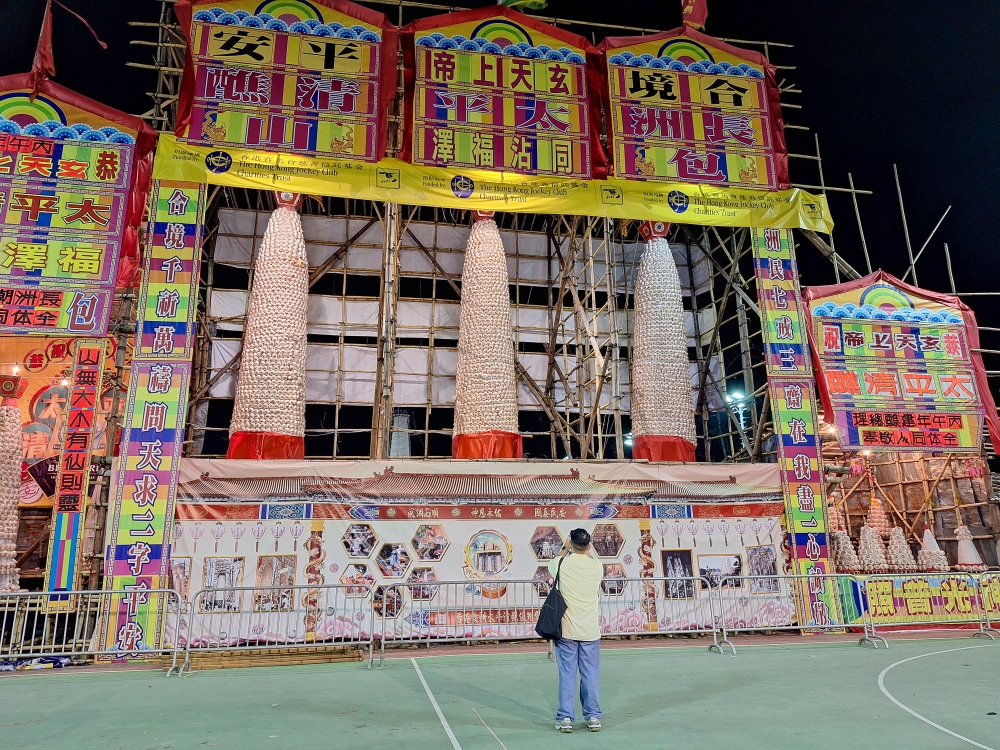
As for the other bun towers (three big, three medium, 36 small) at the Pak Tai Temple, Kwok said his bakery and another bakery in Cheung Chau continue to supply the edible buns mounted on them.
In the past, the three big towers featured a total of 18,000 buns, with 6,000 buns each.
But the big towers’ height and size was reduced several years ago to around 2,000 buns each, he said.
After prayers over these bun towers, the buns would be distributed to the public.
Kwok said the island’s residents traditionally put these buns at their altars and at their shops for one whole year, as they believe it brings blessings.
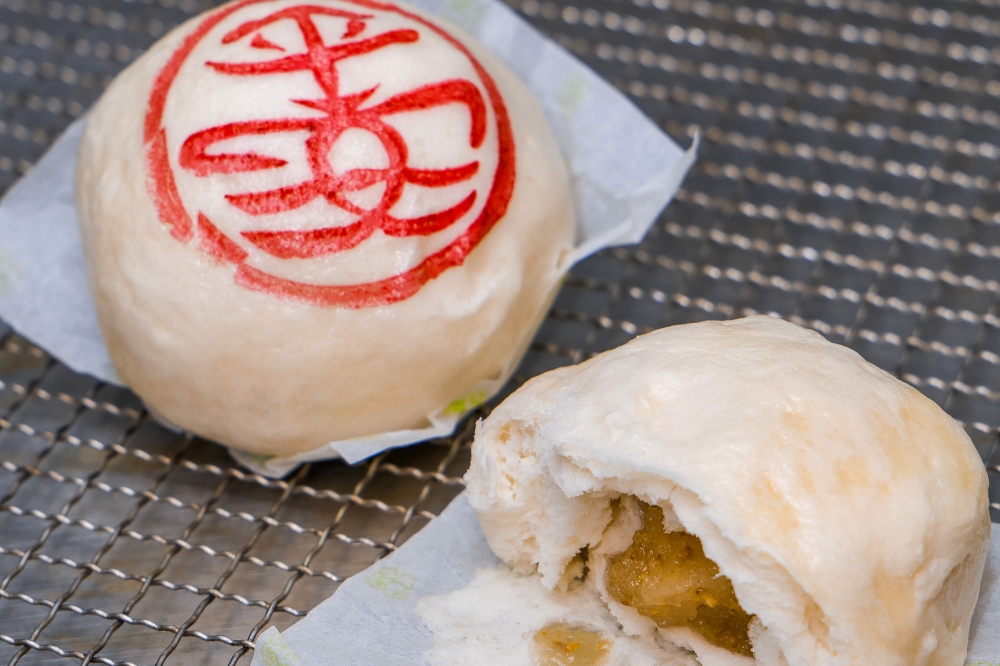
60,000 buns in about a week or so
Kwok Kam Kee originally only sold the Ping On buns during the festival, but started selling it year-round about 10 years ago due to popular demand, Kwok said.
Usually, the bakery makes less than 1,000 Ping On buns daily to be sold throughout Hong Kong, including below 100 buns at its Cheung Chau outlet, he said.
But when it comes to the annual peak period during the festival, Kwok said the buns sell extremely well: “In these eight to 10 days, I think we make around 60,000-plus buns. So that’s why it’s a very huge project for us.”
On the day of the Piu Sik Parade itself, the bakery makes more than 10,000 buns, he said.
During the peak period, the bakery employs around 10 “masters” for the labour-intensive and time-consuming process of making the buns by hand, he said.
He said the Cheung Chau Bun Festival is like a “reunion” for the Kwok family, even more so than Chinese New Year, as everyone including relatives, his siblings, and his children would come and help out.
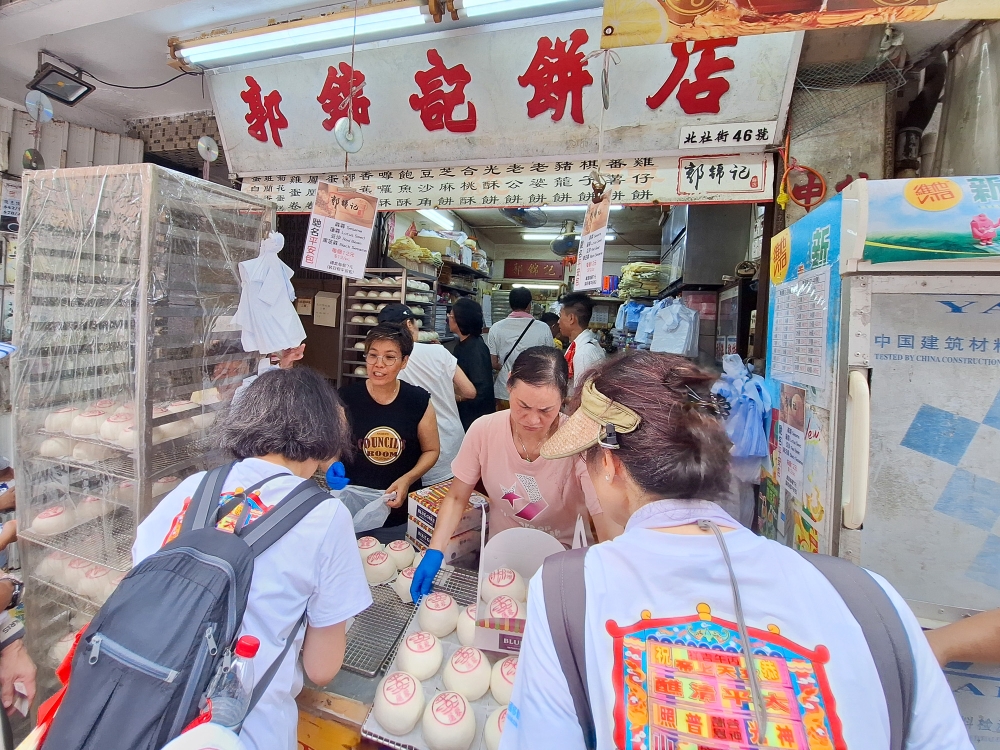
Polishing the diamond
Born and raised in Cheung Chau, Kwok is the eldest son and the fourth of seven children.
When his father wanted to retire, Kwok made a big decision in 2017 to quit his senior finance job in Singapore to take over the bakery, despite the big drop in personal income.
Kwok said he did not want the brand Kwok Kam Kee to end, viewing it as an “unpolished diamond” that his father had spent his life on, and believing that he can “polish it” to become more shiny with his ability and vision.
Currently, Kwok Kam Kee makes Ping On buns at Cheng Chau before freezing them to be sold in Macau; the UK; and at 30 to 40 supermarkets and department stores throughout Hong Kong.
Apart from preserving the traditional Ping On bun, Kwok plans to make Kwok Kam Kee into a household brand, to expand its product range and sell in more countries in the future.
The bakery carried out limited-edition crossovers for its Ping On buns (including by stamping them with Sanrio characters Hello Kitty, Pompompurin and Gudetama in 2018, and superhero Spider-Man in 2019), and also had limited-edition fillings (such as taro, matcha and pumpkin).
This is all part of Kwok’s plan to introduce the brand to more customers and make it “younger”.
#DiscoverHongKong


