


KUALA LUMPUR, April 25 — When Dr Krishna Gopal Rampal first spoke about his Hindu temple art collection last year, he described it as something “too big for one person”. Today, that collection has found its most ambitious expression yet at the UR-MU Urban Museum@Toffee — a sprawling, deeply personal exhibition he simply calls his best.
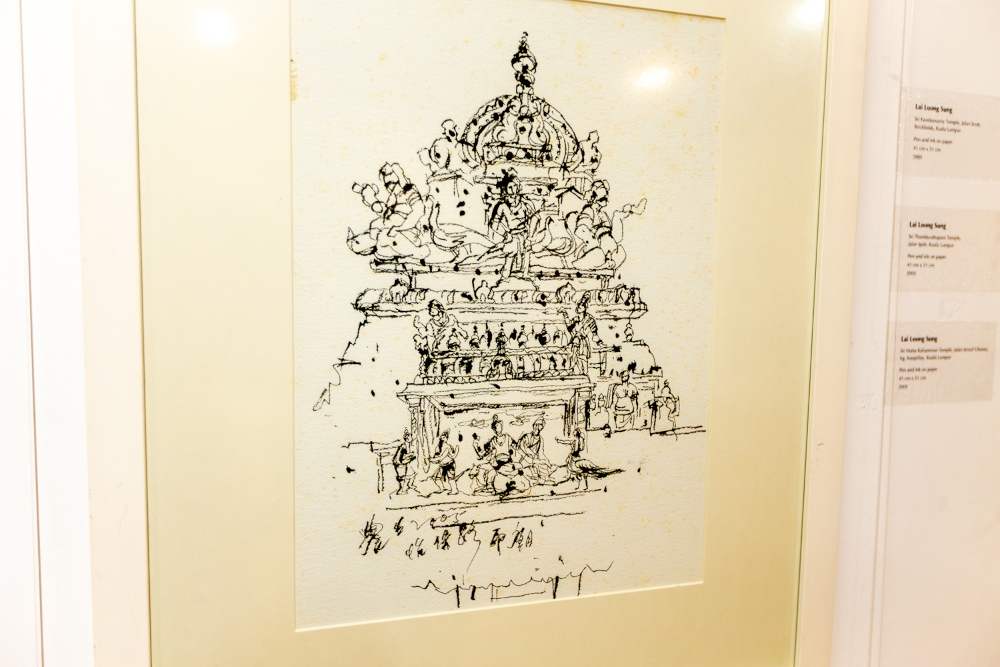
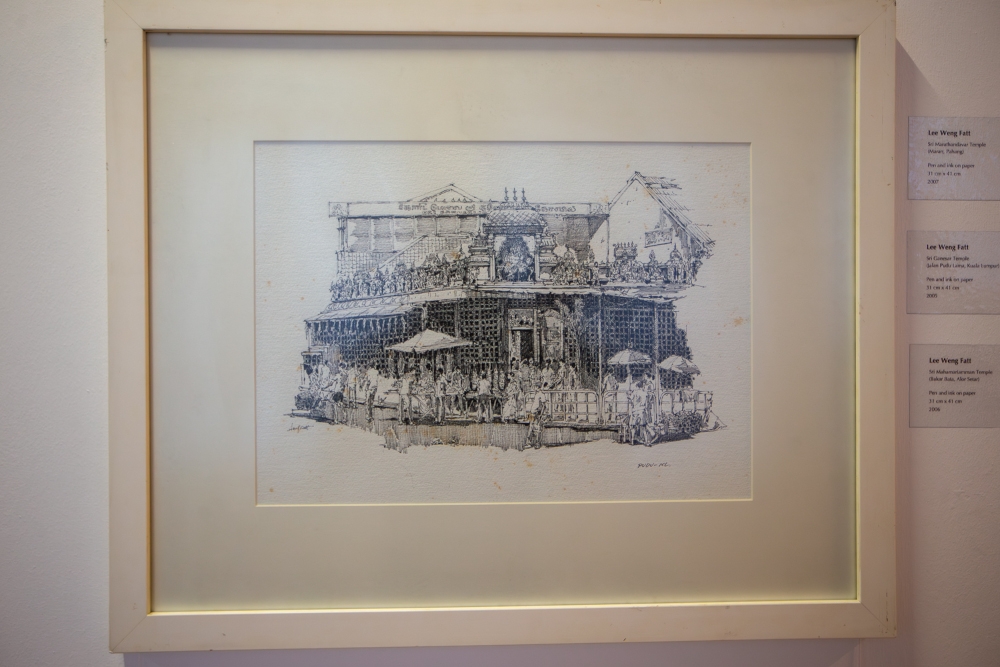
Titled Architecture of Devotion: Hindu Temples in the Indian Diaspora, the show brings together 163 works from all 16 artists he and his wife Kamla Devi have collaborated with over two decades — the first time the full breadth of his collection has ever been seen in one place.
“This is the best display… the largest and the best as I never had the space to show as much as this and feature all the artists. Now I can and I have to thank the founder and friend Tan Loke Mun for this,” he said, after walking through the 4,000 sq ft space he spent months planning.
What makes this exhibition different is not just the scale, but the intent. Every wall, every board, every sequence has been carefully thought through by Dr Krishna himself — from grouping works by country to ensuring each artist gets equal presence.
“I had to decide everything — what to show, where to place, how people will walk and see. It took time,” he said.
The result is a visual pilgrimage across nine countries, from Malaysia and Singapore to Cambodia, Myanmar, Thailand and even England — a reflection of the Indian diaspora and how Hindu temples have travelled, adapted and flourished far from India.
“You may not go to all these places but here, you can see them,” he said.
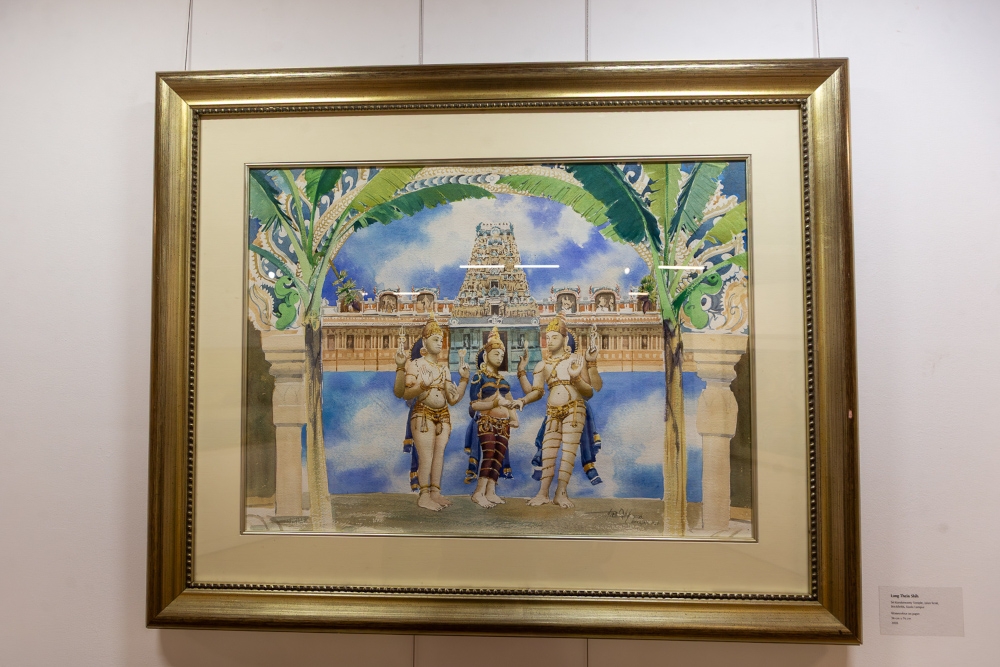
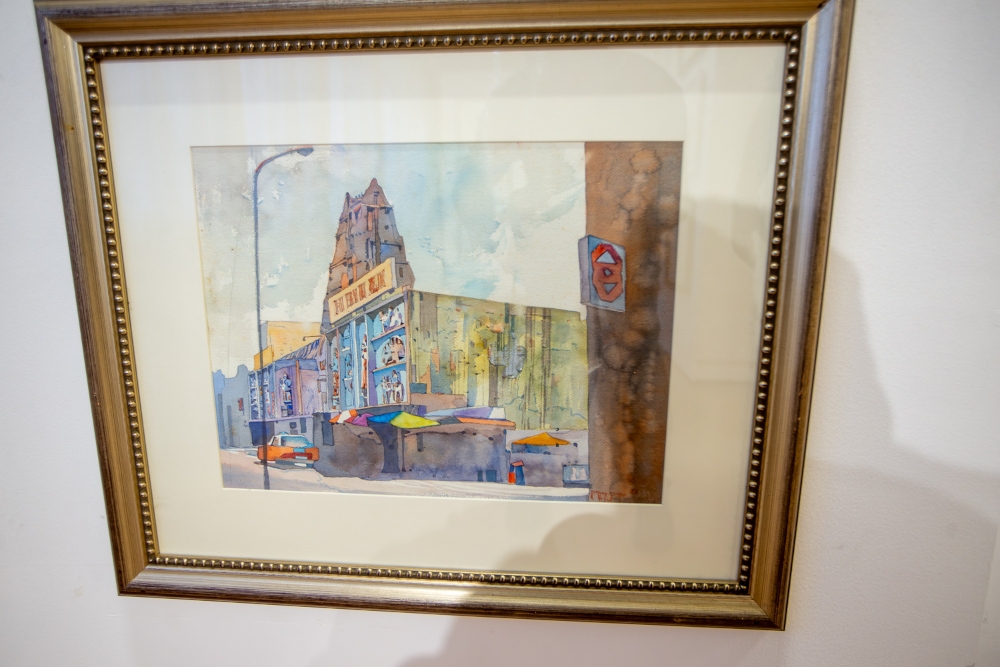
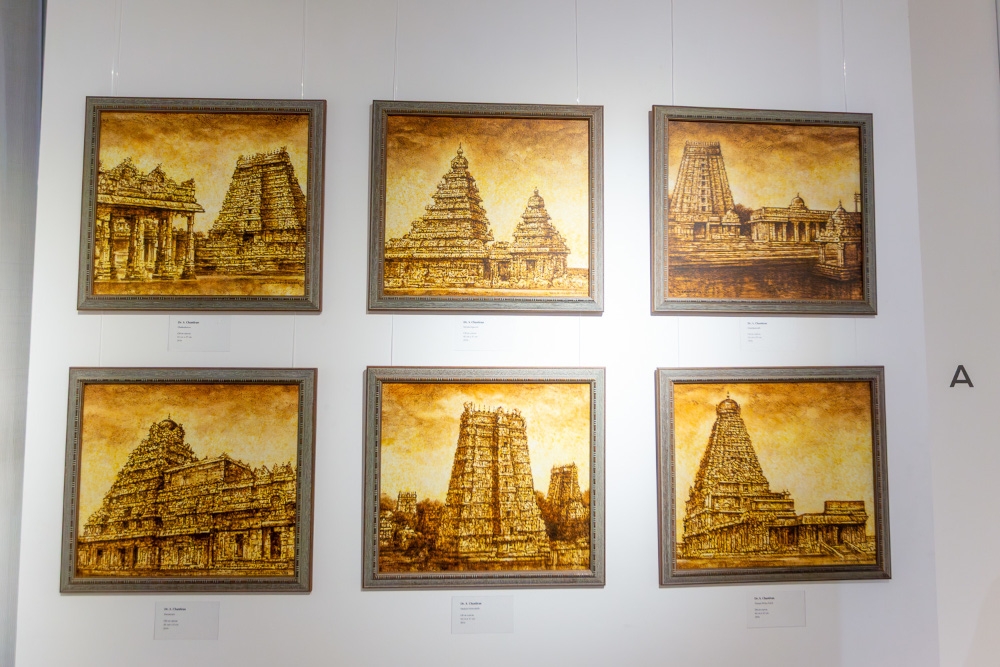
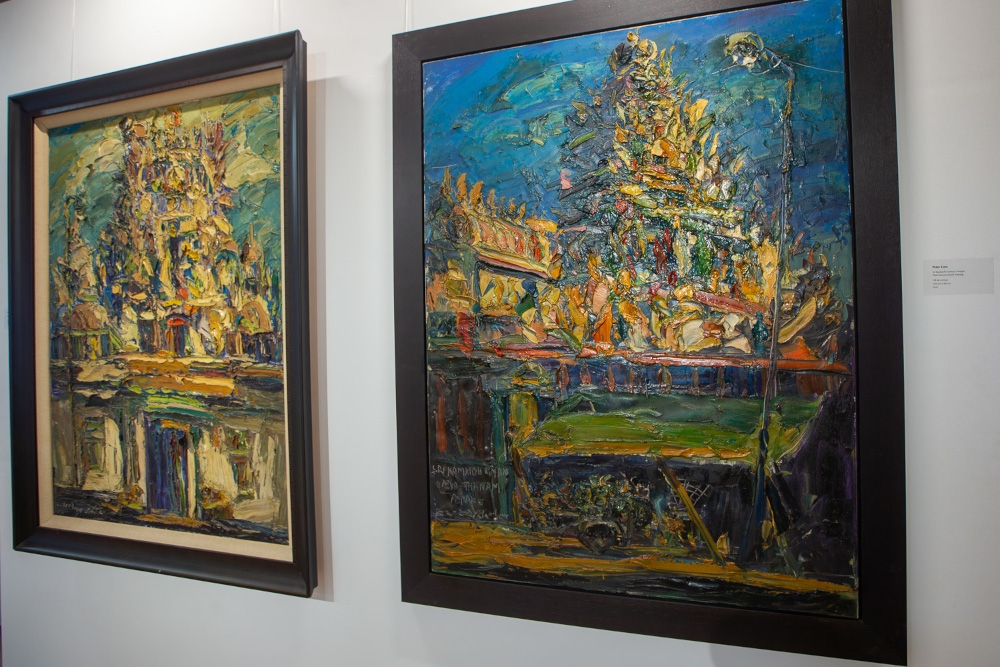
Walking through the gallery, the first impression is immediate — colour, texture and sheer variety. Temples from different countries sit side by side, yet no two works feel the same. Thick, almost sculptural oil paintings hang near delicate watercolours; intricate pen-and-ink drawings contrast with bold acrylic pieces.
“The same temple, different artists — different renditions, that is the beauty,” Dr Krishna said.
Some works stop visitors in their tracks. One painting, at first glance abstract, looks almost like a swarm of bees or flickering lights. Step closer, and it reveals itself as three women performing the Garba dance, captured from above — their white attire symbolising purity as they move in unison.
Another piece strips away the physical limits of reality.
“A photographer is limited — if the wall is there, it blocks you. You have to take what is in front of you. But an artist can remove the wall completely and show you what is behind. That is the difference between a photograph and a painting.” he said.
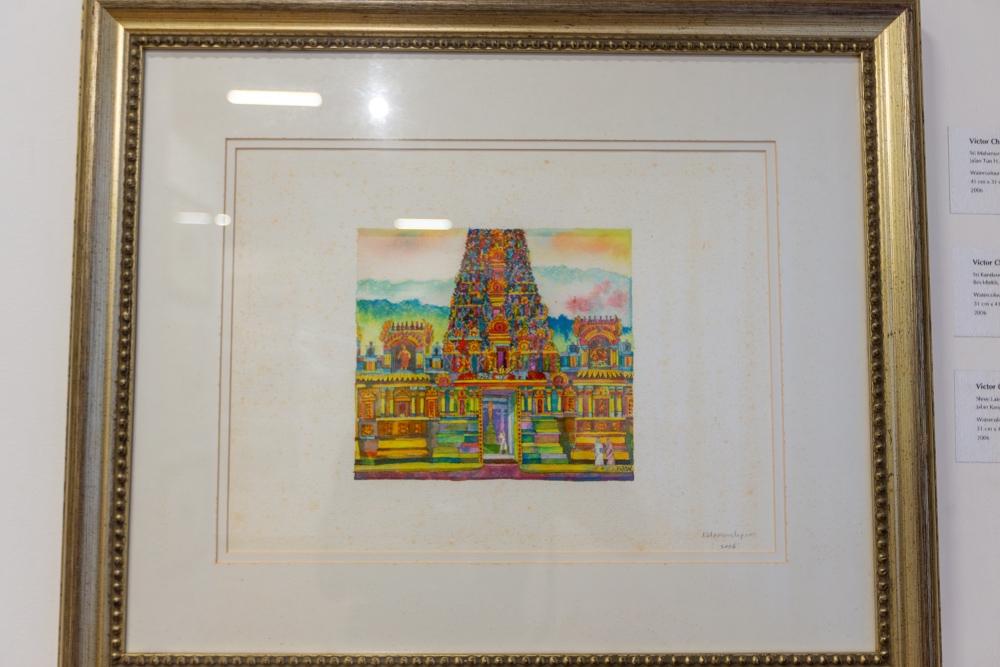
He was referring to a work where the outer structure of a temple is deliberately omitted, exposing the sacred interior — a perspective only imagination allows.
“The artist can bring the deity out. He can show you what you normally cannot see inside the temple, what is hidden from view,” he said referring to another painting where the artist drew the deities as being outside the temple.
The exhibition is also filled with stories of quiet dedication. One artist, tasked with painting temples across the region, went as far as learning Tamil write Tamil script by copying from photographs to ensure every inscription was accurate. In Vietnam, he added subtle local details — cyclists, surroundings — to root the temples in their environment.
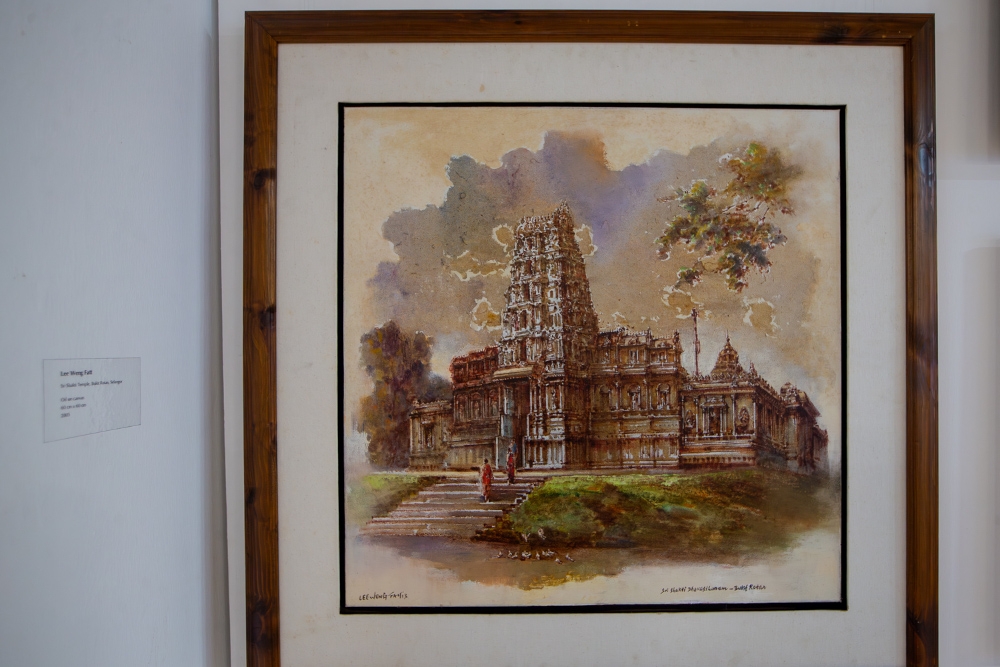
“You must show where the temple is. Otherwise, people won’t know which country it is from,” he said.
“So the artist adds local elements—the surroundings, the people, the small details—to make it clear this is Vietnam, this is Thailand, this is somewhere else. The temples may look similar, but you must show the country.
“So the artist adds local elements — maybe people, maybe the environment — so when you look at it, you know immediately where it is.
“They must get it right too,” Dr Krishna said.
“Everything here exists somewhere. This is not imagination.”
Yet, there is room for interpretation — and evolution. Some artists experiment with abstraction, others with colour and texture, pushing the boundaries of how devotion is represented.
Despite the scale and obvious value of the collection, one thing remains unchanged: it is not for sale.
“I’ve never sold any of my works, this is for people to see.”
Even preparing the exhibition came at a cost — reframing, rematting, transporting — but he brushes it off with quiet faith.
“God is kind,” he said.
For now, the collection — once scattered in storage — stands united, if only briefly. The exhibition runs until April 29, with RM20 entry granting access to all galleries within UR-MU.
And that, perhaps, is what makes this show feel urgent.
A 20-year journey, a lifetime of devotion — gathered in one place, for just a moment.


