


PINGYI, Dec 3 — Here are a few quirky and little-known facts about this industrial backwater some 300 miles southeast of the Chinese capital: Locals have a fondness for fried cicadas, and the city, a major processor of fruits and nuts, bills itself as the “China Foodstuff Canned City.”
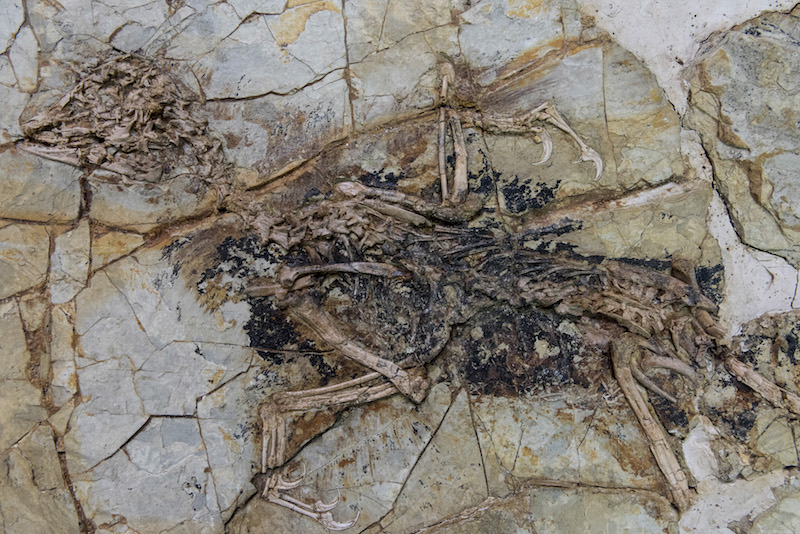
All the same, Pingyi is often overlooked for what should probably be its greatest claim to fame: Palaeontologists say it is home to the world’s largest collection of complete dinosaur fossils, many of which show evidence of feathers that have in recent years radically transformed scientific understanding of the evolutionary transition from dinosaur to bird.
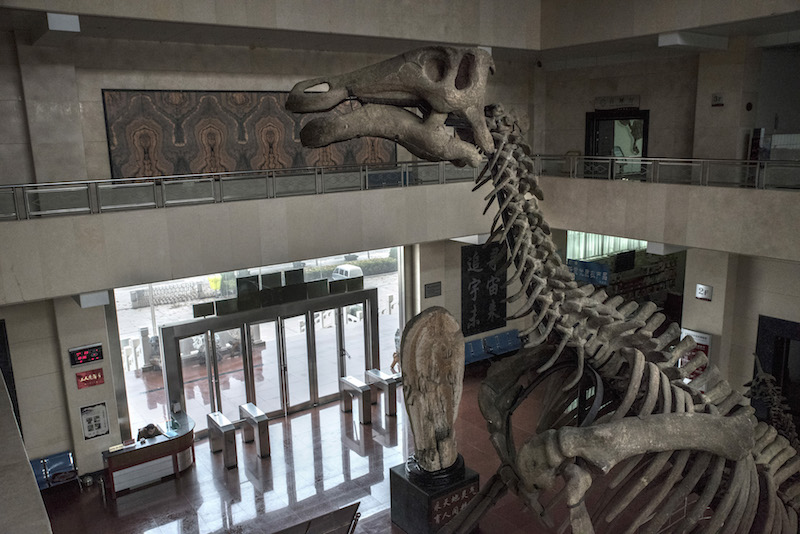
Housed in the Tianyu Museum of Nature — the biggest dinosaur museum on earth, according to Guinness World Records — are more than 1,100 fossilised dinosaurs, 2,300 early bird specimens and thousands of other petrified remains (including a 125-foot-long fossilised tree trunk, another record-holder) that draw palaeontologists from around the globe.
“It’s an incredible museum like no other,” Jingmai O’Connor, 32, a US palaeontologist specialising in the origins of birds, said during a recent visit. “We can test a hypothesis here and the great thing is we can double-check it because they’ve got so many specimens.”
The sprawling collection is a testament to China’s growing importance as a font of paleontological discoveries that are advancing the understanding of the earth’s prehistoric eras.
How so many of those discoveries ended up in the museum, which was founded in 2003 and stocked over just five years by the eccentric former head of a state-owned gold mining company, casts light on the murky complexities of the Chinese boom in fossils, which critics bemoan has been tainted with a glut of counterfeits fabricated by unscrupulous sellers.
Around 120 million years ago, most of what is now China was largely dry land. But in the northeast, a lush terrain of lakes and volcanoes proved ideal for fossil preservation. For thousands of years, people here revered the so-called dragon bones they found while tilling the soil. Under Mao Zedong, fossils were taken note of during searches for oil and gas but were not studied.
“You don’t need to do too much to dig up fossils in China,” said Wang Xiaoli, a local palaeontology professor who had come to examine the museum collection. “When the wind blows, they reveal themselves.”
As market economics took hold in China in the 1980s and 1990s, farmers realised they could earn a small fortune selling their finds to government officials, museums and foreign palaeontologists, particularly if they could offer complete specimens. Forgeries became rife, as did altered fossils, with a different species’ bone glued here, a rib augmented with clay there.
In 1999, a Chinese fossil acclaimed by National Geographic as a “true missing link” between dinosaurs and birds was proved to be a hoax. More recently, a Chinese palaeontologist estimated that more than 80 per cent of marine reptile specimens displayed in China’s museums “have been altered or artificially combined to varying degrees,” according to a 2012 article in the state-owned China Daily newspaper.
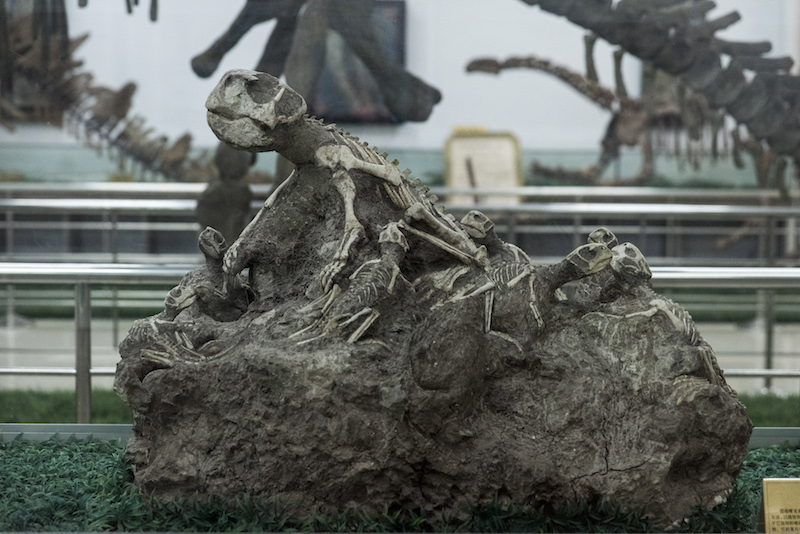
Although China has issued regulations aimed at protecting its prehistoric patrimony, fossil trafficking is not considered a serious smuggling offense, a loophole that has contributed to a rise in illegal excavations and thefts. In July, the police in southern China seized 213 fossilised dinosaur eggs from a house after villagers looted a local construction site where eggs had been unearthed, state news media reported. Authorities also found the complete skeleton of a Psittacosaurus, a dinosaur that roamed the earth 100 million years ago.
Yet despite the rampant greed and fraud, authentic Chinese fossils continue to reveal fascinating clues about dinosaurs, early avians and primitive mammals. Many discoveries have been made from studies of the Tianyu collection, including a small batlike dinosaur that may have been able to fly or glide without feathers, known as Yi qi, or “strange wing” in Mandarin, the journal Nature reported in April.
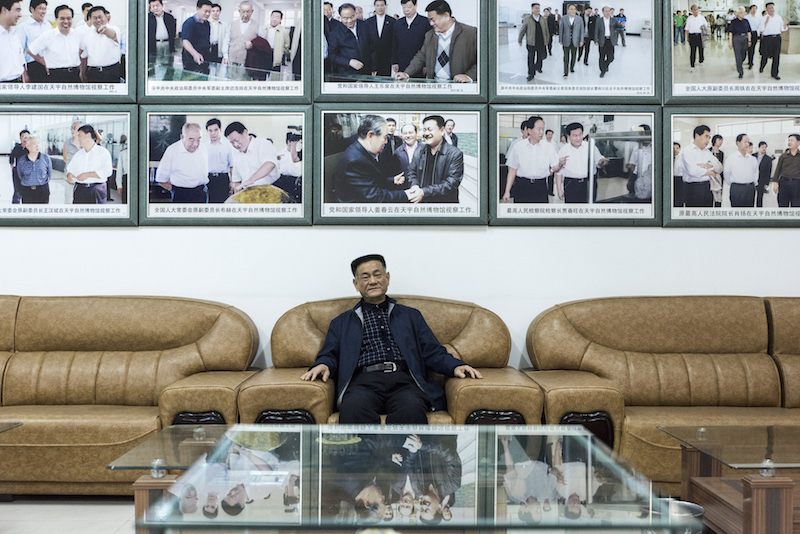
All of which makes Zheng Xiaoting, the museum’s director and founder, extremely proud. “I love them all,” he said of the fossils, while holding court in a cavernous hall adorned with photographs of visiting government officials and jammed with a herd of brown pleather couches, each the size of a baby Triceratops.
Modern China is increasingly populated with men like Zheng, self-made enthusiasts who suddenly have the money to fund their obsessions. A wiry 62-year-old with a military-style flattop, he dropped out of school at 16 to find work in textile factories.
It was in the early ’90s, while managing a government-run gold mine, that he discovered his love for dinosaurs. The part-time hobby eventually became the museum. He said the institution, consisting of three buildings with 28 display halls, was state-owned and required an investment of US$61 million (RM258 million), but he would not say where the money came from. He simply said, “I felt I had an obligation to protect the fossils for science.”
Zheng waved away suggestions by some palaeontologists that his acquisitions were purchased, a practice that was banned in 2008. “People gave us fossils voluntarily,” he said, describing the payments the donors received as small “rewards.”
Zheng says that less than 3 per cent of the specimens he acquired before 2008 were altered and that most of those were returned to their owners.
“There are almost no fake ones in our museum anymore,” he said. The police did visit the museum in 2012 while investigating a fossil dealer they had arrested, he said. “They wanted to figure out where his stash went.” Some of it had ended up at Tianyu, although because Zheng paid money “merely as a gesture,” the museum was never punished.
Notwithstanding his lack of formal education, Zheng has an honorary professorship in palaeontology from a local university, and his name often appears first on scientific papers based on his beloved trove.
Then there is another perk of owning the world’s largest agglomeration of dinosaur fossils. On the museum’s ground floor is a petrified chicken-size bird from the Late Jurassic period, about 160 million years ago. Its scientific name, according to the small yellow placard, symbolises Zheng’s legacy: Xiaotingia zhengi. — The New York Times


