


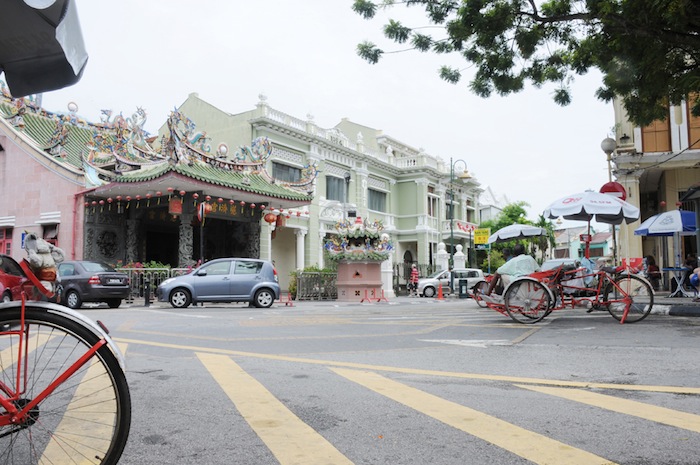
GEORGE TOWN, July 29 ― It is six years since George Town was inscribed as a UNESCO World Heritage site and tourism for the state has thrived as the city went through a massive rejuvenation exercise.
From the beginning, heritage watchdog Penang Heritage Trust (PHT) has warned that the state government will need to keep a balance between tourism, restoration and preserving the heritage values of the city including its residents and traditional trades.
The number of residents and the local trades in the inner city that give George Town its colourful character has declined over the years especially after the repeal of the Rent Control Act back in 1997.
By the time the city obtained its UNESCO heritage status, there were about 10,000 residents still living in the city but annually, more kept moving out for various reasons among which are eviction, relocating to newer residential areas and work-related relocation.
“Of course the number of residents in George Town is declining… people are getting kicked out for boutique hotels, for restaurants, but when you ask the authorities, they say not much can be done except to register the hotels,” said PHT president Khoo Salma.
The three criteria for the world heritage status are built heritage, intangible heritage and historical diversity.
The city’s built heritage ― its row upon rows of pre-war buildings and century-old mansions ― are undergoing restoration where more than 200 have been restored since 2009 while another 200 are now in the process of being restored.
However, it seems that there is too much focus on the built heritage while the other two, intangible heritage and historical diversity, are largely ignored or left to flounder against the tide of re-development and tourism.
“We need intangible heritage, we can’t turn the whole city into a tourist town because we must have a living community,” Khoo said.
Intangible heritage refers to the living communities within the city and also the traditional trades that have been plying within the inner city limits for decades, if not for more than a century.
She warned that if the state is not careful to seek a proper balance between tourism and preserving the three criteria that allowed the city to get its heritage status, the city will lose its status and its soul.
“We don’t want the soul of the city to die because if it’s a tourist town, it is not going to be sustainable. If we only have people coming here to perform for the tourists and tourists coming here only see other tourists, they won’t come anymore,” she pointed out.
Though there are no exact figures of how many residents have actually moved out, it is estimated that almost 600 households have moved out in the last four years while the economy in the area has shifted from traditional trades towards the hospitality and tourism sectors.
Realising that a baseline study needs to be conducted, Think City Sdn Bhd had commissioned Australian based consultancy Geografia to work in partnership together with the George Town World Heritage Incorporated (GTWHI) and the Penang Town and Country Planning Department to compile a comprehensive survey on the social and economic movements within the inner city between 2009 and 2013.
The study was completed but its results are yet to be released but it is believed that it will show an increase in the hospitality industry and a drop in number of residents living in the city.
Khoo believed that this kind of study is important to keep the authorities in the know especially when it comes to managing the heritage site.
“We are dealing with vernacular heritage, a lot of things happen below the radar, such as illegal demolition, but if accumulated, for example, out of 5,000 buildings, every year, 300 houses lose their authenticity, so if we have 10,000 residents and if every year 300 to 500 are moving out, in the end, we will lose the world heritage status,” she said.
She is quick to add that she is not discounting the importance of investors coming in to restore the previously deplorable condition of most of the pre-war buildings in the heritage site.
“We are not saying it is all bad but we need to know what is the impact of tourism, is it changing local values, can locals afford to live here anymore and if we are seeing a lot of tourism, how is it benefiting the local community, are the revenue coming back to the community?” she asked.
In the past four years, more than 40 new hotels have cropped up around the heritage zone while tourism-fueled businesses such as restaurants and cafés, arts and crafts, travel and tourism services and fashion and clothing businesses have all increased by 20 to 50 per cent.
Tourism, especially around the heritage zone, has increased in these past years and Khoo noted that the state is so happy with this that it was not concerned over the possible impact this could have on the delicate balance of the heritage site.
“They are equating tourism with success which is a very dangerous thing,” she said.


