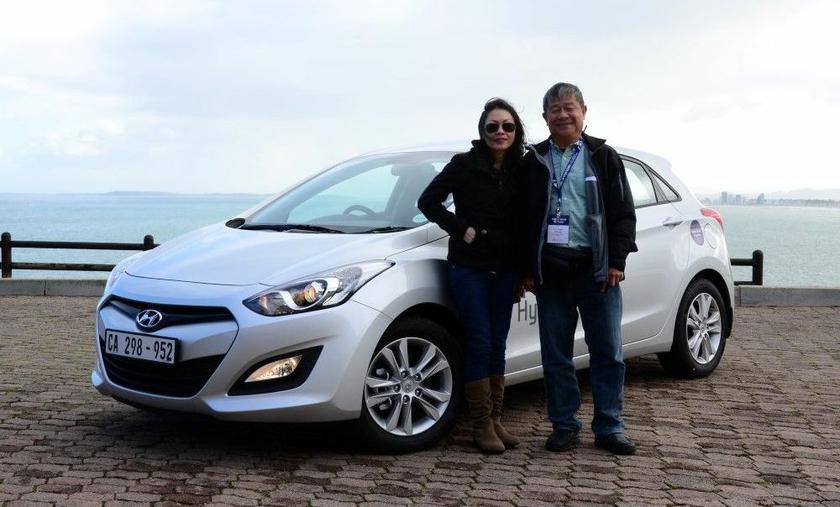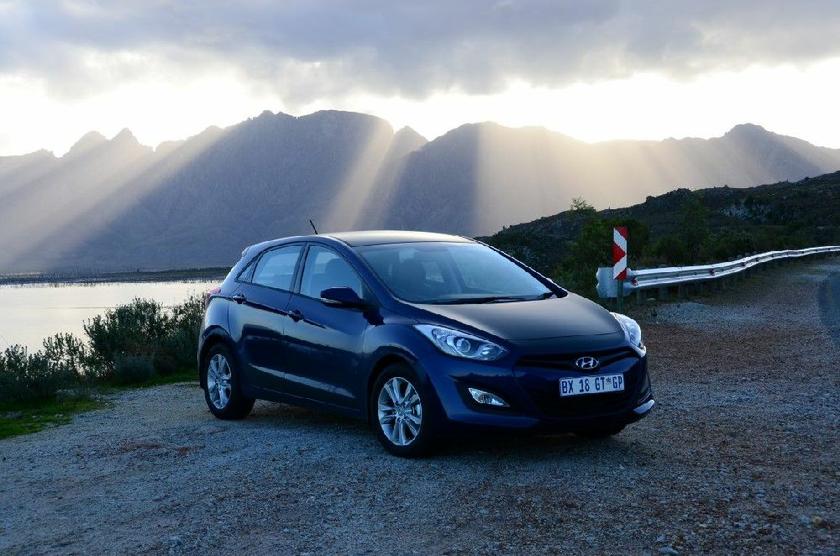


KUALA LUMPUR, Feb 24 — Designed at the Hyundai Motor Europe Technical Centre in Russelsheim, Germany, the Hyundai i30 premiered at the 2011 Geneva Motor Show and went on sale in Europe in early 2012 as a 1.6-litre hatchback. The Korean version was launched a little earlier, and that version was equipped with a Gamma 1.6 litre engine producing 130 horsepower at 6,300 rpm with maximum torque of 157Nm at 4,850 rpm.
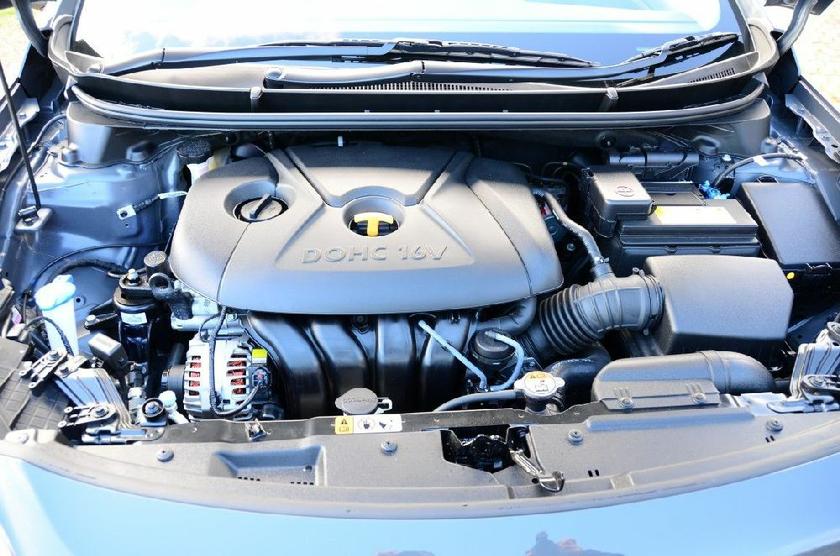 The Malaysian version is scheduled for launch next month, and we expect to get two engine options, the 1.6 litre and a 1.8-litre NU engine version with 150 horsepower and 178Nm of torque. Both cars are available with a 6-speed automatic transmission.
Built on the Hyundai Elantra platform, the i30 is a mid-sized hatch with dimensions similar to that of the VW Golf, and slightly smaller than the Ford Focus hatch. With the European hatches being the competition, Hyundai has paid particular attention to size, interior space, performance, ride and handling.
In terms of dimensions, the i30 has an overall length of 4,300mm, compared to 4,255 for the Golf 7, and a wheelbase of 2,650mm versus 2,637mm for the Golf 7. The i30 width is 1,780mm, a little narrower than the VW Golf 7 at 1,799. The i30 stands a little taller at 1,470mm versus the Golf 7 at 1,452mm.
In terms of engine power, the 1.6-litre i30 is 10 horses lower than the 140 horses while the 1.8 litre version has 10 horses more. Torque for the Golf tops both the i30s at 250Nm. What the Hyundai will have going for it would be its price, which is not announced as yet, but expected to be around RM130k or below.
A small group of Malaysian media were invited to Cape Town, South Africa, in July 2012 to take part in a media test drive, and finally, after a very long wait, the i30 is on its way to our shores.
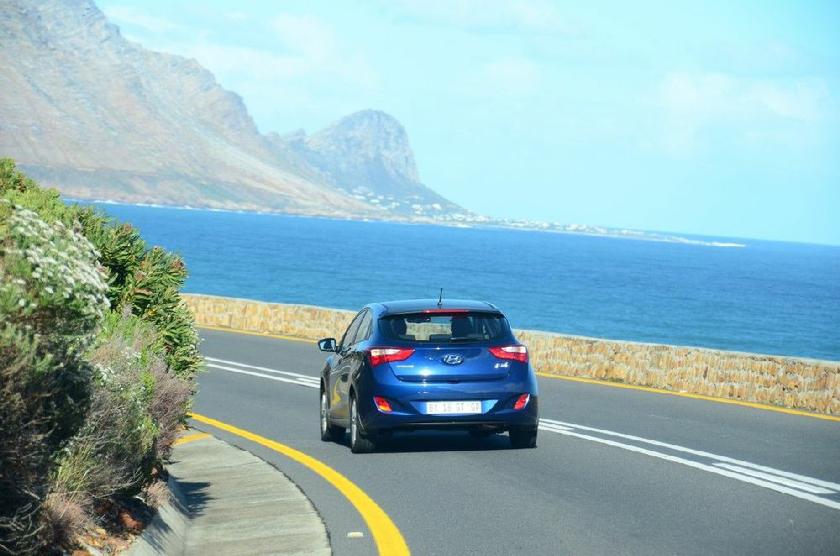 Aesthetically, the Hyundai i30 follows the current Hyundai design language with “fluidic” lines — the fact that it is Elantra-based means the car is basically an Elantra hatch, it must be mentioned that only the underpinnings are the same — the i30 body sculpture is completely different from that of the Elantra, although the design language is similar. Safety has also not been neglected, and the i30 comes with a Euro NCAP 5-star rating.
Front suspension is Macpherson strut type; while the rear is fitted with a torsion beam — these were the spec based on our test drive — the European version is available with a multi-link rear.
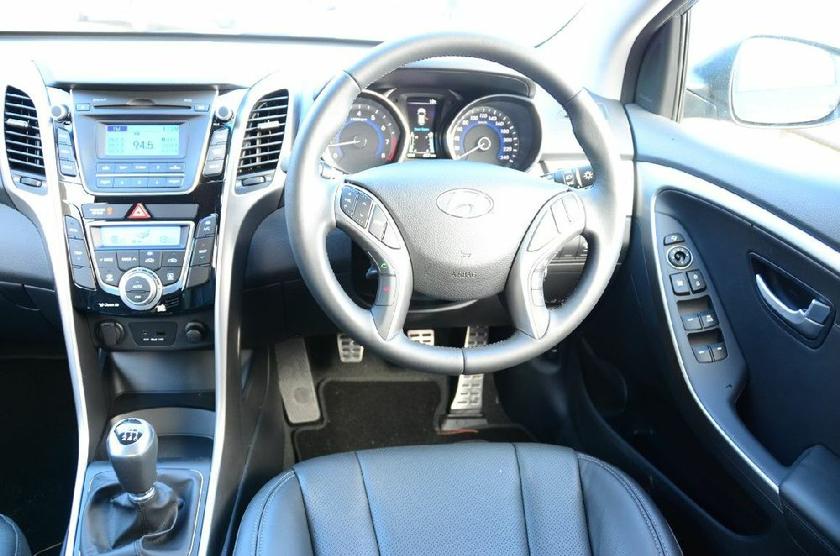 The i30 comes with EPS (electric power steering), with a three-mode setting that can be selected by the driver. I found the harder setting to be the best on the mountain roads, while a softer setting was good for city driving.
We drove through some very beautiful roads in South Africa, which included some steep hill climbing — handling, despite the torsion beam suspension, was exemplary, and the power delivery was excellent.
The six-speed auto works well to transfer the power onto the road with seamless gear changes. The i30 corners quite “flat” and four disc brakes all round helped to boost our confidence in the brakes.
The model we tested came with Electronic Stability Control (ESC) and Vehicle Stability Management (VSM) — however, we will have to wait to see if the local model will come with these features.
Noise, vibration and harshness was something the Hyundai chassis design team worked hard at to keep to a minimum, and I must say the i30 is one of the quietest and smoothest around.
The Hyundai i30 is worth taking a look at — advanced features, the 1.6 litre engine is of advanced design, that offers 6.4 litre per 100 km fuel economy (claimed figure), a 6-speed automatic, and excellent handling — we will be really spoilt for choice.