


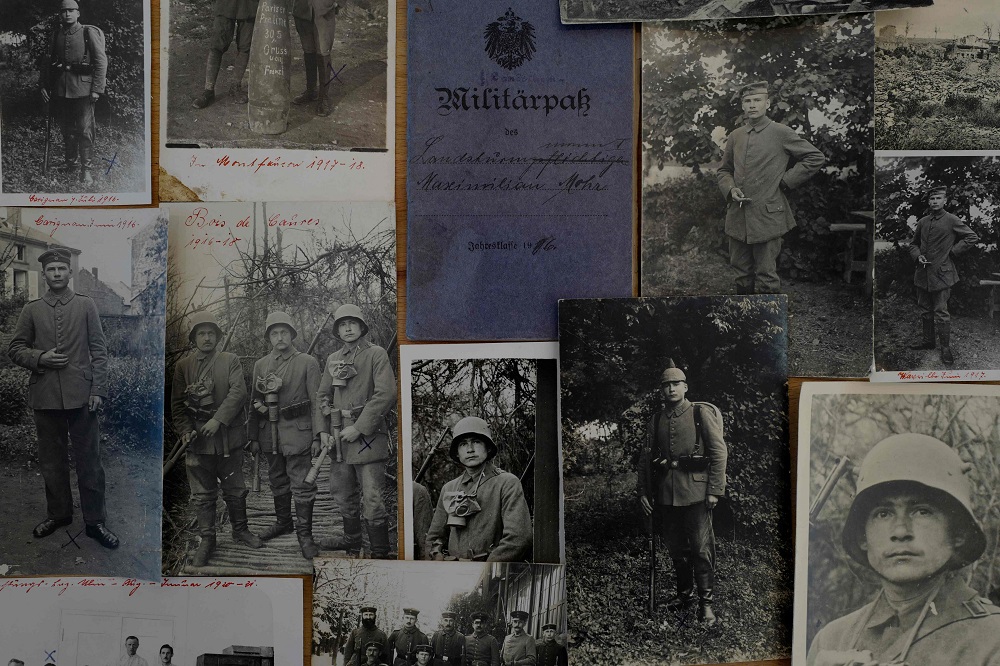
HAMBURG, Oct 12 — As a child, Joachim Mohr recalls being “fascinated and terrified” by his beloved grandfather’s missing left arm, the result of a grenade that exploded near Verdun during World War One.
“My grandfather was a big man, not too talkative, but he was warm and certainly did not lack humour,” Joachim says.
He holds up a photo of Maximilian looking both serious and worried in his uniform before he was sent to the war.
Barely 20 years old, from a poor village in southern Germany’s countryside, he was sent to France to fight in 1916.
He was wounded close to the end of the war and was amputated from the elbow.
“When we were little, I was five or six years old, I remember that he amused us by moving it like a puppet,” recalled Joachim, 56, a writer and journalist.
“We found it funny of course, but we also knew that his arm was destroyed because of the war, even if we couldn’t quite imagine what that was like.”
It was only after his grandfather’s death in 1978 that Joachim, then almost 16 years old, learnt that the elder man had written down the horrors he experienced at the front.
“From these notebooks you see that the war was a horrible thing,” Joachim says.
It was a message Maximilian repeated to his children and grandchildren.
He spoke of his fear of gas attacks, “because he saw his comrades asphyxiated next to him even though they were wearing masks.”
After the war Maximilian, handicapped and uneducated, worked as a concierge for low pay on which he raised five children.
He was not drafted for World War II, which he “rejected from the outset, as he did the Nazis and Hitler”, Joachim says.
The pacifist streak remains in the family, he adds.
He tries to impart it to his 11-year-old daughter when she asks about her great-grandfather, whom she has seen in photos.
He “impressed me a lot,” said Joachim. Even though life was tough for Maximilian, “he never allowed it to discourage him”. — AFP


