













JULY 13 — Dear You is ostensibly a love story. But beneath its romance, lies a larger human story. It is a meditation on migration, memory, cultural survival and the quiet sacrifices through which families endured and nations are built.
It is the story of the Chinese migrant diaspora in South-east Asia, centred on one family, yet celebrates profoundly universal themes that are both personal and political.
The story begins with a spoilt grandson travelling to Thailand to find the grandfather he has never known, not out of filial devotion, but because he is in debt and hopes the old man will give him money.
Yet, as he searches for his grandfather, he discovers something far more valuable — the truth about where he came from.
He uncovers a generation of migrants who crossed seas in search of survival, endured hardship in foreign lands, and carried the weight of families they had left behind.
They did not merely survive, but struggled to remain faithful, responsible and loving, even across decades of separation.
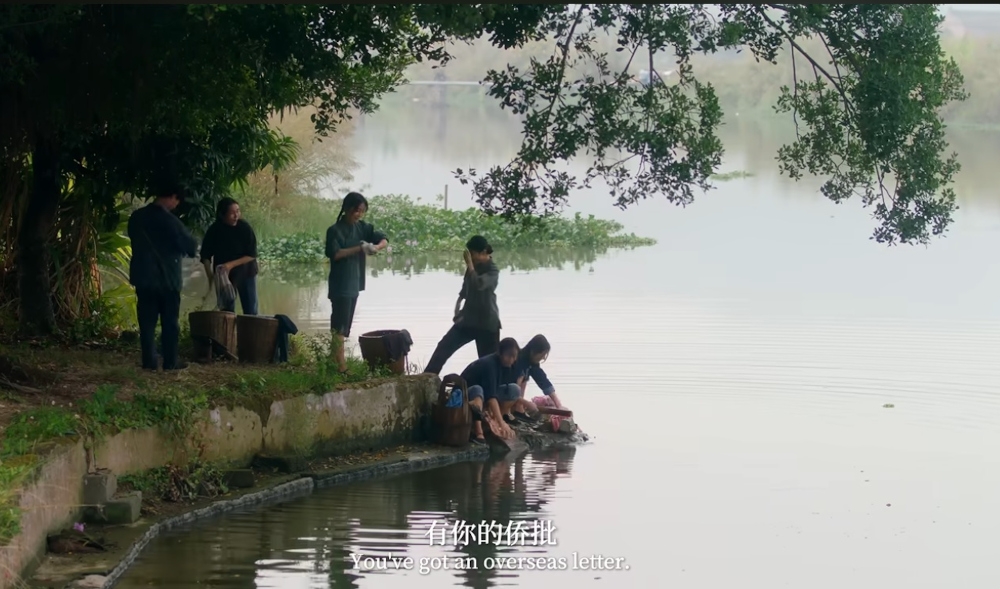
The crux of the story was the qiaopi, letters sent home by Chinese migrants, often together with their remittances. The film unfolded stories of enduring love that arrived in letters folded around small bundles of hard-earned money.
More than 160,000 surviving documents have been preserved, and Unesco placed the collection on its Memory of the World Register. Between 1864 and 1980, historical accounts estimate that over 30 million such letters reached China, carrying remittances worth more than US$10 billion.
The money sustained families and helped build homes, schools, roads and bridges. During wartime, overseas Chinese also sent funds to support their homeland. But behind every letter and statistic was a human being.
A man eating less so that his children could eat more. A father watching his children grow through letters. A husband unable to return to the woman he loved.
And most heartbreaking, a father sending a thousand dollars home to buy back his youngest daughter.
The Teochew spoken in the film also touched something deep within me. I could understand much of it because of its similarities to the Penang Hokkien I grew up speaking.
There is something powerful about hearing a language close to your own on the screen. It carries the voices of our parents and grandparents, the humour of the kitchen table, the scoldings of our elders, and the memory of people who are no longer be with us.
For the first time, perhaps, we see our ancestors not merely as merchants, coolies or immigrants, but as ordinary people who loved, grieved, sacrificed and dreamed.
The film made me think of the migrants living among us today.
The Bangladeshi worker at the construction site. The Indonesian domestic worker caring for someone else’s children while her own children grow up without her.
The Nepali security guard working through the night. The Myanmar worker cleaning our restaurants and factories.
The Rohingya family searching for somewhere safe enough to call home.
We often speak of them as foreign-worker statistics, as refugee or immigration problems. Rarely do we see them as we now see the Chinese migrants in Dear You: as sons, daughters, husbands, wives and parents carrying the hopes of entire families.
During a project in which I travelled to glove factories and interviewed Bangladeshi and Nepali workers all over the country, I heard story after story of young men borrowing as much as RM20,000 to RM25,000 to pay recruitment agents for the chance to work in Malaysia.
Many then spent years repaying those debts and interest. They worked long shifts — commonly 12 hours a day, six or seven days a week, performing exhausting, dangerous and monotonous work that most Malaysians no longer wanted to do.
Many told me they sent as much as 80 per cent of their earnings home.
That money paid debts, built modest houses, sent siblings and children to school, bought medicine for ageing parents, and kept food on tables thousands of kilometres away.
In 2024 alone, around 2.5 million documented foreign workers in Malaysia sent RM32.6 billion home. These figures are not simply money leaving one country and entering another. They represent millions of private acts of responsibility and love, money that raised families, provided opportunities and alleviated poverty.
The Malay Peninsula was once known in ancient history as Suvarnabhumi — the Land of Gold or Aurea Chersonesus, as the Europeans called it.
For generations, this region has drawn people seeking livelihood, refuge and the hope of a better life.
That abundance was never created by one community alone. It was built through the labour of people who cultivated plantations, laid railway tracks, opened mines, built roads, raised families, traded across seas and transformed unfamiliar territory into home.
The migrant worker of today is living a story not so different from that of our ancestors.
The language has changed. The wooden ships have become budget airlines.
The handwritten qiaopi has become an instant bank transfer or a WhatsApp message sent through a mobile phone.
But the longing remains the same. The sacrifice remains the same and the love sent home remains the same.
In the same way, many Malaysians are descended from people who once arrived here as strangers. Today, we call this country home.
Perhaps the real test of how well we remember our history is not how proudly we honour the migrants of the past, but how compassionately we treat the migrants present before us now.
One day, their grandchildren may also tell their stories. And they too, will discover that behind every remittance, was a love letter home.
* This is the personal opinion of the writer or publication and does not necessarily represent the views of Malay Mail.