


JUNE 3 — Every year on June 3, the world celebrates World Bicycle Day, recognising the bicycle as one of humanity’s simplest yet most enduring inventions. Across many countries, the occasion highlights sustainable mobility, healthier lifestyles, and environmentally conscious cities.
In Malaysia, however, cycling carries another meaning altogether. Beyond recreation and transportation, it has become part of the nation’s sporting identity, shaped not only by athletes but also by the spaces that quietly nurtured them. Malaysia’s cycling story is, in many ways, also an architectural story.
Behind every celebrated sprint, every podium finish, and every moment of national pride stand velodromes that were built through collective ambition, technical expertise, and long-term belief in the future of the sport. These structures are more than sporting venues. They are physical reminders of how a nation chooses to invest in aspiration.
Today, the name most closely associated with Malaysian cycling is undoubtedly Datuk Azizulhasni Awang, the “Pocket Rocketman” whose achievements have inspired generations of Malaysians. His latest triumph at the 2026 UCI Track World Cup once again demonstrated the resilience and determination that have defined his career for years.
Yet behind every champion lies another story that is often less visible: the story of the tracks that shaped those dreams. Each of Malaysia’s major velodromes reflects a different chapter in the country’s cycling journey.
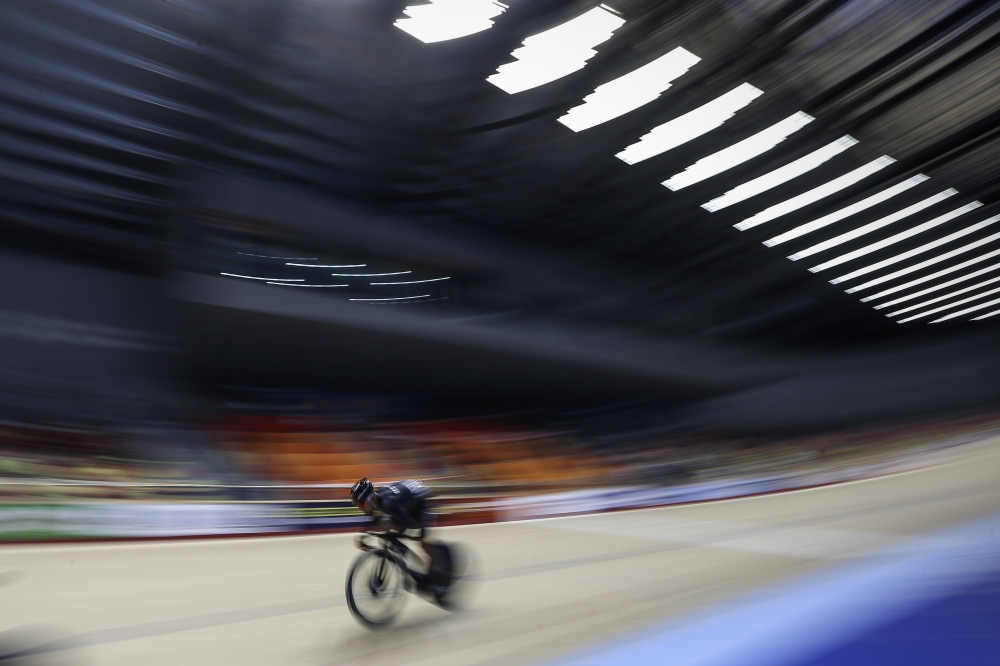
Velodrom Rakyat in Ipoh represented belief.
Built in 1989 through public donations amounting to RM3.25 million, the country’s first velodrome remains one of the most remarkable examples of collective sporting ambition in Malaysia. Ordinary citizens contributed towards its construction at a time when track cycling had yet to establish itself as a major national sport.
The project brought together local commitment and international expertise. German architect Herbert Schumann contributed the architectural design, while renowned Australian velodrome specialist Ron Webb developed the 250-metre concrete track. For Malaysia, which then had limited experience in specialised cycling infrastructure, the project demanded close cooperation between consultants, engineers, municipal planners, and construction teams from the Ipoh City Council.
More importantly, it gave Malaysians something difficult to measure but impossible to ignore: belief.
For the first time, young riders could imagine themselves competing at international level on home soil. Over the years, Velodrom Rakyat hosted major competitions including the Asian Cycling Championships and the UCI Track World Cup, gradually positioning Malaysia within the global cycling conversation.
Even today, after decades under Malaysia’s tropical climate and restoration works completed in 2018, the velodrome continues to stand as a reminder that public belief can leave behind lasting structures.
If Velodrom Rakyat symbolised belief, Velodrom Nasional Malaysia in Nilai represented maturity.
Officially opened in 2017, the RM80 million facility marked Malaysia’s arrival as a serious cycling nation. Developed under the supervision of Jabatan Kerja Raya and led architecturally by Ar Mustapha Mohd Salleh of Arkitek Alirancipta Sdn Bhd, the velodrome introduced a new level of sophistication in both sports’ infrastructure and athlete development.
Its façade, inspired by the Jalur Gemilang, reflects a modern national identity through aluminium cladding and steel frameworks that give the building a bold yet disciplined character. Behind the architecture lies equally demanding engineering precision, particularly in the installation of the Siberian spruce timber track designed to comply fully with Union Cycliste Internationale (UCI) standards.
The facility’s UCI Class 1 certification immediately elevated Malaysia’s standing in international cycling. More importantly, it provided Malaysian athletes with training and competition facilities comparable to those available in leading sporting nations.
The velodrome has since become closely associated with Malaysia’s golden generation of cyclists, from Datuk Ng Joo Ngan and Josiah Ng to Azizulhasni Awang himself. Their achievements may be remembered through medals and records, but they are also inseparable from the ecosystem of planners, architects, engineers, coaches, and institutions that made such excellence possible.
And last but certainly not least, another chapter is emerging in Dungun, Terengganu.
Completed in 2022, Velodrom Dungun is smaller and more modest than its counterparts in Ipoh and Nilai, its significance lies not in scale, but in symbolism.
Developed through collaboration between Federal Jabatan Kerja Raya and Terengganu state authorities, the project reflected Malaysia’s growing confidence in delivering specialised sporting infrastructure through local expertise. Unlike earlier developments that relied heavily on foreign consultants, much of the planning and implementation involved Malaysian professionals and contractors.
Designed primarily as a grassroots training facility, the velodrome prioritises accessibility, durability, and long-term community use. In doing so, it demonstrates how sporting infrastructure can also contribute to regional development beyond major urban centres.
For young people growing up along the East Coast, the message is powerful. World champions do not only emerge from large cities or wealthy sporting systems. Sometimes they begin on ordinary roads, shaped quietly by discipline, sacrifice, and opportunity.
World Bicycle Day may celebrate bicycles, but in Malaysia, it also offers an opportunity to reflect on the spaces that helped shape the nation’s sporting journey.
Our velodromes are more than architectural structures or sporting facilities. They are places where ambition was tested, where generations trained in relative anonymity, and where national confidence gradually took form lap by lap.
Long after medals are won and records are broken, these tracks remain. Quietly waiting for the next young cyclist to arrive, believe, and begin again.
* Associate Professor Sr Dr Zuraini Md Ali is from the Faculty of Built Environment, Universiti Malaya, and can be reached at [email protected], while Assistant Professor Datin Dr Nor Hayati Hussain is from the School of Architecture, Tunku Abdul Rahman University of Management and Technology (TAR UMT), and can be reached at [email protected].
** This is the personal opinion of the writer or publication and does not necessarily represent the views of Malay Mail.


