


APRIL 10 — The real winners of this war were not the Iranian people, not the Lebanese, not the Gulf Arabs, not the Americans, and certainly not the poor fools told to clap every time a missile takes off on television.
The winners were the people who always win.
The weapons manufacturers. The oil traders. The consultants in expensive suits using phrases like maritime de-risking and regional deterrence posture. The lobbyists. The think-tank parasites. The men who can turn blood into billing hours and rubble into shareholder value. While civilians counted bodies, someone in Washington, Virginia, Texas and London was counting margins.
And for all that death, what was the grand achievement?
The Strait of Hormuz.
That famous strip of water now spoken of in such trembling, Churchillian tones by men who probably could not have found it on a map six months ago. The great objective, after all the sermons, aircraft, threats, retaliation and primetime moral theatre, appears to be reopening shipping through the Strait. Which would be stirring stuff, were it not for one tiny flaw: it was open before the war. Then traffic collapsed. And now the world is congratulating itself for trying to restore the condition that existed before the idiots arrived with matches.
Donald Trump, naturally, has handled this with the subtlety of a drunk casino owner screaming at valet staff. He has been raging at Nato over Hormuz. Mark Rutte has been scrambling. Keir Starmer is speaking in grave little phrases about “practical options.” Friedrich Merz wants conditions and sequencing and probably three committees before Germany does anything. So now the Atlantic alliance, that magnificent cathedral of bureaucracy, is locked in an argument over who should help reopen a waterway that was functioning before this latest outbreak of strategic genius.
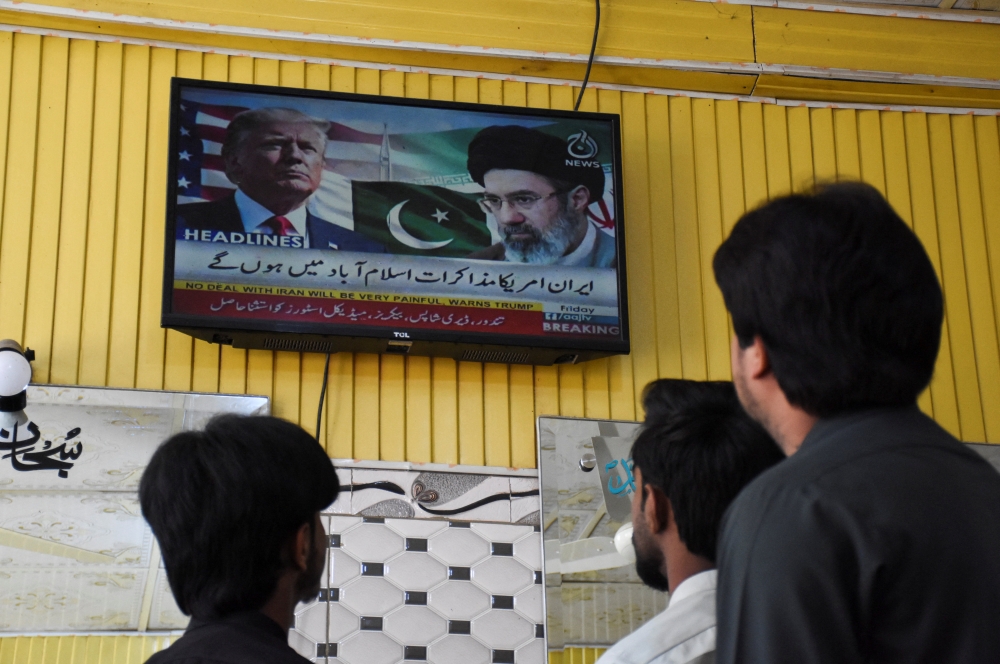
Then there is Iran.
We were told Iran would be taught a lesson. Brought to heel. Corrected. Weakened. Perhaps even modernised by force, which is always a lovely idea if one enjoys setting museums on fire in order to improve the gift shop.
And yet here we are. The Islamic Republic still stands. The clerical machine still stands. Ali Khamenei’s system, so often described as brittle and doomed, once again proves astonishingly durable when faced with foreign threats. In effect, the West has pulled off its favourite magic trick: threaten a civilisation with annihilation, stop short of full annihilation, and then declare that not fully destroying it counts as liberation.
So congratulations to Iran. It has been saved from total destruction by the people who spent the week threatening to destroy it. You’re welcome, Persia.
And then, of course, came the supporting cast from the region’s perpetual travelling circus.
The Houthis — those cheerful little anarchists of the Red Sea, armed with theology, attitude and an upsetting level of competence — have once again demonstrated that a man in sandals with a missile can make a superpower look faintly stupid. Reuters reported that they have shot down multiple US MQ-9 drones, each costing tens of millions of dollars. There is something wonderfully obscene about that image: America arrives with aircraft carriers, satellites, destroyers, fighter jets and enough hardware to invade Neptune; the Houthis reply with budget air defence and a grin.
Even the hardware seems exhausted by the farce. An American F/A-18 ended up in the Red Sea after a failed carrier landing. Another US carrier suffered a fire. The imperial armada now occasionally gives the impression of an expensive luxury hotel chain stumbling through a war zone with a broken minibar and no functioning sense of dignity. The Pentagon will call this repositioning, recalibration, operational adaptation — anything except what it sometimes looks like, which is very costly machines fleeing angry men who absolutely do not care how much the machines cost.
Then we arrive, inevitably, at Hezbollah, Lebanon’s permanent answer to the question: “Can this get more complicated?” Benjamin Netanyahu says Israel wants talks with Lebanon as soon as possible. Hezbollah’s Ali Fayyad rejects direct negotiations. Lebanon asks for a ceasefire first. UN peacekeepers get attacked. Civilians keep dying. Infrastructure keeps crumbling. Which means that after all the war talk, all the deterrence talk, all the cleansing fire and strategic chest-beating, Lebanon remains what it has been for years: damaged, armed, fractured and held together by trauma, improvisation and cigarettes.
And that is the joke at the heart of all this.
We were told this was about peace. But the Gulf had more peace before the war than after it.
We were told this was about navigation. But the Strait was navigating just fine before the world’s great statesmen and television gladiators started pretending they were saving it.
We were told this was about deterrence. Yet the Houthis are still launching, Hezbollah is still armed, Iran is still standing, and the region is still one insult away from another round of men in suits explaining why incineration is actually a pathway to stability.
So let us at least be honest.
This was not about freedom. Not really.
Not democracy. Not really.
Not peace. Certainly not.
And not the poor oppressed masses, whose liberation always seems to involve them getting bombed, sanctioned, starved, lectured and then forgotten.
It was about money.
Oil prices moved. Defence stocks smiled. Contracts were signed. Consultants billed. Politicians strutted around podiums pretending to be Churchill with better dental work. Generals got more toys. News channels got their dramatic graphics. And the dead, as ever, got flags and speeches.
By any humane standard, this was filth.
By the standards of the war industry, however, it was a masterpiece.
The Strait that was open may one day reopen fully. The peace that existed before may one day return. The same old men may survive to deliver new sermons. And the same experts who got everything wrong will return to television to explain why the next war is absolutely necessary.
A spectacular success.
For everyone who got paid.
* This is the personal opinion of the writer or publication and does not necessarily represent the views of Malay Mail.


