


















MARCH 30 — Industrial activities often leave behind a less visible but equally serious problem: wastewater. In oil and gas drilling operations, large volumes of wastewater are generated, and much of it contains toxic heavy metals such as lead, cadmium, and mercury. These substances do not simply disappear. They persist in the environment, accumulate over time, and can eventually enter the food chain, affecting both ecosystems and human health.
Managing this wastewater is therefore not just a technical issue, but an environmental and economic one. If not treated properly, contaminated water can lead to regulatory penalties, operational disruptions, and long-term damage to surrounding ecosystems. At the same time, treating this wastewater is not straightforward. The composition of drilling wastewater is often complex, with high salinity and hardness that make it unsuitable for reuse without proper treatment.
Current treatment methods rely heavily on chemical processes and advanced technologies. While these methods can be effective, they come with significant limitations. They are often costly, require substantial infrastructure, and in some cases, generate secondary pollution. In other words, we may be solving one problem while creating another. This dependence on chemical-intensive treatment also raises questions about long-term sustainability, especially for continuous field operations where cost and practicality are important considerations.
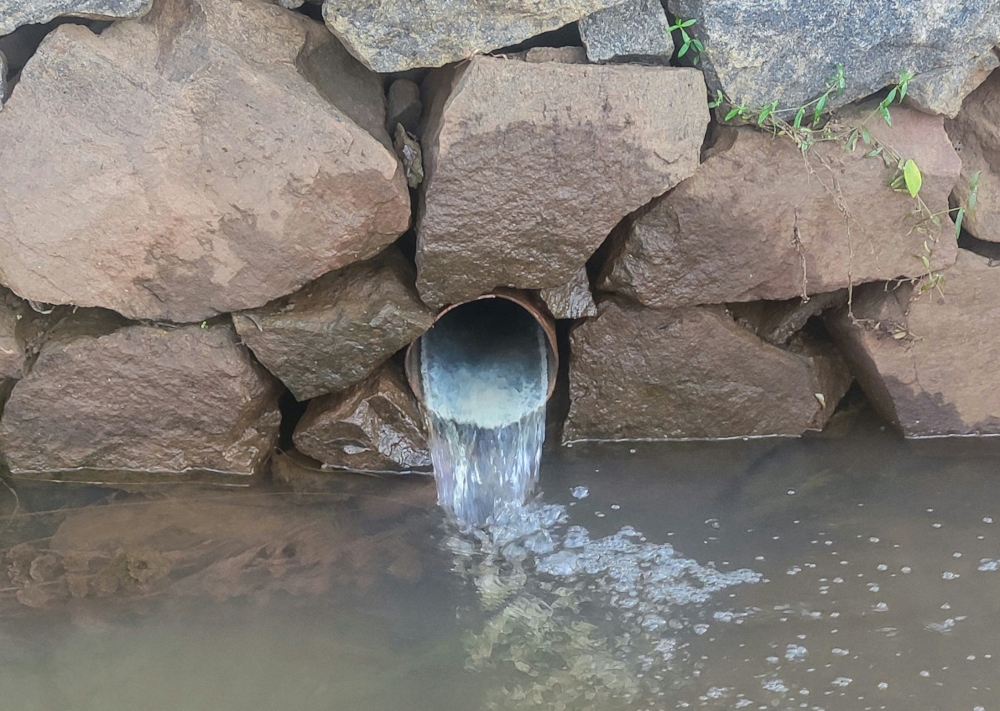
Our research is driven by a simple but important question: can we treat drilling wastewater in a way that is both effective and environmentally responsible, without relying heavily on additional chemicals?
To address this, we explored a nature-based approach using a salt-tolerant bacterium known as Aquibacillus halophilus. This bacterium naturally survives in harsh, saline environments similar to those found in drilling wastewater. Instead of introducing more chemicals into the system, we rely on the biological activity of the bacteria to interact with and remove heavy metals from the water.
The principle is straightforward. The bacteria can capture and reduce heavy metals present in the wastewater, while also helping to decrease water hardness. Because the organism is already adapted to high-salinity conditions, it can function effectively where many conventional treatment systems struggle. This makes the approach more suitable for real industrial environments, rather than controlled laboratory settings alone.
For the public, the significance of this approach lies in its practicality. Instead of relying on complex chemical treatments, this method offers a simpler alternative that can potentially be applied directly at the source of wastewater generation. It reduces the need for chemical additives and lowers the operational burden associated with wastewater treatment.
There are also clear economic implications. By reducing chemical consumption and simplifying treatment processes, industries can lower their operational costs. More importantly, treated wastewater may be reused for certain activities, such as well logging, instead of relying entirely on fresh water supplies. This not only reduces costs but also supports more efficient use of available resources.
From an environmental perspective, the benefits are equally important. Limiting the release of heavy metals into aquatic environments helps protect marine life and reduces the risk of long-term ecological damage. Because the treatment process itself is less dependent on additional chemicals, it also minimises the risk of introducing new forms of pollution during the cleanup process.
We do not suggest that biological methods alone will replace all existing treatment technologies. In many cases, a combination of approaches may still be necessary to meet specific regulatory or operational requirements. However, we believe that nature-based solutions can play a more significant role in improving how industrial wastewater is managed.
At its core, this research is about rethinking how we approach environmental challenges in industrial settings. Treating polluted water should not create further environmental strain. By using biological systems that are already adapted to harsh conditions, we can move towards treatment methods that are not only effective, but also more sustainable.
In the context of drilling operations, where wastewater is generated continuously, even small improvements in treatment methods can lead to meaningful long-term impact. Cleaner processes, lower costs, and reduced environmental risk are not separate goals. With the right approach, they can be achieved together.
* The authors are from the Department of Chemistry, Faculty of Science, Universiti Malaya, and may be reached at [email protected]
** This is the personal opinion of the writer or publication and does not necessarily represent the views of Malay Mail.


