


MARCH 29 — The petrochemical industry stands at a stark crossroads. For a century, its towering cracker plants have fed on ancient sunlight — oil and gas — to weave the very fabric of modern life: plastics, pharmaceuticals, textiles, and fuels. Now, as the imperative to decarbonise reshapes global economies, the industry is scrambling for new feedstocks.
Amidst the buzz around biomass, green hydrogen, and carbon capture, an old, resilient candidate is re-emerging: natural rubber.
At first glance, it seems a curious contender. We know it for tyres and gloves, not platform chemicals. Yet, natural rubber — primarily polyisoprene — is nothing less than a natural, renewable, and high-molecular-weight hydrocarbon polymer.
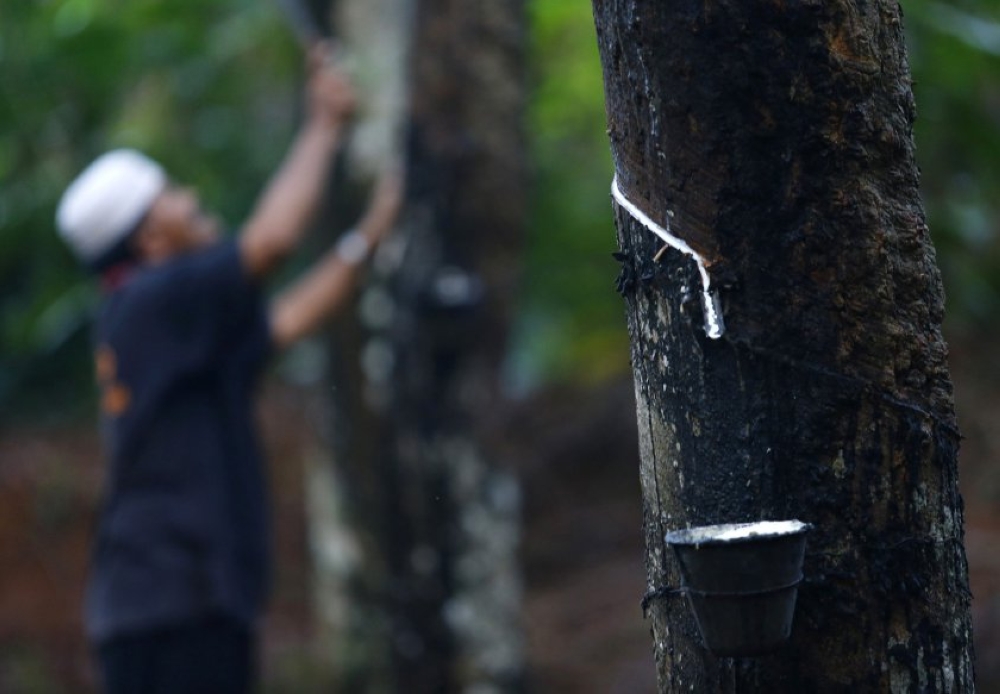
It is a tree’s masterpiece of chemical synthesis, produced sustainably by Hevea brasiliensis and alternative plants like guayule and dandelions.
The key to its promise lies in reversal: breaking down its long, tangled chains into manageable, simpler hydrocarbons like isoprene, limonene, and other terpenoids. This is not alchemy; it’s depolymerisation, and it could open a vibrant new chapter for a circular bio-economy.
The case for rubber is stronger than many realise. Unlike some biomass sources that compete directly with food crops, rubber cultivation, particularly when expanded with desert-adapted guayule or dandelions, can be developed on marginal lands. It represents a form of carbon capture — the tree sequesters CO₂ as it grows, and that carbon becomes embedded in materials, delaying its return to the atmosphere.
Furthermore, the existing global rubber plantation infrastructure offers a ready, scalable agricultural base. Most compellingly, the molecular structure of natural rubber provides a direct, natural pathway to a suite of valuable chemicals that currently require intensive, fossil-based processes to produce.
However, viewing natural rubber as a simple, green substitute for crude oil is a dangerous fantasy. The challenges are substantial. First, the energy economics of depolymerisation. Breaking down tough, vulcanised rubber, like from old tyres, is notoriously energy-intensive.
While breaking down raw latex or plantation scrap is easier, it still requires innovative, low-energy catalytic or biological processes to be truly sustainable. Second, the land-use question. Scaling up rubber for chemicals, on top of its existing demand for tyres, could risk deforestation or biodiversity loss if not managed with strict sustainability protocols. We cannot solve one ecological crisis by exacerbating another.
The most significant hurdle may be economic. For decades, the petrochemical industry has been optimised for ultra-cheap fossil feedstocks.
Natural rubber, as an agricultural product subject to climate, disease, and market volatility, cannot currently compete on price alone. Its viability hinges on two factors: putting a true price on the carbon cost of fossil feedstocks, and creating high-value, not just bulk, chemical applications.
This is where the vision gets exciting. Natural rubber shouldn’t be used to make cheap commodity plastics in the old, linear model.
Instead, its unique molecular architecture should be leveraged for specialty, high-performance applications — biodegradable elastomers for medical devices, premium resins for coatings, or tailored hydrocarbons for aviation fuels and fragrances. Imagine regional “biorefineries” co-located with rubber plantations, processing biomass into a spectrum of chemicals, closing loops, and creating new agricultural value chains.
The petrochemical industry’s future lies in diversification. There will be no single “winner” to replace oil. The future feedstock portfolio will include green hydrogen, captured CO₂, agricultural waste, and dedicated bio-crops. Natural rubber, as a natural hydrocarbon factory, deserves a dedicated place in that portfolio.
The path forward requires strategic investment. Public and private research must focus on efficient, low-energy catalytic cracking and enzymatic breakdown of rubber.
Policymakers must create frameworks that value renewable carbon and support the development of sustainable rubber crops for chemicals. The industry must look beyond tyres and see the molecule within.
Natural rubber is not a magic bullet. It is a sophisticated, natural chemical feedstock that asks us to think differently — to see a rubber tree not just as a source of latex, but as a sophisticated, solar-powered chemical plant.
By harnessing its potential intelligently and sustainably, we can help steer the chemical industry away from its fossil past and towards a more renewable, resilient, and circular future. The time to tap into this vein of liquid sunshine is now.
* The author is affiliated with the Tan Sri Omar Centre for STI Policy Studies at UCSI University and is an Adjunct Professor at the Ungku Aziz Centre for Development Studies, Universiti Malaya. He can be reached at [email protected].
** This is the personal opinion of the writer or publication and does not necessarily represent the views of Malay Mail.


