


MARCH 29 — The world is once again confronting a harsh and familiar truth: when the Gulf trembles, the global economy shudders.
The recent escalation of attacks on energy infrastructure across the Arabian Gulf — targeting liquefied natural gas facilities in Qatar and oil installations in Saudi Arabia and Kuwait — has exposed not only the fragility of global energy markets, but also the deep structural dependence that binds East Asia to this volatile region.
While major economies have responded by releasing hundreds of millions of barrels from strategic reserves, such measures — however historic — are ultimately palliative. They buy time.
They do not solve the problem. The deeper reality is far more unsettling: Gulf oil cannot be easily replaced, and East Asia cannot easily wean itself off it.
The first reason is brutally simple.
The world does not have enough spare capacity. Major producers outside the Gulf — from the United States to Brazil and Norway — are already pumping near their limits.
There is no hidden reservoir of supply waiting to be unleashed at short notice.
Oil production is not like turning on a tap; it is a capital-intensive, technologically complex process that requires years of planning, exploration, and infrastructure development.
Even if additional supply could be found, it cannot be redirected overnight. The global oil system is not merely about production volumes but logistics.
Tankers, shipping routes, insurance, port access, and refinery configurations all impose rigid constraints. Crude oil is not a uniform commodity; refineries in Asia are calibrated to process specific grades, many of which are sourced from the Gulf.
Substituting these inputs is not impossible — but it is neither immediate nor costless.
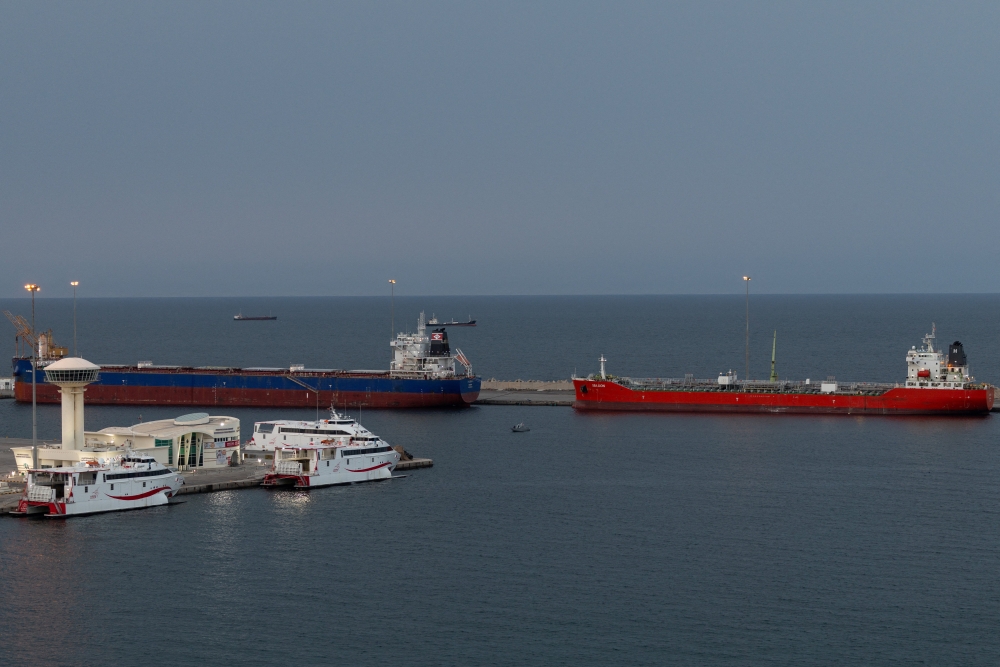
Then there is the sheer scale of the Gulf’s contribution.
Approximately one-fifth of global oil trade — around 20 million barrels per day — passes through the Strait of Hormuz.
No other region combines such volume, proximity, and export efficiency. Remove even a fraction of this flow, and the resulting gap is not merely large — it is systemic.
It reverberates across every sector of the global economy.
Compounding this is the Gulf’s central role in liquefied natural gas.
Qatar, in particular, sits at the heart of global LNG supply. Disruptions here do not just affect electricity generation; they cascade into petrochemicals, fertilizers, and industrial production. ?
The energy crisis thus becomes a food crisis, an industrial crisis, and ultimately, a developmental crisis.
For East Asia, this dependence is even more acute. Geography, paradoxically, is both a blessing and a trap.
The Gulf lies along established maritime routes that efficiently supply China, Japan, South Korea, and India. This proximity has, over decades, shaped supply chains, refinery investments, and long-term contracts.
It has created a system optimised for Gulf energy — and therefore vulnerable to its disruption.
At the same time, East Asia’s economic miracle has been built on energy imports.
With limited domestic hydrocarbon resources, the region’s industrial giants rely on external supplies to power manufacturing, transportation, and urban life.
The scale of this demand is immense. Factories, ports, data centres, and entire megacities depend on a steady, predictable flow of oil and gas.
This is not a dependency that can be unwound quickly. Infrastructure locks in behaviour.
LNG terminals, refining complexes, and petrochemical plants are designed around specific supply patterns. Contracts span decades.
Financial systems and subsidies are calibrated to stable energy prices. To shift away from the Gulf is not simply a matter of political will; it is a question of structural transformation.
Nor are alternatives readily available. Sourcing oil from further afield — whether from the Atlantic Basin or the Americas — introduces longer shipping times, higher transportation costs, and increased exposure to bottlenecks elsewhere. In times of crisis, these constraints become even more binding, as competition for limited supplies intensifies.
The result is a stark asymmetry: the Gulf may be geographically distant from East Asia, but economically, it is inseparable.
When disruptions occur in the Strait of Hormuz, the consequences are felt immediately in the price of fuel, the cost of food, and the stability of currencies across Asia. Inflation is not an abstract risk; it is a direct transmission mechanism of geopolitical conflict.
For Asean, and Malaysia in particular, this reality demands a sober reassessment. Malaysia may not be in a state of emergency, but it is far from insulated.
As a trading state deeply embedded in regional and global supply chains, it is acutely sensitive to energy price shocks. Subsidy burdens can escalate rapidly, fiscal space can narrow, and economic planning can be thrown off course.
More importantly, the current crisis is unlikely to be short-lived. Even if hostilities were to cease tomorrow, damaged infrastructure in the Gulf — especially in critical LNG hubs — would take years to fully restore.
This is not a temporary disruption but a potential five-year problem, one that could reshape energy markets and economic trajectories alike.
The lesson, therefore, is not merely about crisis management but strategic foresight. Strategic reserves can cushion the blow, but they cannot replace lost supply indefinitely.
Diversification of energy sources, investment in renewables, and regional cooperation on energy security must move from aspiration to urgency.
Yet even as the world seeks alternatives, it must confront an uncomfortable truth: the Gulf remains the beating heart of the global energy system.
Until that reality changes, every escalation in the region will carry global consequences.
In the end, oil is not just a commodity. It is a conduit of power, vulnerability, and interdependence. And in a world where East Asia’s growth is tethered to Gulf stability, the stakes could not be higher. The world is once again confronting a harsh and familiar truth: when the Gulf trembles, the global economy shudders.
The recent escalation of attacks on energy infrastructure across the Arabian Gulf — targeting liquefied natural gas facilities in Qatar and oil installations in Saudi Arabia and Kuwait — has exposed not only the fragility of global energy markets, but also the deep structural dependence that binds East Asia to this volatile region.
While major economies have responded by releasing hundreds of millions of barrels from strategic reserves, such measures — however historic — are ultimately palliative. They buy time.
They do not solve the problem. The deeper reality is far more unsettling: Gulf oil cannot be easily replaced, and East Asia cannot easily wean itself off it.
The first reason is brutally simple.
The world does not have enough spare capacity. Major producers outside the Gulf — from the United States to Brazil and Norway — are already pumping near their limits.
There is no hidden reservoir of supply waiting to be unleashed at short notice.
Oil production is not like turning on a tap; it is a capital-intensive, technologically complex process that requires years of planning, exploration, and infrastructure development.
Even if additional supply could be found, it cannot be redirected overnight. The global oil system is not merely about production volumes but logistics.
Tankers, shipping routes, insurance, port access, and refinery configurations all impose rigid constraints. Crude oil is not a uniform commodity; refineries in Asia are calibrated to process specific grades, many of which are sourced from the Gulf.
Substituting these inputs is not impossible — but it is neither immediate nor costless.
Then there is the sheer scale of the Gulf’s contribution.
Approximately one-fifth of global oil trade — around 20 million barrels per day — passes through the Strait of Hormuz.
No other region combines such volume, proximity, and export efficiency. Remove even a fraction of this flow, and the resulting gap is not merely large — it is systemic.
It reverberates across every sector of the global economy.
Compounding this is the Gulf’s central role in liquefied natural gas.
Qatar, in particular, sits at the heart of global LNG supply. Disruptions here do not just affect electricity generation; they cascade into petrochemicals, fertilizers, and industrial production. ?
The energy crisis thus becomes a food crisis, an industrial crisis, and ultimately, a developmental crisis.
For East Asia, this dependence is even more acute. Geography, paradoxically, is both a blessing and a trap.
The Gulf lies along established maritime routes that efficiently supply China, Japan, South Korea, and India. This proximity has, over decades, shaped supply chains, refinery investments, and long-term contracts.
It has created a system optimised for Gulf energy — and therefore vulnerable to its disruption.
At the same time, East Asia’s economic miracle has been built on energy imports.
With limited domestic hydrocarbon resources, the region’s industrial giants rely on external supplies to power manufacturing, transportation, and urban life.
The scale of this demand is immense. Factories, ports, data centres, and entire megacities depend on a steady, predictable flow of oil and gas.
This is not a dependency that can be unwound quickly. Infrastructure locks in behaviour.
LNG terminals, refining complexes, and petrochemical plants are designed around specific supply patterns. Contracts span decades.
Financial systems and subsidies are calibrated to stable energy prices. To shift away from the Gulf is not simply a matter of political will; it is a question of structural transformation.
Nor are alternatives readily available. Sourcing oil from further afield — whether from the Atlantic Basin or the Americas — introduces longer shipping times, higher transportation costs, and increased exposure to bottlenecks elsewhere. In times of crisis, these constraints become even more binding, as competition for limited supplies intensifies.
The result is a stark asymmetry: the Gulf may be geographically distant from East Asia, but economically, it is inseparable.
When disruptions occur in the Strait of Hormuz, the consequences are felt immediately in the price of fuel, the cost of food, and the stability of currencies across Asia. Inflation is not an abstract risk; it is a direct transmission mechanism of geopolitical conflict.
For Asean, and Malaysia in particular, this reality demands a sober reassessment. Malaysia may not be in a state of emergency, but it is far from insulated.
As a trading state deeply embedded in regional and global supply chains, it is acutely sensitive to energy price shocks. Subsidy burdens can escalate rapidly, fiscal space can narrow, and economic planning can be thrown off course.
More importantly, the current crisis is unlikely to be short-lived. Even if hostilities were to cease tomorrow, damaged infrastructure in the Gulf — especially in critical LNG hubs — would take years to fully restore.
This is not a temporary disruption but a potential five-year problem, one that could reshape energy markets and economic trajectories alike.
The lesson, therefore, is not merely about crisis management but strategic foresight. Strategic reserves can cushion the blow, but they cannot replace lost supply indefinitely.
Diversification of energy sources, investment in renewables, and regional cooperation on energy security must move from aspiration to urgency.
Yet even as the world seeks alternatives, it must confront an uncomfortable truth: the Gulf remains the beating heart of the global energy system.
Until that reality changes, every escalation in the region will carry global consequences.
In the end, oil is not just a commodity. It is a conduit of power, vulnerability, and interdependence. And in a world where East Asia’s growth is tethered to Gulf stability, the stakes could not be higher.
* Phar Kim Beng, PhD is the Professor of Asean Studies at International Islamic University of Malaysia and Director of Institute of International and Asean Studies (IINTAS).
** This is the personal opinion of the writer or publication and does not necessarily represent the views of Malay Mail.


