


MARCH 5 — Ramadan evenings in Malaysia have a particular, well, texture.
You can feel it in the traffic around 5.30pm. Not angry traffic. Not quite impatient. Just heavier, as if the whole city is leaning forward slightly.
Cars and motorbikes line up near Ramadan bazaars. Plastic bags fog up with steam. The smell of grilled ayam percik drifts across parking lots.
Someone is counting small change under a fluorescent light. Someone else is negotiating over the last packet of roti john. Or tepung pelita.
And by seven o’clock, the rush softens into anticipation. At home, plates are arranged earlier than usual.
Dates (or whatever dessert Khairul Aming is suggesting that day) sit at the centre of the table. Drinks are poured but not touched. Conversations slow down.
Even the television volume seems lower. The azan is still a few minutes away, but everyone is already waiting for it.
Then it happens.
A short call to prayer over the radio, or from a nearby surau and mosque. And in that brief moment, millions, perhaps more, pause together.
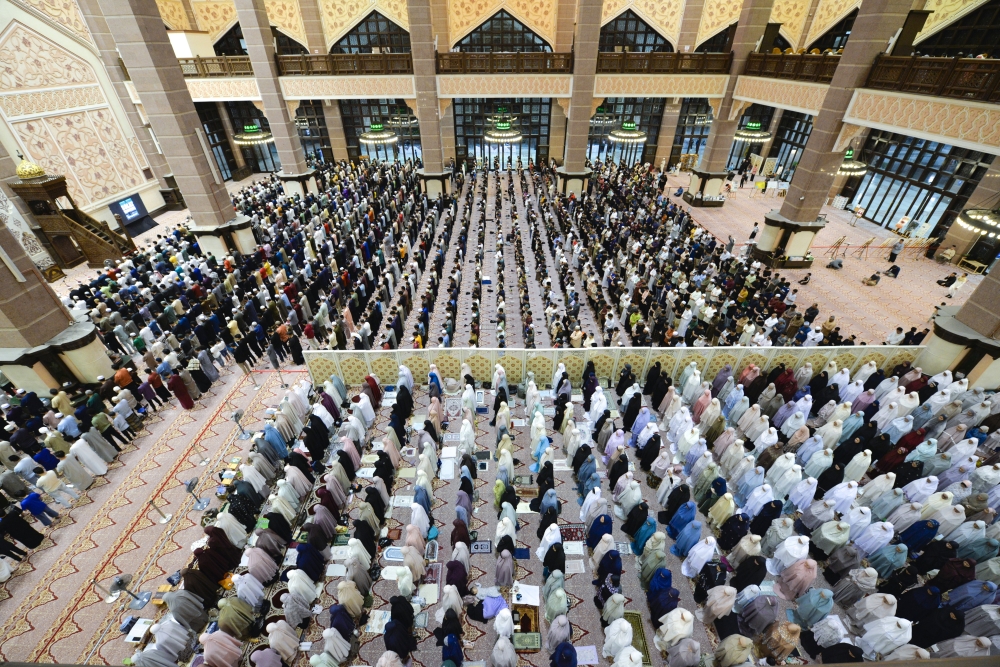
No announcement. No co-ordination meeting. No countdown clock. Just a shared understanding that it is time.
That synchronised pause has always fascinated me. We live different lives. Work different jobs. Carry different worries. But for a few seconds each evening in Ramadan, the country slows in unison.
A delivery rider pulls over for a sip of water. A family at a mamak shop reaches for dates at the same time. A student alone in a hostel room opens a package of food quietly. Across neighbourhoods and cities, hunger turns into gratitude almost simultaneously.
Ramadan is often described in terms of discipline and restraint. And rightly so. But there is another dimension that feels uniquely Malaysian.
The evenings become communal, even when we are physically apart.
The bazaar crowd, the shared recipes, the exchange of Ramadan gifts between friends, colleagues, and neighbours. Even the familiar complaint about traffic and the price of food at Ramadan bazaars feels almost ritualistic.
And we know this rhythm.
We know that after Maghrib, there will be that brief window of relief. After that, perhaps tarawih prayers, perhaps homework, perhaps simply rest. The day that began before dawn now folds into a slower, softer night.
What strikes me more now, as I grow older, is how rare synchronised stillness has become in the modern world.
Our timelines are fragmented. Our attention is scattered. We consume news at different hours. We argue in comment sections at different speeds. Even within the same household, everyone can be living in separate digital worlds.
And yet during Ramadan, the evenings resist that fragmentation. At the appointed minute, phones are set aside. Conversations pause. The body listens. There is a short, shared quiet before the first sip. It is not dramatic. It is not theatrical. It is deeply ordinary. But it binds.
Perhaps that is why Ramadan evenings feel slower, even when they are busy. They are structured around anticipation and release. Around waiting and gratitude. Around a shared hunger that does not isolate, but connects.
In other months, we eat whenever it suits us. Alone in cars. Between meetings. While scrolling. Without noticing. During Ramadan, food regains its shape. It has a time. A place. A beginning. Even water feels deliberate.
And then there is the sound.
The hum of traffic thinning after Maghrib. The soft recitation from mosques at night. The clatter of dishes being washed later than usual. The quieter streets close to midnight. Ramadan evenings carry a different frequency, one that is not louder, but deeper.
It reminds me that community is not always built through grand declarations. Sometimes it is built through shared pauses. Through knowing that at this minute, others are doing the same thing you are doing. Through a rhythm that repeats daily for a month, steady and dependable.
In a time when so much feels accelerated and fragmented, these slower evenings feel like an anchor. Not because they solve anything. But because they remind us that we are not fasting alone. Not waiting alone. Not breaking alone.
The azan comes. The date is eaten. The water is swallowed. The city exhales.
And for a moment, we move at the same pace.
* Prof Ir Dr Nahrizul Adib Kadri is a professor of biomedical engineering at the Faculty of Engineering, the Director of UM Press, and the Principal of Tuanku Bahiyah Residential College, Universiti Malaya. He may be reached at [email protected]
** This is the personal opinion of the writer or publication and does not necessarily represent the views of Malay Mail.


