


MARCH 4 — Just seventy-two hours after the United States and Israel began bombing Iran, what has been termed ‘Operation Epic Fury’ has expanded with astonishing speed.
What began as a pre-emptive strike has metastasised into a regional conflagration with global reverberations.
The scale is staggering.
At least eleven countries are now directly or indirectly entangled in the crisis — from the core triangle of United States, Israel and Iran, to states hosting American bases or lying within missile range.
The shockwaves have travelled swiftly through the Gulf, into the Levant, across the Mediterranean, and into Europe’s energy markets.
The speed of escalation suggests that the war was never meant to remain contained.
A region on edge
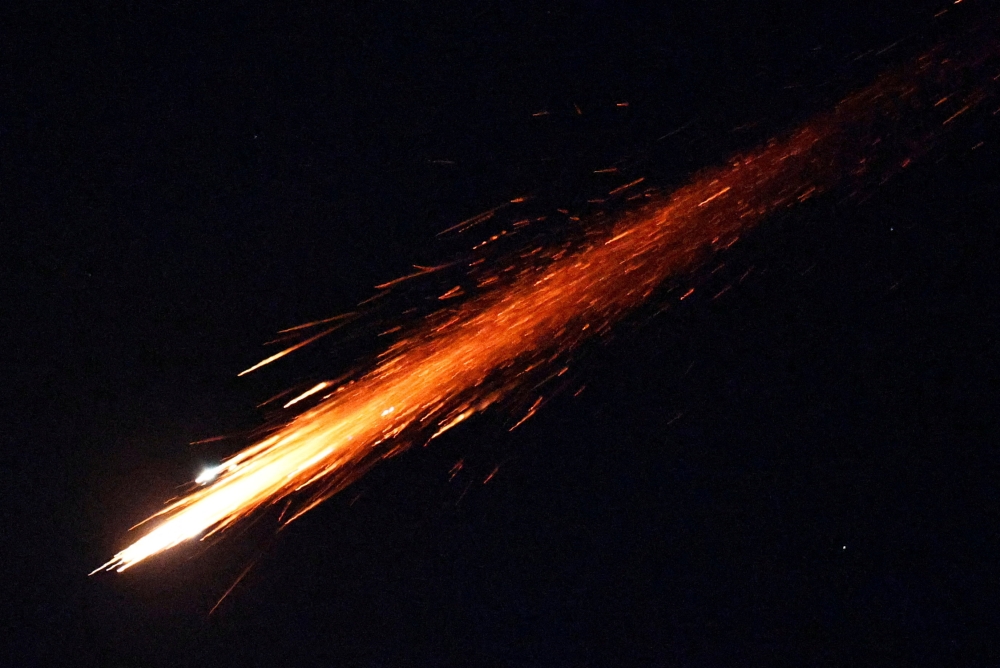
Within hours of the initial strikes, retaliatory missile launches targeted U.S. facilities across the region.
The Strait of Hormuz — through which nearly a fifth of global oil flows — has once again become a geopolitical choke point. Even President Donald Trump has suggested the need of US Navy to escort the oil tankers out of the Straits of Hormuz.
Energy prices spiked. Insurance premiums for shipping surged. Airlines began rerouting flights.
Europe, still struggling with the aftershocks of the Ukraine conflict and its decoupling from Russian gas, now confronts renewed energy insecurity.
Asia, especially major importers such as Japan, South Korea and China, faces the spectre of inflationary shocks.
The Middle East, already burdened by proxy wars and sectarian fractures, is now unified in anxiety if not in alliance.
The geography of escalation
This war is not merely military; it is systemic.
Missile exchanges in the Gulf ripple into European markets. Drone strikes destabilize shipping lanes. Cyberattacks threaten financial infrastructure.
Even distant states feel the tremors through commodity prices and currency volatility.
The most dangerous dimension is psychological.
Nationalism in Iran has historically proven resilient when confronted by external attack.
Attempts at coercive decapitation or regime humiliation tend to consolidate rather than fracture internal cohesion.
History teaches us that wars intended to be surgical often become strategic quagmires.
The danger lies not simply in battlefield outcomes but in miscalculation.
The risk of a wider war
There are at least three escalatory ladders that could turn this regional war into something far more catastrophic:
First, horizontal expansion — additional states entering the conflict either through alliance commitments or retaliatory spirals. Such as England, France and Germany.
Second, vertical escalation — the intensification of weapon systems deployed, potentially involving long-range strategic assets.
Third, unconventional domains — cyber warfare, maritime sabotage, or asymmetric attacks beyond the Middle East.
The mere perception that the war could spread to American soil, or into Europe, creates a climate of fear that markets amplify and political actors exploit.
In such an environment, restraint becomes politically costly — even though it is strategically essential.
Strategic sobriety versus strategic hubris
Wars often begin with clarity of purpose but evolve into contests of prestige and endurance.
The stated objectives may revolve around degrading nuclear capabilities or deterring missile programs.
Yet as demands expand — dismantlement of broader military infrastructure, severing of proxy relationships, total compliance — negotiations become ever more elusive.
Strategic sobriety demands recognition of limits.
No power, however advanced, can completely eliminate another state’s technological knowledge or nationalist will through bombardment alone.
Military operations can degrade assets; they cannot extinguish identity.
Moreover, prolonged instability in the Gulf would wound not only adversaries but allies and neutral trading states alike.
For countries such as Malaysia and other Asean members, the calculus is sobering. Energy importers will feel price shocks.
Export-dependent economies will confront slowing demand. Financial markets in emerging Asia may face volatility as investors seek safe havens.
Thus, what appears distant geographically is economically proximate.
Lessons from history
Modern history is littered with conflicts that escalated beyond original expectations.
Short wars become long wars.
Limited objectives become open-ended commitments.
Regional crises morph into systemic confrontations.
When multiple nuclear-capable states are indirectly involved, the margin for error narrows dramatically.
Misinterpretation of a radar signal, a cyber intrusion misattributed, or an errant missile could trigger retaliatory cycles that leaders never intended.
The very speed of ‘Operation Epic Fury’ suggests compressed decision-making; putatively supported by artificial intelligence.
Compressed decisions heighten the risk of miscalculation.
Markets as early warning systems
Financial markets often serve as barometers of geopolitical risk.
Oil futures, currency fluctuations and equity sell-offs are not merely economic events; they are signals of collective anxiety.
When insurance underwriters adjust war-risk premiums within hours, they reveal how fragile stability truly is.
If maritime routes close or energy infrastructure is sabotaged, the ripple effects will be global.
From Frankfurt to Tokyo, from Kuala Lumpur to Jakarta, policymakers will confront inflationary pressures, currency volatility and political discontent.
Thus, what begins as a strategic strike may end as a worldwide economic storm.
The imperative of de-escalation
Strategic sobriety requires three immediate steps.
First, establish backchannel communication to prevent miscalculation.
Even adversaries must communicate to avoid catastrophe.
Second, clarify limited objectives. Ambiguity breeds escalation; defined end-states create off-ramps.
Third, involve neutral mediators capable of facilitating indirect dialogue.
The alternative is a spiral in which each retaliatory strike justifies the next.
No state, however powerful, benefits from a Middle East engulfed in perpetual war.
Energy disruption alone would punish the global economy. Political radicalization would follow. China has called for peace and cease fire not unlike Malaysia and the rest of the world that do not want the conflicts to spiral out of control.
A moment at the brink
The world now stands at a precarious threshold.
‘Operation Epic Fury’ has demonstrated extraordinary reach and speed. Yet reach without restraint can produce unintended conflagration.
The Middle East has often served as the epicentre of geopolitical tremors.
If this war continues unchecked, it risks becoming the livewire that electrifies dormant rivalries elsewhere.
Strategic sobriety is not weakness.
It is wisdom.
The choice before the principal actors is stark: escalate toward systemic chaos or step back from the brink.
History will judge not only the decision to strike but the courage to restrain.
In moments such as these, prudence is the highest form of strength.
* Phar Kim Beng is professor of Asean Studies and director of the Institute of International and Asean Studies, International Islamic University of Malaysia.
** This is the personal opinion of the writer or publication and does not necessarily represent the views of Malay Mail.


