














NOVEMBER 7 — Although Malaysia has about 4,675km of coastline length and an Exclusive Economic Zone (EEZ) area of more than 334,600 square km, Malaysia’s current maritime surveillance relies heavily on Beechcraft Super King Air B200T and CN-235s operated by the RMAF and MMEA.
While functional, these assets lack modern sensors, data-link capabilities, and mission endurance critical to today’s complex maritime security environment.
In fact, the Beechcraft Super King Air B200T, which first entered service in 1994, was planned to be retired by 2024 after these aircraft reached their operational lifespan.
Seven CN-235s were originally operated as airlifters in 1998, with three upgraded to be Maritime Surveillance Aircraft between 2022 and 2024 under the US Maritime Security Initiative.
In recent discussions during Prime Minister Datuk Seri Anwar Ibrahim’s visit to Italy, one of the focal points was the potential procurement of Italian-made maritime patrol aircraft (MPA).
Although not explicitly named during the visit by the Prime Minister in Italy last week, Defence Minister Datuk Seri Mohamed Khaled Nordin announced two MPAs will be delivered to Malaysia starting from 2026, designated P-72M, based on the widely used commercial ATR 72-600 aircraft.
Italy’s defence industry is among the most reputable in the world. One of the most significant Italian defence footprints in Malaysia is through AgustaWestland, now part of Leonardo, which has supplied multiple generations of helicopters to Malaysian authorities.
Over the past two decades, Leonardo has deepened its local partnerships, particularly in helicopter maintenance, pilot training, and logistics support. The company has positioned Malaysia as a potential regional hub for rotary-wing platforms, not only strengthening the defence readiness of Malaysia but also fostering local aerospace development and workforce upskilling.
Over the past decade, several defence officials and Cabinet members have repeatedly raised alarms over the limited maritime surveillance coverage, especially across the vast EEZ in the South China Sea and the Strait of Malacca.
The MPAs offer a modern and multi-role solution — from environmental monitoring, border surveillance, and search-and-rescue (SAR) missions to conducting anti-submarine warfare and anti-surface warfare — which can also directly address these gaps, offering long-range, real-time maritime domain awareness with minimal escalation risk.
However, according to the Capability Development Plan 2055 (CAP55), Malaysia shall need at least six MPAs.
The acquisition of the Leonardo P-72M MPAs presents Malaysia with more than just a defence upgrade, because it also offers a unique opportunity for Malaysia to play a more prominent, stabilising role in safeguarding Asean’s maritime domain.
With regional waters challenged by piracy, illegal fishing, and transnational crimes, there is increasing urgency for collective maritime vigilance.
Assuming that the P-72M is not much different from the existing ATR-72MP, both have a range of approximately 4,000km and endurance of eight to nine hours in the sky. Obviously, two P-72Ms are still insufficient to secure the maritime interests of Malaysia 24/7.
Mathematically, at least one more is required.
Nonetheless, the advanced surveillance capabilities and NATO standards of the P-72M still enable Malaysia to better support regional initiatives, for example, the Eyes-in-the-Sky (EiS) trilateral patrol programme.
EiS is a multilateral cooperation between Malaysia, Indonesia, and Singapore launched in 2005 to secure the Strait of Malacca. Enhanced ISR (intelligence, surveillance, reconnaissance) capabilities from the P-72M allow Malaysia to contribute more robustly to EiS through greater data sharing, coordination, and early threat detection.
Furthermore, as other Asean members such as Indonesia, the Philippines, Vietnam, and Thailand operate maritime patrol aircraft of varying capabilities, Malaysia can potentially act as a central hub for joint surveillance exercises and maritime security cooperation — amplifying its influence in the region.
That potential can only be materialised provided the void of insufficiencies of MPAs is filled by long-endurance UAVs for maritime surveillance.
There are limited choices available.
But the MQ-9B SeaGuardian and Baykar Bayraktar Akıncı from the US and Türkiye, with endurance of up to 40 hours and 24 hours respectively, are suitable for Malaysia.
In the broader context of Indo-Pacific stability, acquisition of the Leonardo ATR 72MP gives Malaysia the capability to deter grey-zone threats and uphold freedom of navigation without provoking military escalation.
The aircraft enhances Malaysia’s ability to monitor conventional illicit maritime activities such as unregulated fishing, smuggling, and covert incursions — particularly in the South China Sea.
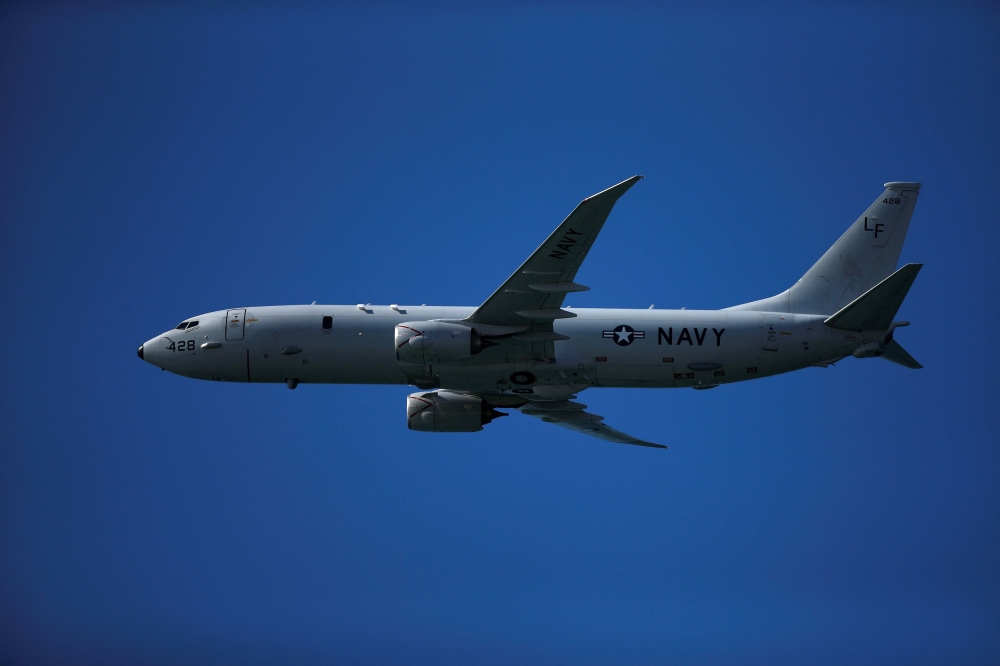
Strategically, the P-72M also aligns Malaysia’s maritime surveillance architecture with Australia, which is a key regional partner whose P-8A Poseidon fleet and regional maritime engagement have been shaping Asean’s defence dialogue.
In addition, Australia’s active support for capacity building, technical training, and joint exercises — such as through the Asean-Australia Maritime Exercise (Aamarlex) — can potentially complement the strengths of the P-72M.
By improving interoperability with Australian and other NATO-compatible assets, Malaysia has greater access to regional multilateral efforts while preserving its non-aligned, diplomacy-first doctrine.
Thus, the MPAs not only serve as a sovereign asset but also as a regional bridge to advance Malaysia’s partnership in Indo-Pacific maritime governance.
They bring opportunities for training, joint development, and technology transfer from Italy, ensuring that various authorities gain not only state-of-the-art capabilities but also the human capital for sustainable operation and regional leadership.
In conclusion, securing the nation’s maritime governance and interests cannot rely only on the P-72M or long-endurance UAVs alone, but a combination of different assets, as well as resources allocated for well-trained personnel, facilities, and maintenance of the assets.
Of course, the acquisition of the P-72M is considered one of the most strategic choices to strengthen Malaysia’s maritime surveillance and security posture. Its proven operational effectiveness and interoperability make it ideal to meet the urgent need for defence modernisation.
To maximise these benefits, the government needs to demonstrate the political determination to ensure transparent and efficient procurement processes, robust long-term support, and engagement with local industries that can elevate their aerospace capabilities.
When executed with foresight and strategic planning, the MPAs could become the cornerstone of Malaysia’s integrated maritime strategy, enhancing the resilience of the nation, regional credibility, and global partnerships.
* Phar Kim Beng, PhD, is a Professor of Asean Studies and Director of the Institute of Internationalization and Asean Studies (IINTAS) at the International Islamic University of Malaysia. Jitkai Chin, PhD, PEng, is an Associate Professor in the Department of Chemical Engineering at Universiti Teknologi Petronas.
** This is the personal opinion of the writer or publication and does not necessarily represent the views of Malay Mail.