


NOVEMBER 2 — When Asean convenes its summits—from the Asean Regional Forum (ARF) to the East Asia Summit (EAS)—the leaders often speak of “peace, stability, and prosperity”. Yet, few ask a deeper question: what kind of security framework actually guides these proceedings?
The answer, though seldom stated outright, lies in a unique blend of realism, regionalism, and constructivism—a framework best understood through Barry Buzan’s Copenhagen School of Security Studies.
The Copenhagen School, led by Barry Buzan, Ole Wæver, and Jaap de Wilde, transformed the way we think about security.
Instead of viewing it merely through tanks and treaties, they saw it as multidimensional and discursive—something that extends to economics, politics, society, and even the environment. Asean, often dismissed as slow-moving or consensus-bound, has in fact been quietly practicing this Comprehensive Security Framework for decades.
A broader understanding of security
The traditional notion of security—rooted in realism—centres on protecting the state from external threats.
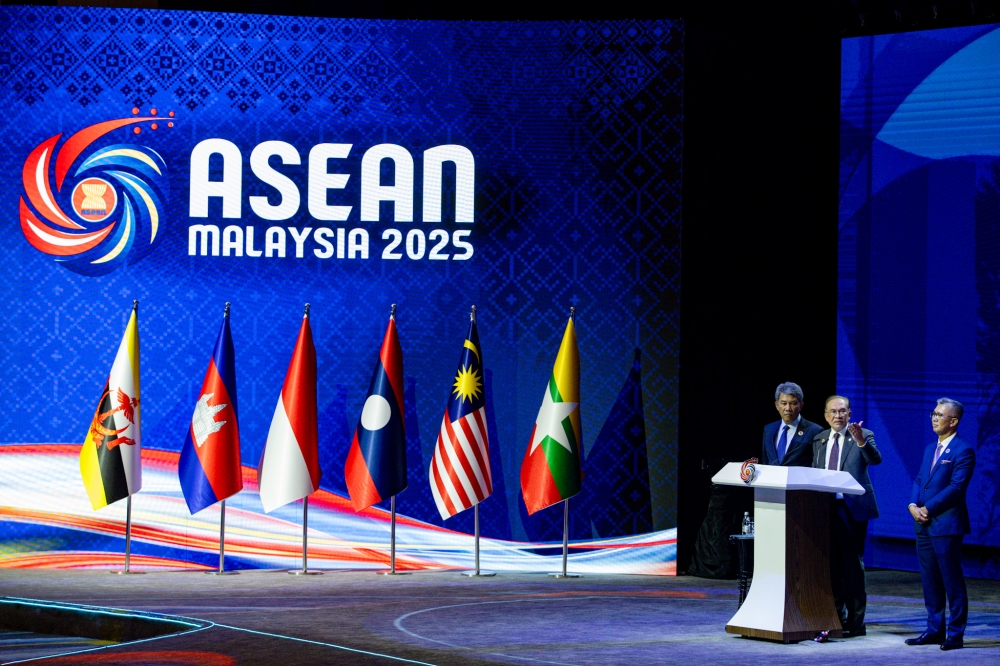
But Buzan expanded this to five sectors: military, political, economic, societal, and environmental. Asean’s summits, from Kuala Lumpur to Seoul, now routinely address all five.
Whether it’s maritime disputes, AI regulation, climate resilience, or pandemic recovery, the region’s leaders understand that peace is impossible if economies crumble or societies fracture.
The Asean Political-Security Community (APSC) is built on this idea. It integrates not only military dialogue but also human security—covering migration, digital safety, and disaster relief.
This multidimensional understanding is precisely what makes Asean a civilian power bloc rather than a military alliance.
Regional security complex theory in action
Buzan’s Regional Security Complex Theory (RSCT) argues that security threats are clustered geographically. Nations are most affected by their neighbours’ stability—or instability.
For South-east Asia, this is undeniably true. A coup in Myanmar, clashes along the Thai-Cambodian border, or maritime tensions in the South China Sea all reverberate across the region.
That is why Asean insists on “regional solutions to regional problems.” Its summits are not mere talk shops but mechanisms to contain insecurity within the region’s political space. This is RSCT in practice—a web of interdependence that recognises shared vulnerability.
Securitisation and desecuritisation — the Asean way
The Copenhagen School’s concept of securitization explains how political actors declare something a threat to justify extraordinary measures. Conversely, desecuritisation returns it to normal politics, encouraging negotiation and compromise. Asean’s style of diplomacy—dialogue, consensus, and non-confrontation—embodies this principle.
When leaders discuss South China Sea tensions, Asean deliberately desecuritises the issue. It avoids dramatizing it as an existential war risk, choosing instead to handle it through legal, diplomatic, and institutional means.
The same applies to cyber threats, trafficking, or even the Rohingya crisis—Asean turns potential flashpoints into managed processes rather than militarized confrontations.
This preference for quiet diplomacy and preventive dialogue is not weakness; it is strategic.
It prevents external powers from exploiting divisions while preserving regional autonomy—a hallmark of Buzan’s constructivist logic, where how issues are framed determines whether they escalate or resolve.
Comprehensive security and human resilience
Asean’s leaders have consistently emphasised “comprehensive security”—a term that captures Buzan’s multi-sectoral vision. It acknowledges that regional peace depends as much on economic resilience and environmental stewardship as on defence spending.
The Asean Outlook on the Indo-Pacific (AOIP), for instance, redefines the Indo-Pacific not as a military theatre but as a space for cooperation.
Similarly, Asean’s climate initiatives and digital governance frameworks recognize that cybersecurity and sustainability are no less vital to survival than territorial integrity.
This balance between sovereignty and solidarity reflects Asean’s genius: it adapts to the shifting nature of threats without abandoning its core principles.
In Buzan’s terms, Asean maintains a “regional security community” that privileges process over coercion and trust over threat perception.
The enduring relevance of the Copenhagen School
Critics often call Asean indecisive, but this misunderstands its method. The Asean way—of dialogue, consensus, and comity—is not paralysis but institutionalised desecuritisation.
It is the ability to contain conflict through words, not weapons. It recognises that in South-east Asia’s complex mosaic of histories and hierarchies, the loudest voice is seldom the wisest.
Barry Buzan’s framework reminds us that security is about perception as much as power.
The summits in Kuala Lumpur, Jakarta, or Gyeongju succeed not by producing hard treaties but by stabilising expectations, reducing fear, and keeping communication open.
That is the essence of a Comprehensive Security Framework: one that integrates economics, environment, and identity into a single conversation on peace.
Conclusion: Asean’s quiet power
In an age of great-power rivalry and global volatility, Asean’s model of comprehensive, regional, and desecuritised security may be the most pragmatic blueprint for peace.
The Copenhagen School helps explain why. It captures the spirit of a region that has learned—through history and humility—that real security is not achieved by confrontation but by constant consultation.
Asean’s summits, therefore, are not mere gatherings. They are a living experiment in how to build security without an arms race, trust without coercion, and cooperation without domination. Barry Buzan gave the theory. Asean gives it life.
* Phar Kim Beng is professor of Asean Studies and Director, Institute of International and Asean Studies (IINTAS), IIUM.
** This is the personal opinion of the writer or publication and does not necessarily represent the views of Malay Mail.


