


NOV 1 — When Beijing announced that it would extend a reprieve on rare earth element (REE) exports to the United States — without lifting its broader export restrictions — the move carried a strategic signal far deeper than mere commodity diplomacy.
It suggested that China no longer interprets Make America Great Again (Maga) as a zero-sum crusade against its rise. Rather, it recognised that limited cooperation on critical minerals can serve both sides in stabilising an otherwise fraught geopolitical landscape.
This is not a surrender, but a tactical détente. In geopolitical terms, a reprieve is as good as a message: “Let us disagree less, and trade more — at least for now.”
A reprieve, not a rollback
The fine print matters. Beijing’s decision did not revoke export controls on certain REEs, but it ensured that the US would not face immediate shortages in the advanced manufacturing of semiconductors, electric vehicles, and defence systems.
This subtle distinction maintains China’s leverage while avoiding escalation. It gives Washington breathing space, and grants China goodwill points ahead of the Apec Summit in Gyeongju, South Korea, where Presidents Trump and Xi Jinping are expected to engage directly.
By refraining from tightening the tap, Beijing projected itself as a rational actor. It reframed its stance from being reactive to constructive — showing that China, too, is capable of restraint, not retaliation.
Maga’s second wind is no longer anti-China
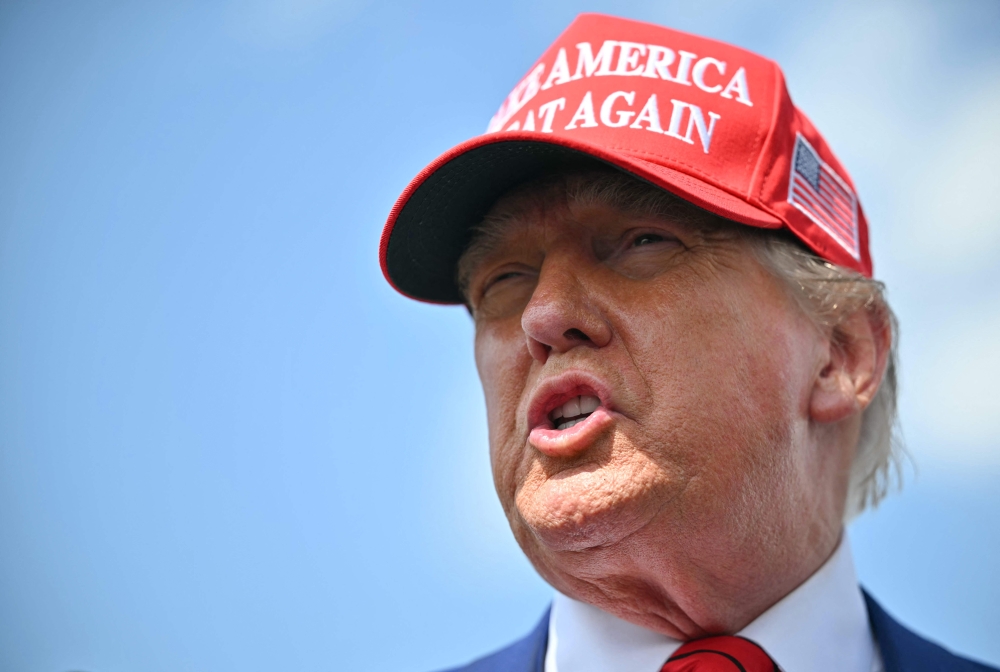
President Donald Trump’s second term under Maga 2.0 has defied both hawkish and dovish expectations. His economic nationalism remains fierce, yet increasingly transactional rather than confrontational.
What Beijing has discerned is that Trump’s domestic focus on “bringing jobs home” does not automatically mean “keeping China out.”
The logic is simple: a booming US economy still needs a stable Chinese supply chain, particularly for rare earths. These 17 critical elements are the lifeblood of high-tech innovation, powering everything from precision missiles to 5G infrastructure. America cannot decouple without derailing its own industrial revival.
Hence, China’s reprieve can be seen as a geo-economic olive branch — a recognition that a pragmatic Maga agenda can coexist with Chinese technological ascendancy.
Strategic recalibration before Apec
The reprieve came just as trade negotiators from both powers were fine-tuning a quiet agreement reached earlier in Kuala Lumpur, facilitated by Malaysia’s deft chairmanship of the Asean and Related Summits.
That engagement helped both sides reaffirm the principle of “strategic patience with calibrated cooperation.”
By maintaining rare-earth exports, China has positioned itself as a responsible partner ahead of Apec — signalling its willingness to prevent further shocks to the global supply chain. The reprieve is not a token gesture; it is a precursor to a new equilibrium.
For the United States, it relieves immediate pressure on its defence-industrial base. For China, it sustains export revenues while preserving its position as the world’s indispensable REE supplier. Both sides gain, albeit cautiously.
The Asean connection
Amid these global manoeuvres, Asean remains the silent stabiliser. Malaysia, Vietnam, and Thailand are fast emerging as secondary REE refining and processing hubs, reducing over-reliance on Chinese sources while keeping the region integrated into both the US and Chinese industrial chains.
Malaysia’s rare earth extraction projects in Kedah and Perak, supervised under strict environmental frameworks, have attracted attention from US clean-energy firms seeking alternatives without confrontation.
Likewise, Vietnam’s growing REE exports — with Japan’s support — suggest an evolving “triangle of trust” that keeps Asean central in balancing resource security with ecological integrity.
In this sense, the rare-earth reprieve is not only a Sino-US moment; it is an Asean validation. Southeast Asia’s ability to remain open to both superpowers has given global supply chains a neutral buffer in an era of weaponised interdependence.
The power of reprieve diplomacy
Reprieve diplomacy, as exemplified by Beijing’s calculated pause, is fast becoming a new lexicon of statecraft. It blends realism with restraint — giving rivals time to cool off without conceding ground.
China’s policymakers have likely concluded that full retaliation against Maga policies would risk alienating not only the US but also Asean, Europe, and the Global South, who rely on Chinese exports for industrial transition.
By offering a reprieve, Beijing demonstrated that power today is best exercised through precision, not punishment.
Trump, too, has found an unexpected advantage in this development. His domestic narrative — that American manufacturing can rise without triggering another trade war — gains traction. It allows him to claim that his policies have “bent but not broken” global trade dynamics, while China’s strategic calm reinforces that the world need not fear Maga’s return.
Global implications
The ripple effects of this reprieve extend beyond bilateralism. Europe, Japan, and South Korea — all reliant on rare earth imports — are watching closely. A stable US-China trade corridor on REEs means lower volatility for global industries from renewable energy to AI.
Moreover, it offers breathing space for emerging green economies, particularly within Asean, to expand into downstream sectors such as battery production, chip packaging, and electric mobility.
The reprieve could thus become a template for conflict management in critical resource diplomacy — demonstrating that mutual dependency, when handled maturely, can prevent resource nationalism from spiralling into trade wars.
Between strategic patience and tactical competition
Still, optimism must be tempered. A reprieve is temporary by design. The geopolitical trust deficit between Washington and Beijing remains wide, especially over Taiwan, digital sovereignty, and military deployments in the South China Sea.
Yet what matters is that both sides are learning to pause before escalation — a rare quality in today’s fractured world order.
In Beijing’s calculus, granting breathing space to the US aligns with its own economic recovery goals and its desire to keep Asean firmly within its economic orbit.
For Washington, the pause allows American industries to recalibrate supply chains while maintaining diplomatic engagement through multilateral platforms like Apec and the East Asia Summit.
The future of rare earth diplomacy
As the world edges toward 2026, rare earths will remain the litmus test of great-power coexistence. The reprieve could evolve into structured cooperation — perhaps even a Sino-US REE Council, akin to an OPEC-style framework for technological minerals.
Such an arrangement would reflect the new pragmatism underpinning global order: competition without catastrophe.
For now, China’s gesture confirms one thing — Maga 2.0 may not be against China’s interest after all.
It may, paradoxically, be the pressure valve through which both nations rediscover the value of interdependence.
And if Asean continues to serve as the convener of quiet understandings — from Kuala Lumpur to Gyeongju — the reprieve could mark not the end of rivalry, but the rebirth of responsibility in global trade governance.
* Phar Kim Beng is professor of Asean Studies and Director, Institute of International and Asean Studies (IINTAS), IIUM.
** This is the personal opinion of the writer or publication and does not necessarily represent the views of Malay Mail.


