


OCTOBER 21 — As Malaysia prepares to draw the curtain on its Asean Chairmanship and hosts the East Asian Summit (EAS) on October 28 2025, the region stands at a crossroads.
Hundreds of senior-official and ministerial meetings have debated everything from ceasefire monitoring to energy cooperation.
Yet one issue, too often dismissed as peripheral, now sits at the heart of regional stability and moral legitimacy — the digital scamming epidemic.
If Asean wants to end the Summit on a high, it must show collective resolve to stamp out this cancer that corrodes economies, destroys lives, and undermines trust in governance.
The new enemy within
Across South-east Asia, from northern Myanmar’s border towns to Cambodia’s coastal enclaves, sprawling scam compounds have become a form of modern slavery. Victims from across Asia — Chinese, Thais, Malaysians, Filipinos, Vietnamese — are lured with promises of online jobs, then trapped behind barbed wires, beaten, and forced to operate fraudulent crypto or love-scam networks.
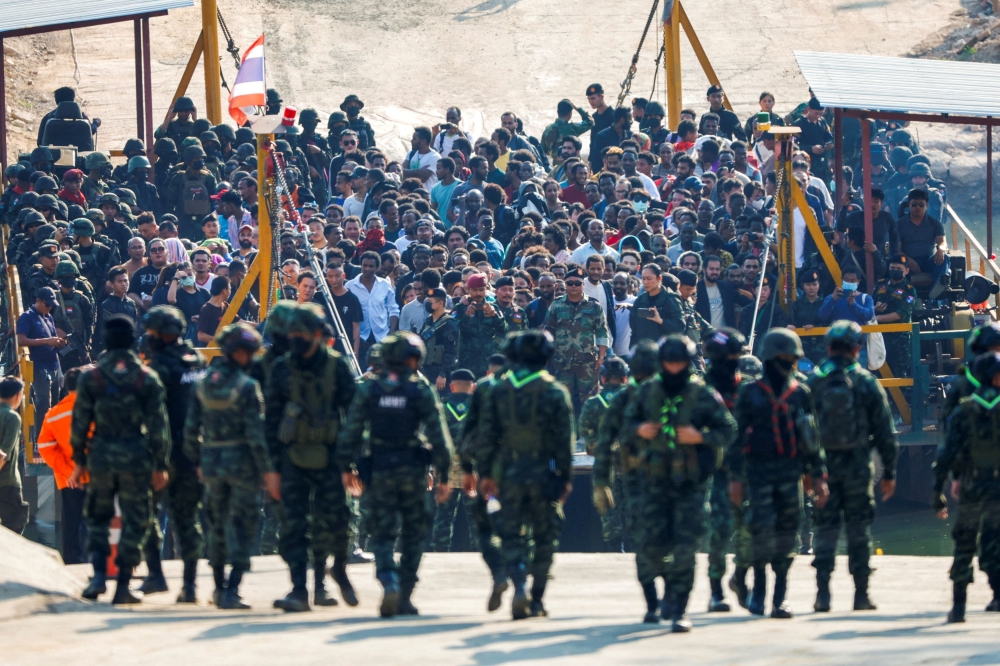
These crimes no longer just humiliate victims; they erode the moral fibre of the region. The problem is transnational, but the silence around it has been local.
The United States has already sanctioned several individuals and entities involved in crypto-scam laundering, while China has mounted joint crackdowns with Myanmar. Yet Asean, which prides itself on consensus and community, has not moved as one.
Malaysia, as Chair, has the moral duty to say what others hesitate to: digital slavery is as serious as terrorism. It must be treated as a threat to human security, economic integrity, and Asean’s international credibility.
Linking morality and modernity
The summit’s closing statement should declare that technology without ethics is a regional danger. Digital scamming is not just crime — it is a distortion of innovation. When blockchain, artificial intelligence, and fintech tools are weaponised to defraud rather than empower, they turn the promise of digitalisation into despair.
Asean’s digital-economy ambitions — from the Asean Digital Economy Framework Agreement to cross-border payment systems — will ring hollow if people fear being defrauded the moment they log in.
To end the summit on a high, leaders must show that the region’s digital future will be clean, safe, and moral.
A shared regional response
The time for pilot projects and polite communiqués is over. The EAS, which includes major cyber powers such as Japan, South Korea, China, India, and the United States, should endorse an Asean–East Asia Digital Crime Task Force.
Modelled after Interpol’s cybercrime units, it should pool technical intelligence, harmonise legal frameworks, and coordinate enforcement against scam syndicates operating across borders.
Equally important is creating an Asean-wide victim-recovery protocol, offering safe repatriation, psychological support, and reintegration for those trafficked into scam zones. Asean can show that human dignity, not just trade or tariffs, remains its true currency.
Cutting the financial veins
The financial dimension of scamming cannot be ignored. Digital fraud thrives on the anonymity of cryptocurrencies, shadow exchanges, and cross-border money-mules. Malaysia and Indonesia should take the lead in proposing a Regional Anti-Crypto Laundering Compact, working with banks, exchanges, and law enforcement to trace illicit flows.
Singapore, with its advanced fintech regulation, can offer capacity-building for neighbouring states still developing frameworks for digital asset oversight.
The EAS partners, especially the United States and Japan, can share forensic tools that unmask blockchain-based fraud.
Only a united front can choke off the oxygen that sustains the scamming industry.
Protecting Asean’s reputation
The reputational damage is immense. Every time a scam operation involving Asean nationals makes global headlines, investor confidence suffers. Tourism, e-commerce, and digital trade all depend on trust. If Asean cannot police its own digital domain, it cannot expect others to treat it as a credible partner in the Fourth Industrial Revolution.
Malaysia’s chairmanship has already prioritised integrity and good governance. Ending the summit with a bold regional declaration against digital scamming will project Asean as a community that defends not only borders and markets but also morality.
It would remind the world that South-east Asia can grow rich without losing its conscience. In short, Make Asean digitally safe again.
Aligning security and technology
Digital scams are not isolated economic crimes; they are tied to broader security patterns. Many scam centres flourish in lawless zones — the same spaces where arms smuggling, human trafficking, and drug networks operate.
Left unchecked, they provide revenue streams to armed groups and criminal syndicates that destabilise borderlands.
Asean’s peace architecture must therefore treat the fight against scams as part of its conflict-prevention agenda. The proposed Asean Border Security and Technology Network — linking surveillance, data-sharing, and policing — could integrate digital-crime monitoring with counter-terrorism and anti-trafficking efforts.
Restoring faith in regionalism
Ending the EAS with such a human-centred initiative will revive faith in regional cooperation. The world is fatigued by summits that end with ceremonial photos and ambiguous communiqués.
A decisive move against digital scamming would show that Asean and its partners are not detached elites but guardians of everyday people.
As Prime Minister Datuk Seri Anwar Ibrahim has reminded his counterparts, “Asean must be useful to its people, or risk irrelevance.” The best way to prove usefulness is to act where citizens hurt most — in their wallets, their screens, and their faith in the system.
Building a digital moral order
The region’s digital ecosystem should be governed not only by codes of law but also by codes of ethics. Educational campaigns across Asean can instil digital literacy, while inter-faith and cultural institutions can promote the moral teachings that discourage deceit and exploitation.
The East Asian Summit can add its weight by supporting a Regional Charter on Ethical Technology, a moral statement that Asia’s modernisation will not be built on manipulation.
This is how Malaysia, as Chair, can define success: by leaving behind an agenda that binds technology to conscience, and profit to compassion.
Do not stop trying
Asean’s founding ethos was never about perfection but persistence. From ending wars in Indochina to building peace in Timor-Leste, the Association has always chosen progress over paralysis. Today, the battlefront is digital, and the victims are invisible. Yet the moral duty remains the same: do not stop trying.
If Kuala Lumpur can steer the Asean and East Asian Summit toward a unified stand against digital scamming, it will mark not just a procedural victory but a civilisational one — proving that in South-east Asia, peace is not only about borders, but about the integrity of our shared digital soul.
* Phar Kim Beng is Professor of Asean Studies and Director, Institute of Internationalisation and Asean Studies (IINTAS), International Islamic University Malaysia
** This is the personal opinion of the writer or publication and does not necessarily represent the views of Malay Mail.


