


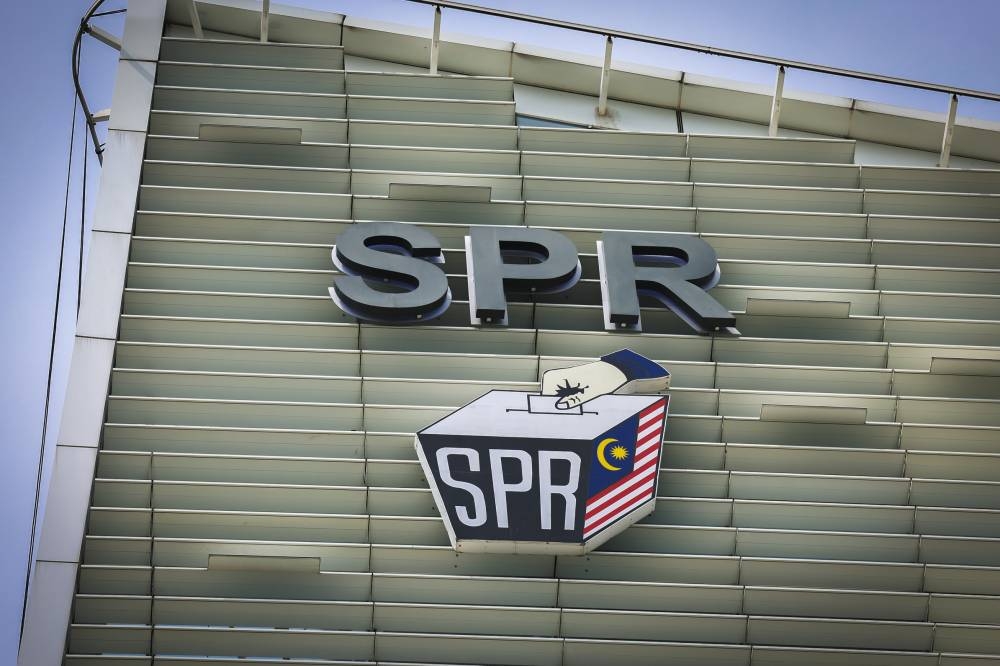
NOVEMBER 8 — Article 113 of the Federal Constitution entrusts the Election Commission (EC) with the conduct of elections in the country, both at state and federal level. The EC is constituted in accordance with Article 114.
The EC is therefore a constitutional institution. It exists, and is supposed to exist, separately from other branches of government.
So it is curious, to say the least, that caretaker prime minister Datuk Seri Ismail Sabri Yaakob should say that, while it was up to the Election Commission (EC) to decide whether to stop the 15th general election (GE15) process if the country were to be hit by massive floods, meetings would be held with the EC and related agencies to look for possible alternatives to proceed with the election process in the event of major floods.
It is not surprising then that Perak Parti Keadilan Rakyat (PKR) operations room spokesman Dr Lee Boon Chye, among others, has slammed the caretaker prime minister over his statement.
“The election date has been fixed and nomination day done and campaigning has started. This means the process of voting has started. So by any means, the election needs to go on no matter what,” Dr Lee told a press conference at the Perak PKR office in Medan Istana, Ipoh.
Dr Lee added, rightly, that it is the responsibility of the EC to hold the election safely during the rainy and flood season.
The EC’s existence as a constitutional institution independent from the other branches of government should not be undermined by the executive arm of the government, let alone a caretaker executive.
The EC should not be vulnerable to executive influence affecting its ability to function as an independent constitutional institution.
There should not be any semblance of interference or pressure on the EC, which has a history of running into “difficulties with the ruling party.” According to Lim Hong Hai, as early as in 1960, when re-delineation of electoral constituencies by the EC was not well received by Umno, it led to a series of actions that compromised public belief in the EC’s independence (See Lim Hong Hai, “Electoral Politics in Malaysia: ‘Managing’ Elections in a Plural Society” (2002).
Relations between the first chairman of the EC and Umno became strained and the government attempted to remove him by passing amendments to the Federal Constitution in 1960 and 1962.
Although the attempt failed in 1960, the 1962 amendments allowed the government, through its control of Parliament, to determine the terms of office of EC members other than their remuneration and to take over the EC’s power to determine constituencies.
According to the writer, the government continued its “assault” on the EC by making clearly partisan appointments to the EC to counterbalance its “overly” independent chairman before his retirement in 1967. (See Lim Hong Hai, at page 114)
It has accordingly been written that there have been “manifest pressures” from the government, at least in the public’s perception, which is unfortunate since in appointing members of the EC “the Yang di-Pertuan Agong shall have regard to the importance of securing an Election Commission which enjoys public confidence” – Article 114(2).
Twenty years ago, Lim wrote:
“An increasingly serious problem with the Malaysian electoral system is that the Election Commission is seen as insufficiently independent and impartial.”
Twenty years on, it should be that the EC is seen to be sufficiently independent and impartial. If it is up to the EC if it wants to stop the election, let it be. The EC is entitled to discuss with MetMalaysia (Malaysian Meteorological Department), National Disaster Management Agency (Nadma), and the caretaker government can give its views.
It’s not the other way around.
The EC must be independent and impartial, even when deciding whether to postpone the GE15 because of massive flooding.
In any case, it is a constitutional imperative that the EC hold and conduct a general election within 60 days from the date of the dissolution of Parliament – Article 55(4).
The GE15 must be held by December 9.
* This is the personal opinion of the writer or organisation and does not necessarily represent the views of Malay Mail.


