


SAO PAULO, June 2 — Brazilian teenager Leo Veiga had almost given up on his dream of becoming a professional footballer when artificial intelligence helped him secure a spot in the youth ranks of an Italian club.
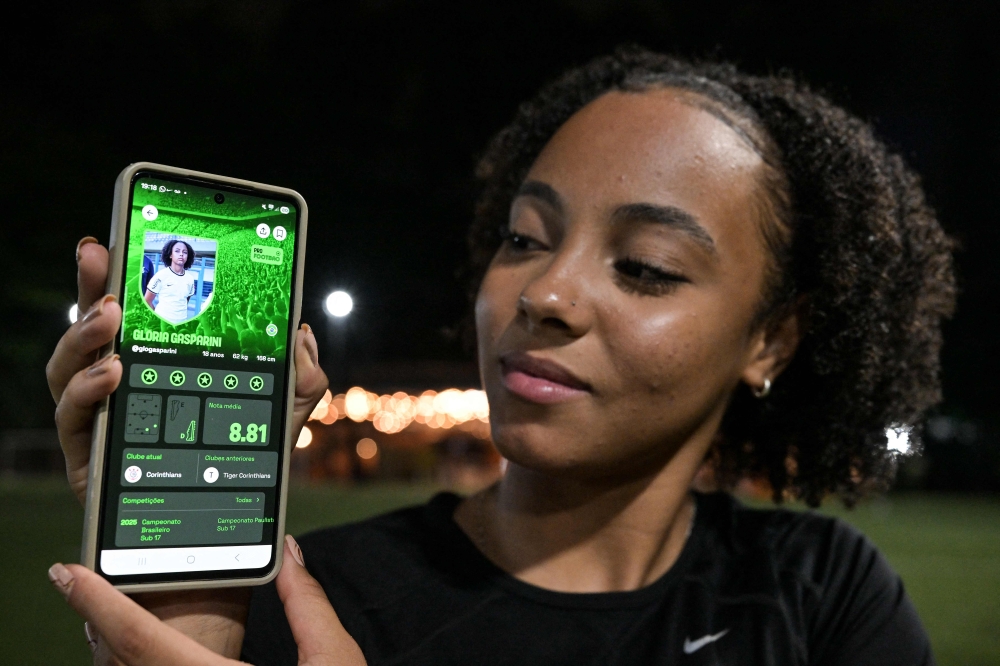
Tech companies promising to “democratise” football are launching apps that allow young players to upload videos recorded on their phone of them showcasing their ball skills.
AI is then used to analyse and score their performance, which is sent to scouts and clubs.
The 18-year-old Veiga was stuck playing for a small club in his home state of Santa Catarina in southern Brazil when he discovered one of these apps, from Swiss company Footbao.
A YouTube video offered the highest-scoring users to train for a few days with the Italian club Lecce. Veiga was selected and caught the eye of a scout, who decided to take a chance on him.
“AI opened a new door,” he told AFP from Italy, where he is now under contract with the youth academy of the club Spezia, which plays in Italy’s second division.
“I thought, ‘I’m going to download the app and give it a try. If nothing happens, it doesn’t matter because nothing else is working out for me. But what if something does happen?’” he said.
Footbao works with videos from matches and training sessions, while another tech company in the field, German firm CUJU, uses videos of drills suggested to users through the app.
‘Untapped potential’
Around 120,000 players have used the Footbao app, most of them in Brazil, the world’s largest exporter of football talent.
“There are probably between 14,000 and 15,000 players with the potential to join clubs or academies,” chief executive Nick Rappolt told AFP.
The company, founded in 2023, also operates in Colombia and Argentina and plans to expand into other South American countries.
According to Rappolt, AI can “democratise” football by helping identify talent that lies outside the radar of major development centres.
CUJU’s app, meanwhile, was launched last year and has been downloaded around 160,000 times.
“Professional clubs have huge databases, but they mostly contain players who have already been scouted. There is no reliable data on talent at the earliest stages,” Sven Muller, CUJU’s marketing director, told AFP.
The goal, he said, is to turn “simple videos recorded on a phone” into “reliable performance data.”
‘Boost to women’s football’
In Sao Paulo, Marcela Geremias de Lima repeatedly kicks a ball against a wall, one of the exercises proposed by CUJU, which focuses on technical skills such as ball control and speed.
After using the app, Marcela was invited to youth tournaments organised by the company in front of scouts.

She eventually earned a place in the Under-15 side of Corinthians, a powerhouse of South American women’s football with six Copa Libertadores titles.
The exercises “help you improve” and mean “you can be seen from anywhere in the world,” she said.
Brazil will host the 2027 Women’s World Cup, an event that could help drive the recruitment of young female players.
The Brazilian club Santos, associated with star players like Pele and Neymar, in December announced a deal with Footbao to help identify young prospects.
It is a way to “expand our search for athletes,” club president Marcelo Teixeira said.
Top prospects are usually recruited from a very young age, but AI can give a boost to players who might otherwise go unnoticed, according to Joao Paulo Sampaio, head of youth development at Palmeiras, where international talents such as Endrick and Estevao came through the ranks.
“I receive between 30 and 40 videos every day,” Sampaio told AFP, adding that tech companies that carry out “a first round of pre-selection” represent “a new tool,” although the Sao Paulo club does not currently work with these firms. — AFP


