


JULY 17 — Negeri Sembilan is emerging as one of the most consequential political battlegrounds in Malaysia. The coming state election is no longer merely about which coalition forms the next state government.
It is increasingly becoming a referendum on whether PAS under the leadership of Tan Sri Abdul Hadi Awang can expand its political influence beyond its traditional strongholds through strategic cooperation with Umno and Barisan Nasional.
Recent statements by Hadi Awang leave little doubt about PAS’s ambitions. He has openly declared that PAS is prepared to accept an Umno menteri besar should cooperation materialise, while negotiations over seat allocations continue.
More significantly, he framed the contest as one in which Malay-Muslim political leadership should shape the future government of Negeri Sembilan.
Yet this should not be mistaken for an imminent PAS takeover of the state.
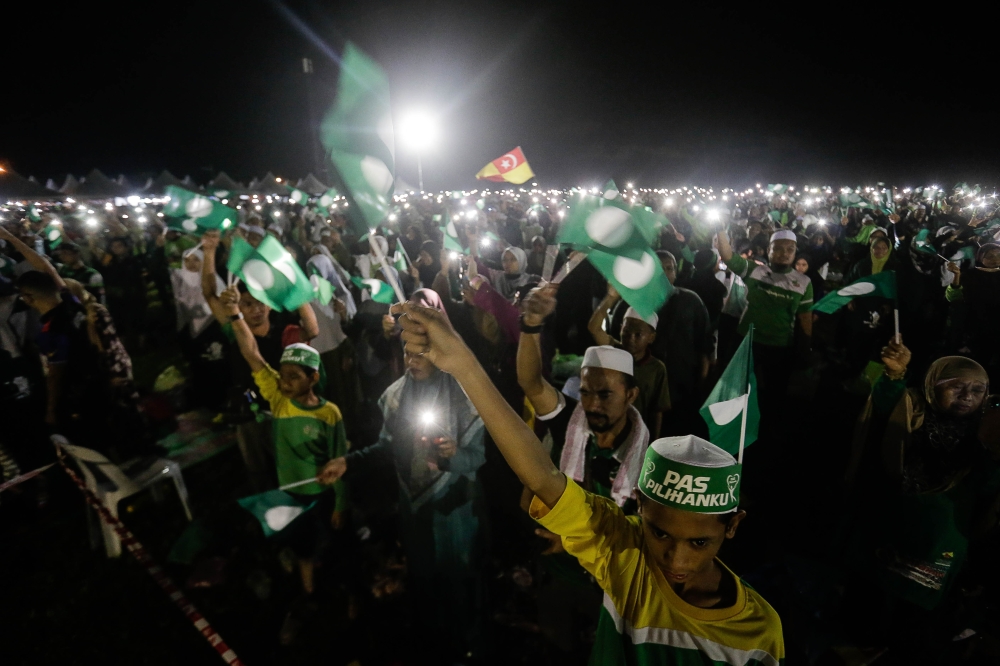
The more important question is thanks Negeri Sembilan will become the next platform from which Hadi Awang expands PAS’s national influence. Electoral success need not be measured solely by the number of seats PAS itself wins.
If PAS succeeds in positioning itself as an indispensable strategic partner in defeating Pakatan Harapan in key constituencies, it would emerge with greater bargaining power, both within opposition politics and in future negotiations with Umno.
This explains why Negeri Sembilan carries significance well beyond its 36 state seats.
The election may determine whether PAS’s strategy of coalition-building after Johor can be replicated elsewhere, including in future contests such as Melaka.
For Pakatan Harapan, the challenge is therefore larger than defending an existing administration.
It must demonstrate that moderation, multi-ethnic cooperation and effective governance remain electorally competitive against increasingly coordinated opposition strategies centred on identity politics.
At the same time, Barisan Nasional faces its own strategic dilemma.
While Hadi Awang has spoken positively about cooperation, Umno president Ahmad Zahid Hamidi has publicly denied that any formal agreement has been concluded, emphasising that discussions remain exploratory rather than final.
This divergence illustrates the fluid nature of Malaysian coalition politics. Electoral alliances today are increasingly pragmatic rather than ideological, shaped by constituency-level calculations instead of long-term political commitments.
Negeri Sembilan has historically rewarded political moderation and stability. Its electorate is ethnically diverse, economically integrated and generally less receptive to ideological polarisation than several northern states. Nevertheless, no political landscape remains static.
Rising living costs, voter fatigue and dissatisfaction with the pace of reforms can create openings for opposition forces capable of presenting themselves as disciplined and united.
Consequently, the election should not be interpreted as a binary choice between Pakatan Harapan and PAS alone. Rather, it is about determining whether Hadi Awang’s political strategy gains greater legitimacy and momentum within Peninsular Malaysia.
Should that occur, PAS’s influence over national political negotiations would expand considerably, regardless of whether it governs Negeri Sembilan directly. Such an outcome would reshape coalition calculations well beyond this election.
The voters of Negeri Sembilan therefore carry responsibilities extending beyond their state borders.
Their decision will influence not only the composition of the next state government but also the trajectory of Malaysian politics over the coming years.
The state has often been regarded as a model of constitutional moderation and political balance. Whether it continues to play that role now rests with its electorate.
The issue before them is not whether PAS immediately governs Negeri Sembilan, but whether Hadi Awang’s vision acquires greater national momentum through the state’s electoral verdict.
* Phar Kim Beng is a professor of Asean Studies and director, Institute of Internationalisation and Asean Studies, International Islamic University of Malaysia.
** This is the personal opinion of the writer or publication and does not necessarily represent the views of Malay Mail.


