


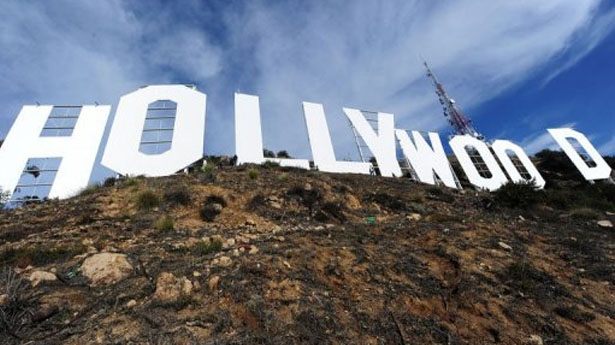
LOS ANGELES, Sept 3 — Hollywood suffered its worst summer for years at the box office, as filmgoers apparently grew tired of blockbuster sequels and epic computer-generated fight scenes, experts said yesterday.
Between the first weekend of May and the last of August — Labour Day weekend, which traditionally marks the end of the summer film going season — US films made some US$4.05 billion (RM12.9 billion), about 15 per cent down on last year’s box office.
That is the smallest box office total since 2006 when films made just US$3.75 billion in North America, said Paul Dergarabedian, an analyst at movie and TV data provider Rentrak.
Corrected for inflation, it is the worst summer box office showing since 1997, according to Rentrak.
But it could have been worse — had the rogue superheroes not saved the day.
Offbeat sci-fi flick “Guardians of the Galaxy” topped the box office on its fifth week in theaters, and became the biggest grossing film of the year.
Family favourite “Teenage Mutant Ninja Turtles” also performed well.
“‘Guardians’ and ‘Teenage Mutant Ninja Turtles’ thankfully came at the perfect time, and enabled Hollywood to knock the summer deficit down to just under 15 per cent, from 20 per cent just a month ago,” Dergarabedian said.
Professor Tom Nunan of the University of California Los Angeles (UCLA) Film School added: “It’s obvious that there is an appetite for the movies, even the bad ones because (they have) decent opening nights.
“But then they fall off drastically because word of mouth conveys they are lousy,” he told AFP.
Granted, this summer’s box office suffered in comparison with last year’s, boosted by blockbusters including “Iron Man 3” (US$409 million in the US, US$1.2 billion globally) and “Despicable Me 2” (US$368 million, and US$970 worldwide).
Rare successes
It wasn’t all bad news: “Guardians of the Galaxy” became the highest-grossing film of the year, beating “Captain America: The Winter Soldier” which made US$280 million.
Over the Labor Day holiday weekend, the tale of ragtag heroes in space added US$22.9 million to its five-week haul, taking its earnings to US$281.2 million since its release, box office tracker Exhibitor Relations said.
Although it proved a hit, “Guardians” nevertheless failed to break the US$300 million barrier — the first time a summer film has failed to reach that mark since 2001.
Another summer success was “Transformers: Age of Extinction,” with US$244 million in the US and over US$1 billion internationally.
But others disappointed, like “Hercules,” “Edge of Tomorrow” and “The Expendables 3,” which made only US$34 million despite an all-star cast including Arnold Schwarzenegger, Sylvester Stallone, Mel Gibson and Harrison Ford.
The latter “is almost the definition of formulaic,” said Nunan.
“That was kind of fun” because of the novelty of seeing wrinkly former stars, he explained. But “now it’s another exhausted franchise.
“We all understand it’s a business and that sequels are more of a predictable commodity that an original film. But can’t we try a little harder?” he said.
In second place over the four-day Labour Day weekend was “Teenage Mutant Ninja Turtles,” which added another US$15.6 million to its take for a total of US$166.3 million.
Third place was occupied by the teen melodrama “If I Stay,” which earned US$11.8 million, followed by “As Above/So Below,” a thriller set in the catacombs beneath Paris, which took in US$10.3 million.
Raunchy comedy “Let’s Be Cops” came fifth with US$10.4 million.
It was a disappointing return to the box office for former James Bond star Pierce Brosnan, whose “The November Man” was sixth with US$10.1 million.
“When the Game Stands Tall,” based on the true story of a US high school coach who leads his team on a 151-game winning streak, fell to seventh place with US$8.2 million.
In eighth spot was dystopian drama “The Giver,” which earned a whisker under US$7 million, followed by romantic comedy “The Hundred Foot Journey,” with US$6.5 million.
Rounding out the top 10 was “The Expendables 3,” which took US$4.5 million in its third week in theatres. — AFP


