


MARCH 1 — Spain’s second biggest city, Barcelona, will be a busy place in the next few days as a huge influx of visitors flood into the Catalan capital.
That is nothing particularly new because there are always thousands of tourists in Barcelona: being a sunny seaside city which offers world-class architecture, culture, food and sport, as well as boasting one of Europe’s largest cruise ship ports, ensures that.
This week, however, the hometown of Antoni Gaudi and Lionel Messi will play host to a particular breed of visitor from the business world.
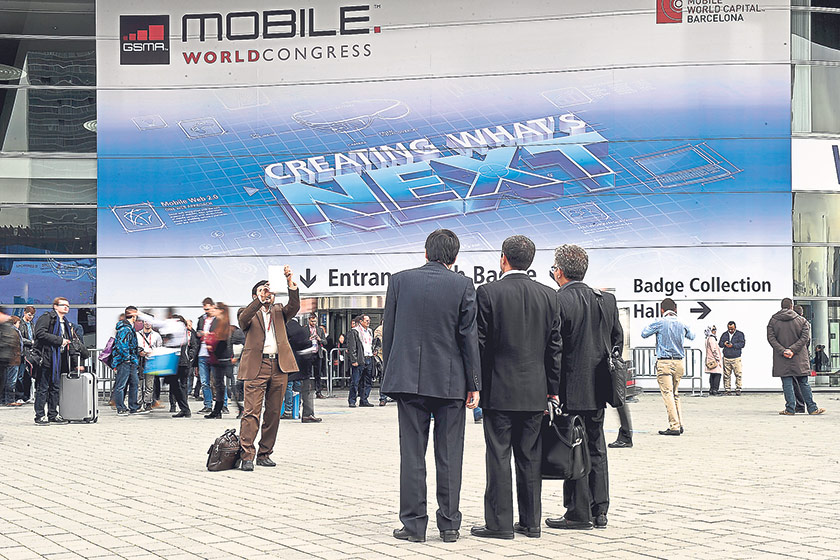
Specifically, close to 100,000 tech-savvy professionals will be in town for their annual pilgrimage to attend the Mobile World Congress: one of the biggest trade fairs in the world, which moved to Barcelona in 2006 having previously taken place in the glamorous French resort of Cannes.
Last year’s event drew an attendance of 85,000 delegates from 201 different countries — enough to nearly fill the city’s famous Nou Camp football stadium located no more than a couple of miles from the trade fair site.
Like all successful events of its nature, Mobile World Congress — or simply Congress, as it is called by those in the know — has become an attraction in itself, developing a powerful “brand” to entice visitors who attend because they feel they should rather than actually having specific items of business to conduct.
One of the chief reasons for attending, indeed, is the opportunity to network with like-minded individuals from the same industry, with some eyes fixed on breaking new business deals while others may more selfishly be simply seeking future personal career openings. It is a place to see and be seen.
Another attraction is the appearance of star name guest speakers, with both last and this year’s events, for example, featuring rare public outings by Facebook founder Mark Zuckerberg as the keynote speaker.
There is also a huge potential for media coverage with many companies timing the announcement of new products or initiatives for the start of the event, and PR executives are kept busy making arrangements for interviews, round-table discussions and seminars whilst also manning the endless exhibition stands with the best smiles they can muster during 20-hour working days.
In addition to its importance within the mobile technology industry, Congress and other trade fairs of its ilk play an increasingly important role within the Barcelona economy, with thousands of hotel rooms, restaurants, taxi drivers and cultural activities eagerly lapping up the riches of visitors over the course of the event.
One of the biggest beneficiaries, although this will probably not be revealed in any official literature, are local ladies of the night, who enjoy a peak in demand for their very specific services and can be seen loitering nearby several major hotels in the (often successful) hope of enticing passing trade from visitors emboldened by the free-flowing alcohol available at the many late-night parties which play an integral role in the week’s activities.
The contribution to local businesses is further boosted by the fact that most delegates are on in town on an all-expenses-paid basis, and are therefore happily prepared to spend much more money than if the bills were being settled out of their own pockets.
Last year’s event was estimated to be worth nearly €400 million (RM1.6 billion) to the Barcelona economy, whilst also accounting for the creation of 12,000 jobs — particularly significant figures during the financial crisis which has gripped Spain in the last five years.
Although it is clearly a major event, Congress is by no means the largest when compared to some of the other trade fairs dotted around the annual global calendar.
The biggest exhibition site to be found anywhere, for example, is in Hannover, Germany, which plays host to roughly 250,000 visitors every spring for the Hannover Messe, an industrial fair which bills itself as the most important trade show in the world.
For outsiders, the whole shenanigans can be rather bemusing, with the sight of so many people investing such emotional energy into the obscure minutiae of their day-to-day concerns rather difficult to comprehend for anyone not directly involved in the process.
But when you are caught up in the middle of the whole thing, trade fairs can be the most important few days of the year. In the world within a world created at such events, great feats can be accomplished and mountains can be moved — or so it feels to the participants, whose ability to not take themselves too seriously is often temporarily suspended for the duration of the activities.
Ultimately, trade fairs are the kind of event which makes the world go round: the business world, at least. Deals are struck, relationships formed, publicity generated, free gifts handed out and egos massaged.
Not everything that takes place is strictly necessary or even worthwhile, but for a few days every year a specific industry is allowed to portray itself as the most important thing on the planet.
And without such lapses into self-importance, perhaps nothing much would ever get done.
* This is the personal opinion of the columnist.


