


JANUARY 11 — A man who spent most of his life defending criminals, rapists, murderers and child abusers died earlier this week — since, tributes have poured in for Subhas Anandan, Singapore’s most prominent defence lawyer.
At his funeral on Wednesday, hundreds of well-wishers, former clients, fellow lawyers and legal luminaries came to pay tribute to a man who had become a living symbol of Singapore’s criminal justice system.
For those accused of the most heinous crimes, he was a last line of defence and he worked tirelessly for the principle that everyone is innocent until proven guilty and that “even the most heinous offender deserves a proper trial.”
Over a 40-year career that began in the 70s he defended over 1,000 criminal cases often working pro-bono — to ensure the accused had a chance to defend themselves.
And while the technical, abrasive and jargon-filled world of the courtroom rarely makes for popular figures, Anandan was associated with so many high profile trials he became a national celebrity.
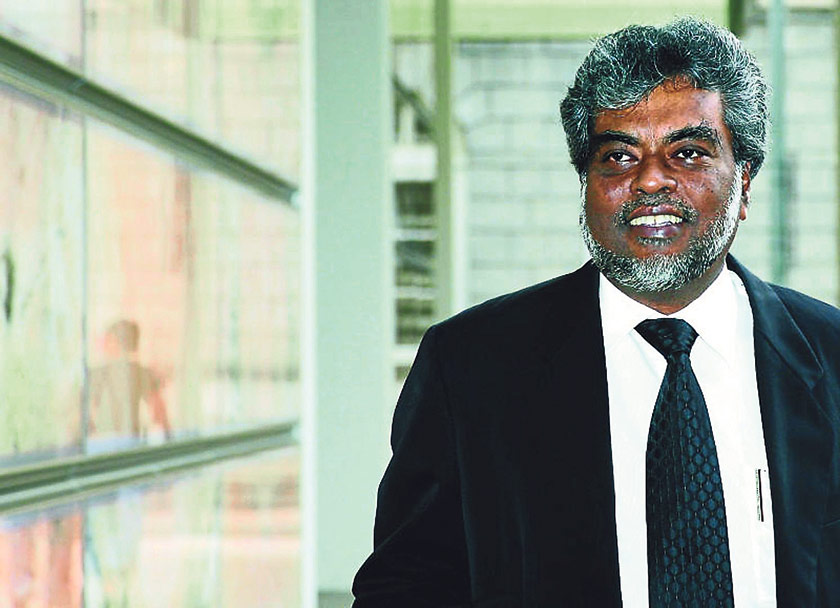
The fact that even Singapore’s notoriously busy taxi drivers would often stop and roll down their shutters to congratulate him on his appearances if he was out on the street is testament to his status as a national icon. But like almost everything about him his trajectory to the top of Singapore’s legal profession was unconventional.
His parents migrated to Singapore when he was just five months old. However, he wasn’t granted Singapore citizenship until 2002. He grew up in a Singapore we would find unrecognisable today, a rough kampong in Sembawang in the 50s and 60s but excelled in his exams and went on to attend the prestigious Raffles Institution.
He initially attended medical school but dropped out to become lawyer; then sought a career based on pro bono work.
Unlike most prominent lawyers he spent time in jail himself while accused of belonging to a secret society in the 70s — the charges were dismissed. This experience allowed him to empathise with his clients.
The cases he handled were legion but most Singaporeans will remember the horrifying case of Took Leng How who murdered and dismembered an eight-year-old girl — Huang Na — in 2001.
But apart from these more sensational cases it was the hundreds of other everyday defence cases he handled that endeared him to thousands of suspects and their families and ensured his legacy.
He established the Association of Criminal Lawyers in Singapore to ensure poor defendants would receive a committed defence. Throughout his career he worked to shift the island’s criminal justice and sentencing system from one based purely on punishments to a system based on rehabilitation and reform.
He was prepared to take on even the government, defending the activist and dissident J.B Jeyaretnam in the 80s though he would later admit to preferring not to handle political cases.
Throughout his career he operated within the system using the legal system he knew so well to achieve his ends. Which is perhaps why he appealed to so many Singaporeans — as a reformer, humanitarian and basically decent man who was able to work within the system without compromising his principles.
My condolences to his family and the legal profession of Singapore.
* This is the personal opinion of the columnist.


