


OCTOBER 23 — Muthu’s days are numbered. It’s going to happen, there is nothing anyone can do to prevent it. An obituary likely for the character, but not keenly anticipated.
The non-Malaysian might be wondering, who is Muthu?
He has been ever-present in the way Malaysians interpret unity or race-relations.
In Malaysian textbooks for generations, Muthu was the default name for the Indian in any attempt at displaying tempered multiculturalism — all of the country in a trio of boys. There are Ali and Ah Chong preceding him, in a stoutly machismo yet plastic manifestation of a nation. Our own “Adidas All-In” happy family.
There is the odd use of Raju instead of Muthu, but you get the drift about our own trinity.
Anyway, whatever you call him, he — the collective Indian — is slipping away from the equation. A bit dour to write on Deepavali Day (yesterday), and a morbid thought to add to the depression is that one day it may cease to be a holiday.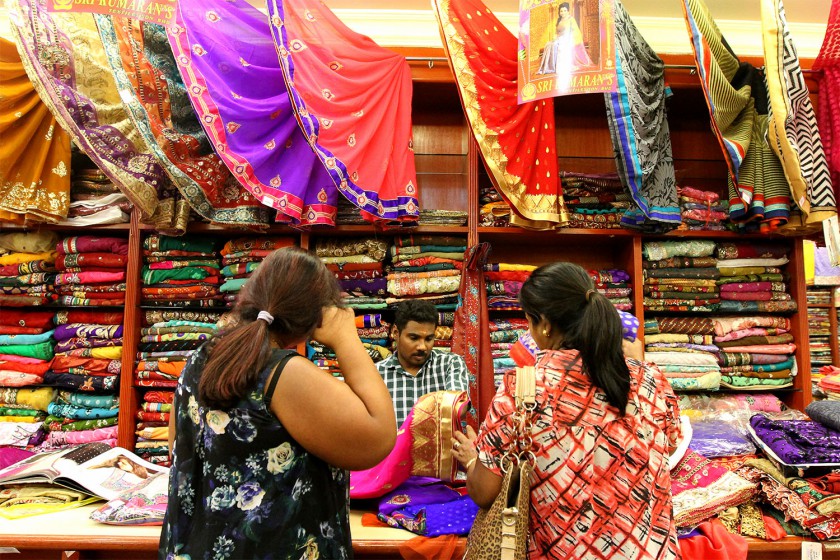
As 6.7 per cent of the country is allegedly Indian — with rising Muslim and Christian numbers within that figure rendering those observing the festival of lights even lower — it begs the question, if Ali and Ah Chong are better matched with Michael who covers the bases for both Dayak and Kadazan-Dusun-Murut communities, should we go that way?
Muthu’s death will not mark the end of Indians in Malaysian life, just dilutes their significance uniformly with their shrinking population relative to others.
There are those in the country who’d prefer Ali, Abu and Hashim standing in the playground, with Khatijah, Aisyah and Najwa sitting politely inside the confines of a home, as a prognosis of the future, but that’s for another day. When I am ready to pound my keyboard, about how things have gone to the dogs when talking about the right-wing — they are a rabies inducing delight.
Them good ol’ boys
Retirees reminiscing their days in the Indian party — Malaysian Indian Congress (MIC) — are kept warm by decade of the token Indian when it comes to presenting the country visually. It’s brought votes and a government ill-suited to care enough about them, but their boy is in the picture.
A picture is everything to them. That and dedicated festive season ads from government-linked companies.
There is a joke about how multinationals in India avoid higher pay packages for their executives by offering them amorphous job-titles. The Indian can be placated by a fancy title. It does resonate with Malaysian observers of how the powerful manage ethnic Indian expectations in Putrajaya.
MIC contests seven seats in Parliament. It won only four last year but it sees itself as a vote basin for Barisan Nasional (BN) in 150 other seats with varying degrees of import. The peninsula is the battleground now, and for that Muthu keeps his spot in the visual presentation.
We are like that a bit, obsessed with race numbers. Singapore’s Malaysia proposal was only palatable to Malaya if the Borneons were part of the deal, moderating the new Chinese population percentage.
Opt out
It’s time to opt out.
Malaysia’s laboured multiculturalism is out of place in 2014.
A thriving multiculturalism cannot stomach patronising domination of the hateful prone to intellectual escapism, which is why the state’s support for the latter continues decimating tolerance.
A thriving multicultural society has a high chill quotient — those who laugh off unintended cultural infractions and welcome the odd, by reflecting on their own oddities. The ones driving the agenda presently appear to be on a dangerous cocktail of crack and horse steroids, they are perpetually angry, insecure and growing man-boobs.
In a thriving multicultural society, individuals realise that all mankind is irrevocably different from them, a fact which is equally present in highly homogenous societies but masked by anti-pluralistic forces under the guise of fostering cohesion built on abandoning individualistic traits.
They ask you to be boring, actually.
Boring and obedient. Sometimes you can’t tell the two apart.
Muthu and Gopal disagree
A country is more than lining up representations. The positives of all symbols must prevail in everyday life, if not their claim to worth become bogus.
Are there in our lives, in our days hundreds of thousands of Ali, Ah Chongs and Muthu’s prancing down hillsides and alleyways?
The surge in various immigrant communities in Malaysia does not limit the diversity campaign to race alone.
There are women. Muthu does not represent every Uma out there. Also youth. An older Muthu cannot process why young Vinod prefers electronica. Is Muthu irrelevant if he becomes a Muslim? Ah Chong crowded by two constitutionally defined Malays? Or can Muthu be two things like the chief secretary to the government Ali Hamsa, who ticks both the Friday prayers and picks up the Tamil Malar broadsheet in the morning box?
Equality for all is equality for you
Indians were minorities in 1957 and more so in 1963. They have gradually dropped for a variety of reasons, from the reasonable (emigration) to the contentious (the government departments refusing to document many Malaysian-born Indians).
The real joy for any minority group is equal protection under the law.
Indians can live with less of them in textbooks if classrooms have more engagements on societal rights and fairness. They will also find joy in other minorities being discussed in classrooms: women, Eurasians, Penan, polytheists, comic book fans and farmers.
The original trinity was an oversimplification to champion the need for diversity, albeit a managed one.
Today’s Malaysia is a different proposition. It would be an absolute howler to not press on with universal inclusion. It is ok to say goodbye to Muthu.
* This is the personal opinion of the columnist.


