


APRIL 10 — So I woke up on Wednesday morning and saw some hopeful news on my phone: Both the US and Iran announced a two-week ceasefire as a sort of prelude to formal negotiations on April 10th to end the war.
Great! Yay!
Except about half an hour after I read the ceasefire news I also read that Iran had fired missiles into Israel and her Arab neighbours, Israel had fired back and – omg! – it looks as if all talk of “cease firing” was a very short-lived joke.
A few of my friends even expressed concern that the continued rockets and hostilities – barely an hour (or less) after an official ceasefire announcement – was proof that this war could end up being a forever war.
Thing is, it’s guaranteed that many people who were at first joyfully anticipating an end to this war (and all the economic problems it’s been causing) must’ve felt their hopes dissipated.
Thankfully, though, if history is anything to go by we can be assured that the ceasefire announcement on Wednesday is a major (albeit fragile) first step towards ending this conflict.
Because, believe it or not, most official ceasefires do not mean the warring parties actually cease firing.
Consider last year’s Asean Summit where President Trump and Prime Minister Anwar witnessed the signing of the Kuala Lumpur Peace Accord by both the Thailand and Cambodia prime ministers.
This very formal and official ceasefire agreement, significantly, did not result in a complete cessation of hostilities (in fact, another ceasefire agreement had to be signed a few months later) but, crucially, it represented the first steps towards ensuring peace.
As of now – fingers crossed – the fighting has more or less abated.
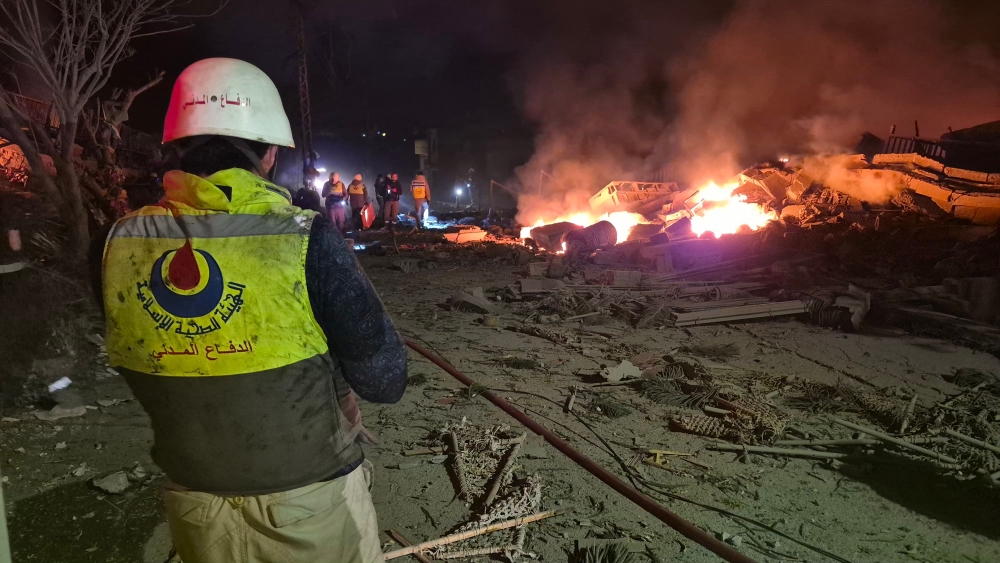
Ceasefires are announced with fanfare: diplomats shake hands, headlines proclaim “Fighting Stops,” and the world breathes a tentative sigh of relief.
The point is that skirmishes, violations, artillery duels, and opportunistic attacks often continue – often immediately. A ceasefire is rarely a true end to violence; it is usually a tactical pause dressed up as progress.
The fundamental reason most ceasefires fail to deliver lasting quiet is because they represent a suspension of hostilities, not a peace treaty.
It does not resolve the underlying political, ethnic, or territorial disputes that caused the war.
Without robust enforcement mechanisms – neutral monitors, demilitarised zones with real teeth, or mutual exhaustion – parties will obviously retain both the means and the incentive to keep testing and hurting each other.
In fact, for the 2,200 plus ceasefire agreements made from the start of the 20th century up to today, practically all have met with post-agreement hostilities (see Note 1) but – crucially – this does not mean that the ceasefire was pointless. Whilst ceasefires do not mean a cessation of firing, the eventual peace could not have come about without them.
Seen pessimistically, one could argue that hostile human nature will always find reasons to fight and not stop. But looked at optimistically one could say that without these ceasefire agreements, the wars would either get worse or be well and truly indefinite.
Ceasefires and armistices remain important. They save lives in the short term, allow aid to reach civilians, create much-needed space for negotiations and buy political breathing room.
Comprehensive agreements with verification teams and clear red lines tend to perform better than vague declarations. Yet total cessation of all firing remains extraordinarily rare.
Announcing a ceasefire should never be confused with ending a war, but wars rarely end without one. It brings brittle (and often failed) anticipation for peace. But in times like these, surely even the smallest glimmer of hope helps.
Note 1: It appears only two ceasefires in modern history have resulted in practically zero hostilities in the short term: the 1979 peace treaty between Israel and Egypt and the 1994 peace treaty between Israel and Jordan. These were rare exceptions where clear and strong mutual interests translated into genuine and sustained calm and stopped renewed fighting.


