


APRIL 19 — The murder trial of South African double-amputee Olympian, ‘Blade Runner’ Oscar Pistorius, is being followed worldwide like a soap opera with even suggestions that Malaysia should adopt televised trials.
Justice as a public spectacle will have its theatrical moments, but mob justice carries the high-risk of judicial proceedings being editorialised by news providers.
There are strict rules in Malaysia governing contempt of court. The sub judice rule forbids comment on court cases as it could influence the legal process while editorialising is seen as an attempt to have a trial by newspaper.

Commentary means taking over the role of the judge and that should not be surrendered to the unrest of mob justice.
South Africa’s legal system, with a judge, not a jury, presiding over criminal cases, allows “comment” on the basis there is no one who will be unduly influenced by media coverage.
The televised trial of Pistorius, 27, an Olympic hero, has placed millions worldwide inside the courtroom to soak into a real-life drama that has gone into the intimate details of the tragic death of his 29-year-old girlfriend, model, reality TV star and law graduate Reeva Steenkamp.
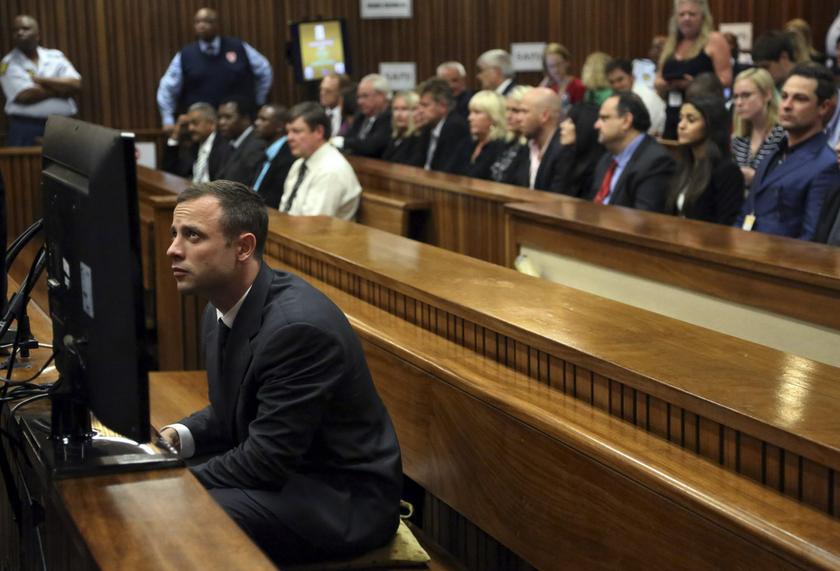
The case has an unofficial ‘jury’ in the form of a global audience watching from their sofas. Their tweets have rolled down the screen during gaps in the proceedings that began on March 3 and revealed much about what they made of it so far.
While tweeters in Malaysia face the threat of prosecution for commenting on ongoing legal proceedings, there are no such consequences in South Africa where it’s a participant sport and everybody can sound off.
A serious case can quickly turn into a form of entertainment with “insights” from a peanut gallery. It is a slippery slope for this type of editorial coverage – something that should never violate the judiciary.
In the Pistorius trial, unprecedented access to the action has stirred international conversations across interactive platforms.
It has dramatically changed the relationship between the public, the media and the courtroom.
Between the televised coverage and the live tweeting of the trial, the entire world is able to engage in these conversations.
Traditionally, such conversations only existed within the traditional media that were the only ones with access to the information.
They were the only ones discussing the information and resulted in people passively consuming news.
Have these obsessive compulsions of the news providers diminished the majesty of the law into the stuff of soap opera?
Indeed, the face of court reporting has changed. The Pistorius case has received more media coverage than any other case in South African history.
Demand for coverage is coming from all around the world and information is no longer restricted to the people sitting in the courtroom.
The disquiet normally present when commenting on on-going court cases there is slowly disintegrating.
Truth is, even if people have heard the facts of the case, most do not fully understand the intricacies of the judicial process itself.
Soap opera treatment of the Pistorius trial is fine example to Malaysia of why we shouldn’t prompt televised courts that would only satiate curiosity and voyeurism.
For one, it would put tremendous pressure on the judges. There is no guarantee that public statements will never influence the final verdict of a court.
You can be guaranteed, though, that televised trials will provide more than fodder for online commentators to bicker over.
The argument that live television coverage will provide an unprecedented education about the workings of the courts holds little weight because the judicial process is a system few people would recognise.
South Africa is different. It is still far from the non-racial society that Nelson Mandela envisaged. But the unique social experiment in justice in the Pistorius is particularly targeted at giving the impoverished South Africans their first real glimpse of local criminal justice in action.
At stake are values as fundamental as freedom of information, the ethics of transparency and perhaps most importantly, the crucial issue of maintaining the dignity of all involved.


