


FEB 19 — Has public trust in the ability of the authorities to deal with climate change that could be causing the current extreme weather been reduced to a reality cooking show contest? Where everything is whipped up to fill a plate of political strategy, not policy?
Have politicians identified climate change as a national threat they have had to deal with? If so, why haven’t the authorities ramped up heatwave warnings?
When politicians say climate change is not a threat to national security even if it had the potential to destroy livelihoods and businesses of millions of people, then we definitely have a huge problem.
When it comes down to the public saying that global warming “even if it exists” is not their problem, we have another big problem.
When someone tells you that they view global warming as a distant threat, we sizzle.
When another says it would only affect others on the planet or future generations more than Malaysians, we shudder with blazing intensity.
It’s not in the national interest that the severe lack of concern over climate change continues. It’s not in public interest when the Health Ministry declares it does not have a standard operating procedure to deal with a severe heatwave.
The ministry holds that it does not expect temperatures to soar to dangerous levels in spite of the prolonged hot and dry weather.
It is a dense response, an indication that the relevant authorities lack a coherent policy regarding weather change. Must the hot weather be at an alarming level before it becomes a hot issue?
Why aren’t people being taught how to cope with climatic extremes other than to drink at least 10 glasses of water a day? What about eating because many people tend to drink only when they have food?
What about close monitoring of vulnerable individuals such as older people, young children and those with serious illnesses?
During very hot weather, pregnant women and people who have chronic illnesses, including cardiovascular, respiratory, renal conditions, diabetes or Parkinson’s disease, may experience discomfort if indoor temperatures are particularly hot and in using public transport.
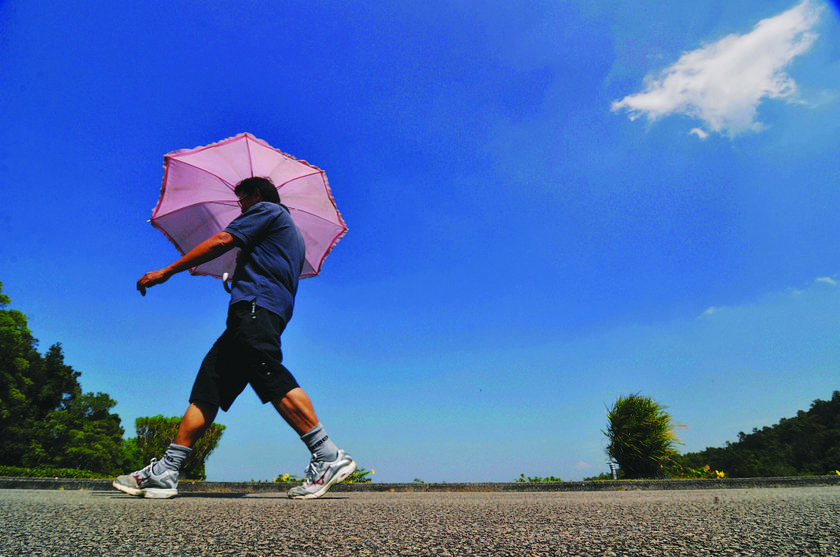
Public health messages will teach people how to behave: about dressing in light clothes; about lightly spraying your clothes with water because evaporation has a cooling action on the body.
The majority of Malaysians know nothing about heat-related deaths. Complementary health specialist Gabriel Lourdes explains: “A heatwave can overload the heart as people’s bodies try to adapt to the temperatures. Extreme heat can increase the demands on the heart by two-thirds.
“In very high temperatures the body sweats to lose heat, thereby losing salt and water.
“This leads to all body fluids, especially the blood, getting more concentrated, stickier and more likely to clot. This tends to make it much more likely that clots will form, which means both heart attacks and strokes go up.
“While heart failure tends to affect the elderly, heart attacks and strokes triggered by heat can affect anybody.”
So, it is worrying that the Health Ministry does not collect figures on heat-related deaths. Perhaps, it’s time they started to.
In 2003, the summer heatwave in France caused 10,000 ‘excess deaths’, most of them elderly who succumbed to heart failure, heart attack or stroke.
Morgues ran out of space and the French health minister resigned amid widespread criticism over the slow official response. That same summer Britain recorded 2,000 excess deaths during a 10‑day heatwave.
As the authorities dither, some are sceptical about the official temperatures released by the Meteorological Department. They believe the official thermometer is always way below what they record themselves.
Take Datin Dr Lim Swee Im from Ipoh who has been driving a car with an external temperature sensor for some years.
“l have been closely observing the temperatures rising for at least eight years or more. It used to be 33-35C but now it is almost always 41-45C.
“A good day has now become when my sensor records below 40C. l pray it will not touch 50C one day!”
Says Dr Lim: “My husband and I also closely observe the temperature inside our house. We do not use air-conditioning which only adds to the global warming problem.
“Suffice to say the temperature is climbing and reaches 30C despite our trees in the house compound and various heat insulation measures.”
So, why should we heed the Health Ministry’s advice and not worry about the heatwave when the sun is expected to blaze across the country until April?
Why shouldn’t we be worried when weather experts say there is an outside chance the previous record for the highest temperature in Malaysia of 40.1°C in Chuping, Perlis, in April 1998 could be broken?
The current heatwave follows some of the worst weather – cold, hot, dry, and thunderstorms and no fresh breezes – the country has seen in years.
Bringing the equinox – when the sun crosses directly over the equator – into the equation during the current bad weather is futile as the seriousness of mercury rising is diminished.
Until someone realises the impact of climate change, here’s what you may want to do: Remove packaging of chicken, place on verandah and roast for 60 minutes!
* This is the personal opinion of the columnist.


