


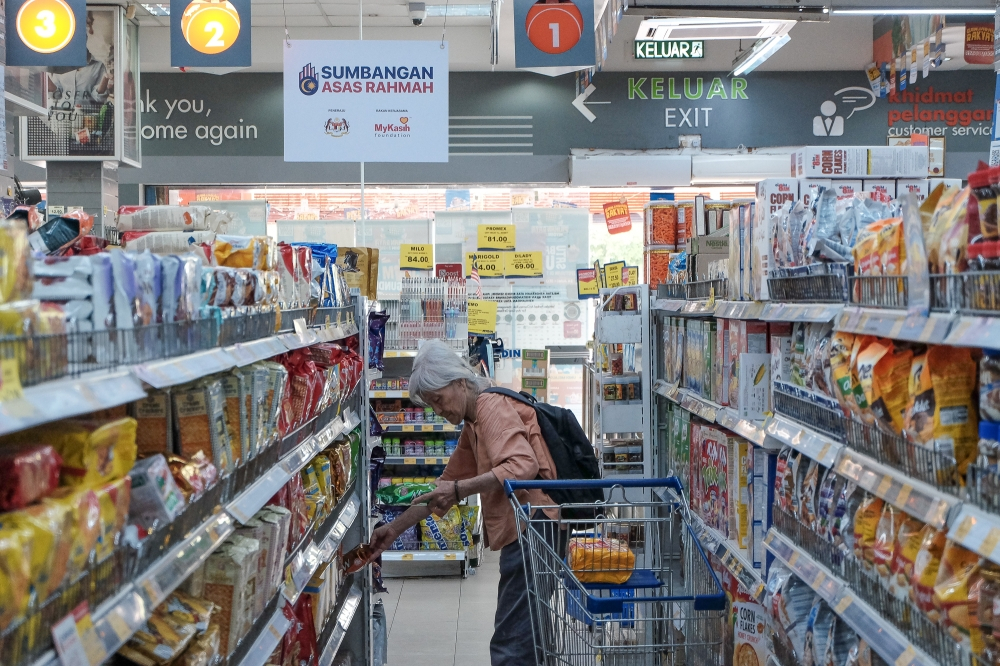


KUALA LUMPUR, June 12 — Malaysian consumers, already weathering months of relentless price hikes, face a sobering warning: the worst may yet be coming.
According to the latest industry report from Retail Group Malaysia (RGM), a fresh wave of retail price increases is expected to hit this month.
This new surge arrives as the country grapples with an inflationary environment that has been steadily deteriorating since the start of the year. Inflation rose 1.6 per cent in the first quarter of 2026, only to jump further to 1.9 per cent in April alone.
The categories driving this spike mirror the daily struggle of the average household: insurance and financial services surged 4.9 per cent, personal care and miscellaneous services climbed 4.8 per cent, and transport costs rose 4.1 per cent.
Even the simple act of dining at restaurants, cafes, and takeaway outlets saw a rise of 2.6 per cent.
“To make matters worse, new wave of retail price increases is expected to begin from June this year,” RGM said in its report.
The root cause of this mounting pressure is thousands of kilometres away. The escalation of conflict between the US, Israel, and Iran in February has sent fuel prices spiralling.
Between the first week of March and the first week of June, unsubsidised RON95 jumped 39 per cent, from RM2.67 to RM3.72 per litre. Diesel prices in Peninsular Malaysia were hit even harder, climbing 45 per cent to reach RM4.67.
These costs do not stay confined to the petrol pump; they bleed into every corner of the economy. RGM notes that the “fuel effect” has already inflated prices for a staggering array of essentials: from groceries and dining out to car repairs, house rentals, medical consultations, tuition fees, and even airline tickets.
The latest warning suggests this list is about to grow longer.
The timing is particularly precarious. RGM’s initial projection of 3.7 per cent retail growth for Q1 2026 already fell short of the 4.4 per cent retailers had hoped for in March.
Now, heading into the second half of the year, RGM has slashed its full-year retail sales growth forecast from 4.0 per cent to 3.8 per cent, citing the direct hit the conflict has taken on consumer purchasing power.
This caution is echoed at the highest levels of government. The Malaysian government has revised its annual inflation forecast upward to between 1.5 per cent and 2.5 per cent,a significant jump from the previous estimate of 1.3 per cent to 2.0 per cent.
RGM suggests the final figure will likely lean toward the upper end of that range.
For the manufacturing sector, the pressure is compounding. Prolonged conflict in the Middle East has not only spiked energy prices but disrupted supply chains and inflated logistics costs.
Manufacturers are now trapped in a difficult balancing act: absorb these costs and risk their margins, or pass them on to the consumer.
For the ordinary Malaysian, the implication is straightforward: the pinch felt at the petrol station, the grocery store, and the dining table is set to intensify.
With retailers across multiple sectors already adjusting prices to survive rising input costs, households must brace for a tighter budget.
RGM’s report also offers no sign of a reversal before the year ends, marking the second half of 2026 as a period of high-stakes navigation for both businesses and consumers.


