








KUALA LUMPUR, Sept 24 — For Malaysia’s palm oil industry, the European Union’s new deforestation rules once looked like a wall. Now, companies like FGV Holdings Berhad are trying to turn them into a bridge, with its digital arm FGV Prodata leading the way through a homegrown traceability platform known as FGV TOP, or Traceability of Product.
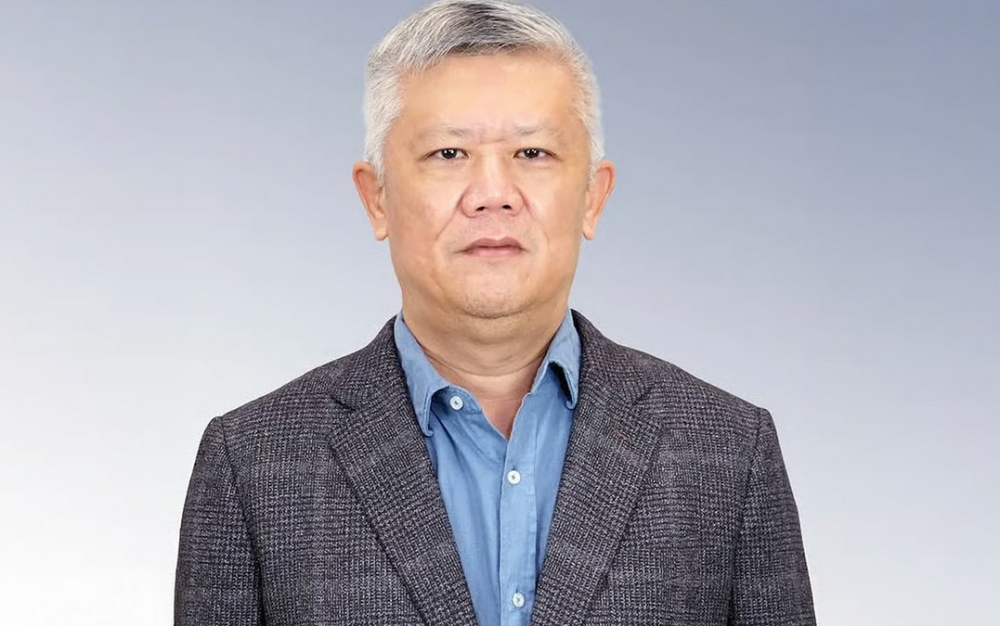
In an interview, FGV Prodata’s head of digital strategy and planning Muhammad Yazid Masol explained why traceability has become central to the group’s strategy.
“Europe requires Malaysian palm oil to adhere to EUDR (European Union Deforestation Regulation). FGV, as one of the largest players, needed a system that could trace products from the plantation all the way to the export manifest,” he said.
“That’s why we developed FGV TOP in-house — end to end, from ladang to consumer.”
Racing against the clock
The EUDR, which comes into effect at the end of 2025, requires exporters of commodities like palm oil, cocoa and coffee to prove their products are not linked to deforestation after December 2020. For FGV, the stakes were clear: no traceability, no access to Europe.
Muhammad Yazid said the platform was developed at speed.
“Within four months, we prepared for compliance. The CEO likes two things — speed and resilience. That’s what we delivered,” he noted.
The system links every batch of fresh fruit bunches to the estate it came from, the mill that processed it, and the refinery that turned it into oil. A polygon map shows the exact estate of origin, providing regulators and buyers in Europe with a transparent record.
“You can’t cheat, you can’t lie. The report generated by TOP is what satisfies Europe’s compliance,” he added.
Boost for smallholders
Beyond ticking boxes for Brussels, FGV Prodata sees the platform as a way to uplift rural incomes.
“We can then assist settlers and their FFB (fresh fruit bunches) to adhere to the compliance through technology," Muhammad said.
With around 300,000 Felda settlers in the supply chain — and thousands of independent smallholders — traceability ensures that compliant fruit can reach higher-value markets.
He stressed Prodata’s wider responsibility.
“We must take the lead and help external smallholders too. They won’t get a certificate on their own, but we can buy their products and include them in the system as long as their products comply with EUDR regulations.
"That way, no one gets left behind."
This effort dovetails with the Malaysian Sustainable Palm Oil (MSPO) certification, which was recently acknowledged by the EU as a credible sustainability standard.
Plantation and Commodities Minister Datuk Seri Johari Abdul Ghani hailed the move as proof that Malaysia could meet global expectations while keeping smallholders in the picture.
“MSPO provides assurance on legality, cut-off date compliance, and digital traceability, while ensuring that more than half a million smallholders are fully part of the sustainability agenda,” he said in a statement.
First mover in Europe
FGV Prodata has already claimed a first-mover advantage. In August 2024, it produced its first batch of EUDR-compliant crude palm kernel oil, making it one of the first Asian companies to export to Europe under the new regime. That milestone, Muhammad noted, came because the platform was ready.
“We wanted to be the first mover in Europe, the first from Asia. That’s why we rushed to get TOP operational,” he said.
Exporting know-how to Asean
Yet Prodata’s ambitions go beyond Malaysia’s borders. The company has already been tapped to share its expertise with neighbours. Through a SIRIM-Asean programme funded by Germany’s PTB (Physikalisch-Technische Bundesanstalt), Malaysian experts — including Muhammad — trained Vietnam’s National Metrology Institute in building a regulatory framework for traceability.
“Vietnam wanted to learn from Malaysia instead of copying the whole German model. So we taught them how our system works, and at the same time, we showed them we already had a product, ProWeigher, our certified weighbridge system — that complies with international standards.”
That weighbridge system is now deployed across FGV’s 66 mills and is designed to provide tamper-proof, legally relevant weighing data — a crucial element in preventing fraud and ensuring transparent transactions. Beyond palm oil, it can be applied to commodities from rice to coal, which gives it wider Asean market potential.
From compliance to opportunity
For Muhammad Yazid, the bigger story is not just helping Europe trace Malaysia’s palm oil, but showing Asean and the world that Malaysia can lead on technology.
“We’re not just building this for ourselves. We want to promote FGV products and Prodata’s systems in the region. That’s why Vietnam and other neighbours are looking to us,” he said.
With EUDR enforcement looming, and with smallholders depending on access to export markets, FGV Prodata’s digital push may prove critical. By anchoring compliance in technology and spreading that know-how across Asean, the company hopes to turn regulation into opportunity.