


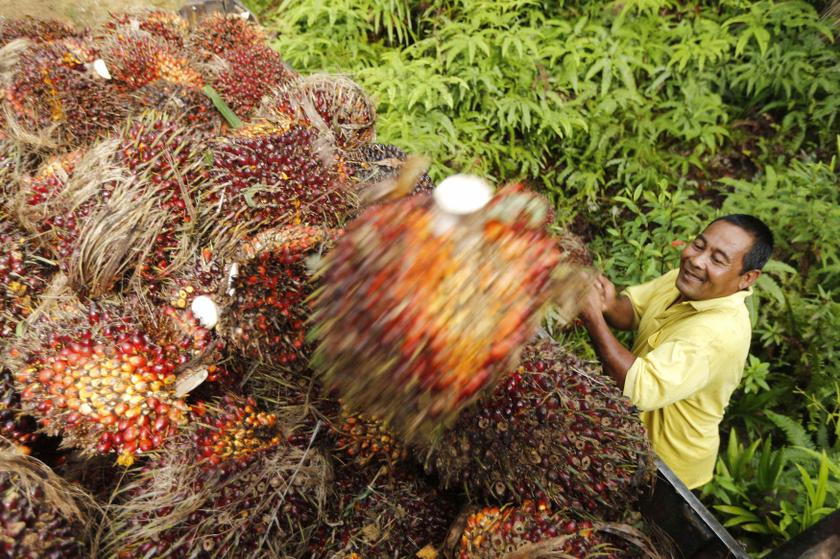


KUALA LUMPUR, Nov 1 — Malaysia-Ghana trade is set to grow further by year-end from US$340 million (RM1.4 billion) in 2016 following the continued bilateral relationships between the two nations, which mainly involved the palm oil industry.
Speaking to Bernama on the sidelines of Malaysia-Ghana Palm Oil Trade Fair & Seminar 2017 in Accra, Ghana, recently, Chargé d’Affaires of High Commission of Malaysia, Farhan Areffin, said Malaysia’s relations with Ghana had progressed in recent years with the surplus shifted into Malaysia’s favour.
“The main exports from Malaysia to Ghana are palm oil and its by-products, amounting to US$270 million, approximately 79 per cent of the total exports. As for Malaysia’s imports from Ghana, they are mainly agricultural products whereby almost 90 per cent of the total imports were cocoa beans,” he told Bernama.
Farhan said the Ghanaian government was in the midst of reviving its palm oil industry and with the opening of the Malaysian Palm Oil Council (MPOC) regional office this June, it would further enhance the trade figures in this sector.
The MPOC office, apart from promoting palm oil and palm oil-based products here, would allow Malaysia to share its expertise in this sector with the Ghanaians, he said.
“More Malaysian firms should see this country, among other West African countries, as one of the markets to penetrate, not only in the palm oil sector but others, including agriculture, affordable housing, energy, oil and gas and also logistics sectors,” he said.
He said another industry the Ghana government would be interested in was the halal industry.
“The Muslim population in Ghana and West Africa is growing, thus making demand for halal products and services to increase,” he said, adding that due to the stability and vibrant economy of Ghana, it has the potentials to become the hub for halal industry.
Farhan said Islamic banking was another halal-related sector that was still new in the region.
“In fact, the Bank of Ghana (central bank) is also active in studying the Islamic banking as well as other banking systems in Malaysia.
“Malaysian halal industry players are encouraged to visit Ghana to see the potentials. We, together with Malaysia External Trade Development Corp’s office in Lagos, Nigeria, would be able to assist,” he said.
One of the Malaysian companies which had successfully made its presence felt there was Yinson Holdings Bhd, which back in 2015, was awarded a 15-year contract worth US$2.54 billion for the chartering, operation and maintenance of a floating production storage and off-loading vessel for offshore deployment in Ghana from ENI Ghana Exploration & Production Ltd.
HeiTech Padu Sdn Bhd is also in Ghana to supply pre-printed smartcards for the country’s Social Security and National Insurance Trust project.
Other Malaysian companies included Sribima Maritime Training Centre Sdn Bhd, an oil and gas safety training company, and Edmark International, a multi-level marketing company, continued to thrive in Ghana.
“Ghana is one of the best destinations for Malaysian companies to invest in West Africa. Given the stability in terms of security and its growing economy, our firms should tap this opportunity,” he said.
On the safety in the country, he said, it was safe and this was why it has been receiving foreign investors.
“I had the opportunity to go through the presidential elections last December. They were held peacefully without any chaos.
“The peaceful nature of the country and its people have made Ghana a role model for other African countries. Personally, I think this is due to the religious-nature of Ghanaians, regardless whether they are Christians or Muslims, they are very pious,” he said. — Bernama


