


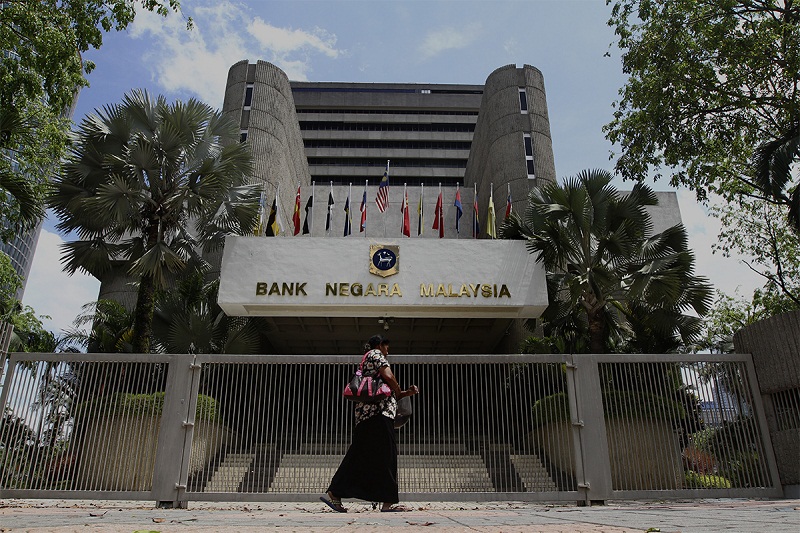
KUALA LUMPUR, Jan 20 — Malaysia’s central bank will likely hold interest rates steady tomorrow as it looks to contain market jitters at a time plunging oil prices hit the country’s economy and currency.
Economists polled by Reuters predicted that Bank Negara Malaysia (BNM) will maintain its overnight policy rate at 3.25 per cent, even as crude oil prices fell to a 13-year low this week.
They said inflation is not a worry at present, and that a policy shift is unlikely as Governor Tan Sri Zeti Akhtar Aziz prepares to retire in April after 16 years at the central bank’s helm.
“BNM is likely to maintain a wait-and-watch stance in tomorrow’s policy meeting as growth risks constrain any space for a hike while currency weakness limits space for a cut,” ANZ Research said in a note yesterday.
Crude futures slumped again yesterday, losing more than 2 per cent as US oil dropped below US$28 (RM122.31) a barrel, its lowest since 2003, on worries about global oversupply.
The slump is weighing heavily on Southeast Asia’s third largest economy, with the national oil firm Petronas planning spending cuts of up to RM50 billion over four years.
Prime Minister Datuk Seri Najib Razak will table a revised 2016 budget on Jan. 28, as spending this year was based on the assumption that Brent crude would average at US$48 per barrel.
Awaiting governor appointment
Last week, Indonesia’s central bank cut its benchmark rate for the first time in 11 months in a bid to lift growth, which has slumped to its lowest rate in six years.
BNM is unlikely to do likewise, according to OCBC economist Wellian Wiranto.
“The stance has been to present market stability, so I don’t think they’ll change their rates any time soon,” he said.
Markets are waiting to see who Najib wants to succeed Zeti. An announcement is expected by the end of January.
“The market will look at how the new governor will hold the reins,” said Pan Jing Yi, a Singapore-based analyst with 4Cast.
A key factor seen keeping BNM from cutting the rate is extra pressure that it would put on the ringgit, which has been battered by tumbling global commodity prices and other factors.
In 2015, it was Asia’s worst-performing currency, shedding more than 18 per cent against the dollar.
This year, the ringgit has weakened nearly 2 per cent against the dollar. — Reuters


