


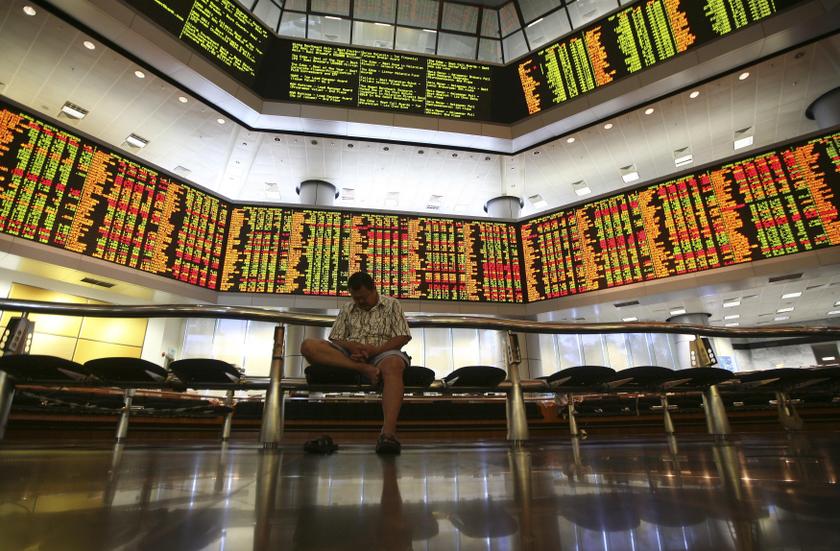
KUALA LUMPUR, Aug 17 — Emerging-market stocks fell to the lowest level since October 2011, extending last week’s losses, and currencies slid as investors speculated that capital outflows will accelerate. Russia’s rouble tumbled with oil prices.
Hong Kong’s Hang Seng China Enterprises Index decreased to an eight-month low as foreigners pulled funds amid concern about the weaker outlook for the yuan and economic growth. Malaysian stocks tumbled 1.6 per cent as SapuraKencana Petroleum Bhd plunged 11 per cent. Vietnam’s equity gauge retreated 2.7 per cent, set for a correction. The ringgit fell to a 17-year low versus the dollar and the rouble dropped 1 per cent.
The MSCI Emerging Markets Index lost 1 per cent to 854.81 at 9.05am in London. The gauge posted a fourth weekly drop, the longest stretch of weekly declines in two months, after China’s shock devaluation boosted bets that Asian nations will weaken their currencies. A US manufacturing report due Monday may offer clues on the Federal Reserve’s timing for its first interest-rate increase since 2006.
“Outflows will continue from emerging markets until the Fed confirms a date for the rate hike,” Danny Wong Teck Meng, chief executive officer of Kuala Lumpur-based Areca Capital Sdn, which manages about US$224 million (RM919.8 million) in assets, said by phone. “We are switching to stocks that have been sold down.”
Fund outflows
Investors pulled money from emerging-market equity funds for a fifth straight week, according to a report from EPFR Global. A Bloomberg gauge of 20 currencies slid 0.3 per cent to a record today after slumping for an eighth week.
The developing-nation stock index has fallen 11 per cent this year and trades at 11 times projected 12-month earnings, data compiled by Bloomberg show. The MSCI World Index has added 2.1 per cent and is valued at a multiple of 16.2.
A gauge of Hong Kong-traded Chinese shares sank 0.9 per cent. Net outflows from Chinese and Hong Kong equities reached US$531 million in the week to August 12, the ninth week of sales out of the past 10, China International Capital Corp said, citing EPFR Global.
Ping An Insurance Group Co led losses by insurers as the government seeks to contain the fallout from blasts in Tianjin port. The Shanghai Composite Index rose 0.7 per cent.
All 10 industry groups in the emerging-market index fell, led by technology and energy companies. SapuraKencana, Malaysia’s biggest oil and gas services provider, tumbled the most on record, and Bumi Armada Bhd sank 10 per cent.
Ruble weakens
Russia’s Micex Index retreated 0.5 per cent and the rouble weakened to a six-month low. Oil futures in New York fell as much as 1.6 per cent as Iran said OPEC production may hit a record after sanctions on the country are lifted and as US drilling activity sustained its increase.
The FTSE Bursa Malaysia KLCI Index sank toward the lowest close since June 2012. The ringgit added to last week’s biggest slide in five years and bonds extended their declines on speculation investors will dump more Malaysian assets as sentiment deteriorates.
Vietnam’s VN Index has dropped 10 per cent from its July peak amid concern about the nation’s export growth after China devalued its currency. The State Bank of Vietnam doubled the amount the exchange rate can move either side of a daily fixing to 2 per cent on Wednesday.
The Borsa Istanbul 100 Index fell 0.7 per cent, as the Turkish lira headed for a record low. The South Africa rand weakened 0.4 per cent.
India’s S&P BSE Sensex index lost 0.6 per cent, while equity gauges in Taiwan, the Philippines and South Korea dropped at least 0.8 per cent. — Bloomberg


