




KUALA LUMPUR, June 17 — Japanese firms are still upbeat on their prospects in Malaysia due to the country’s political stability and pro-Japan outlook, although many said the country needs to improve its public transportation system, a survey has shown.
While Malaysia’s key selling points to Japanese investors in the last few years have been both its pro-Japanese outlook and political stability, this is the first time where “pro-Japanese” is “listed as the most attractive feature of investment” in the annual survey, with 65.9 per cent of the 170 respondents citing it.
“In addition to this, ‘Political Stability’ gains almost appreciation from the companies,” the Japanese Chamber of Trade & Industry Malaysia (JACTIM) and Japan External Trade Organization (JETRO) said in a press release yesterday on the results of their joint survey.
Both Malaysia’s political stability and the linguistic capabilities of workers here were cited by 65.3 per cent as attractive features, while factors such as comfortable living conditions; safety and security; substantial infrastructure were cited by 48.8 per cent of respondents.
A total of 46.5 per cent of those polled also listed “fewer natural disasters” as a pull factor.
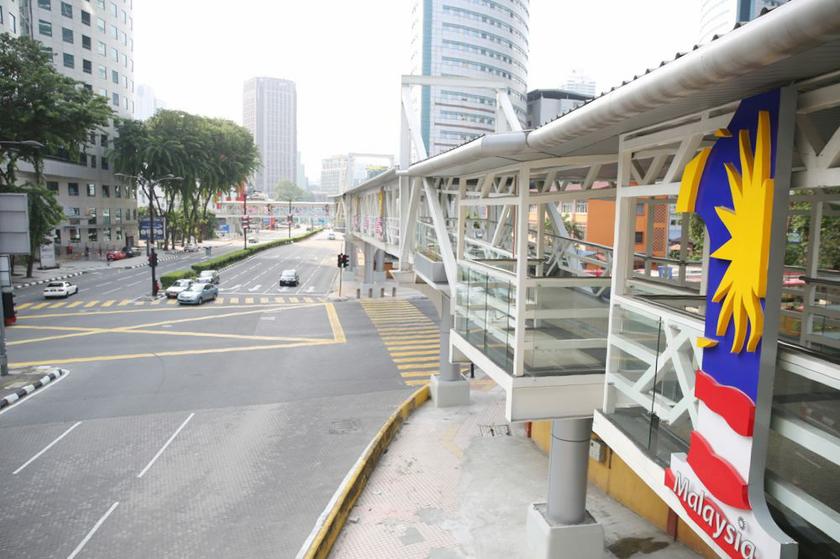
Over half or 56.4 per cent of 172 Japanese firms surveyed said, however, that Malaysia’s public transportation system needs improvements, with 41.9 per cent and 39.5 per cent also saying they want upgrades to the current road network, communications systems and the Internet.
Chronic traffic jams topped the list of points that Malaysia needs to improve on at 72.1 per cent, while 46.5 per cent cited bad road conditions.
Labour costs featured prominently, with a whopping 72.1 per cent of 172 firms citing the need for a wage hike, while low retention rate, as well as difficulty in hiring skilled workers, specialists and mid-management staff were also significant problems for 57 per cent and 55.8 per cent of the firms.
Almost a quarter of firms said difficulty in hiring foreign workers and tighter employment regulation by the government has led to increase in labour costs, which was cited by 57.5 per cent of 134 firms.
A key factor that most of the 169 Japanese firms wanted Putrajaya to consider in future wage hikes is for wage increases to be reflective of economic growth (73.4 per cent) and that the minimum wage amount should include allowance and benefits (37.9 per cent).
Putrajaya’s new minimum wage policy of RM900 and RM800 for the private sector’s employees in peninsular Malaysia and east Malaysia was launched in January 2013 and kicked in fully on January last year. The federal government reviewed the minimum wage this year and plans to implement the new undisclosed figure at year-end.
The lack of sufficient water supply was no longer much of an issue as it was in the first half last year, with 85.6 per cent of 167 respondents saying they did not have water rations during the survey period.
Only 10.2 per cent said they had to ration water more than once in three months.
Out of 169 firms, almost half of those polled are considering expansions here, with 42 per cent and 9 per cent planning to maintain or downsize their operations.
The online survey was conducted from January 22 to March 5 this year among 172 Japan firms out of a possible pool of 554 JACTIM members, with the largest represented sectors from electric and electronics (23 per cent), other manufacturing firms (27 per cent), trading and wholesale (14 per cent), construction and engineering (9 per cent).
But in a separate JACTIM survey on 165 Japanese firms here, respondents were seen to have a negative outlook on business sentiments in the first half of this year, with 72.4 per cent noting the weaker ringgit and stronger US dollar had impacted their operations as “watching currency movement became important”.


