




KUALA LUMPUR, March 4 — The year 2015 is shaping up to be quite a volatile year for financial markets.
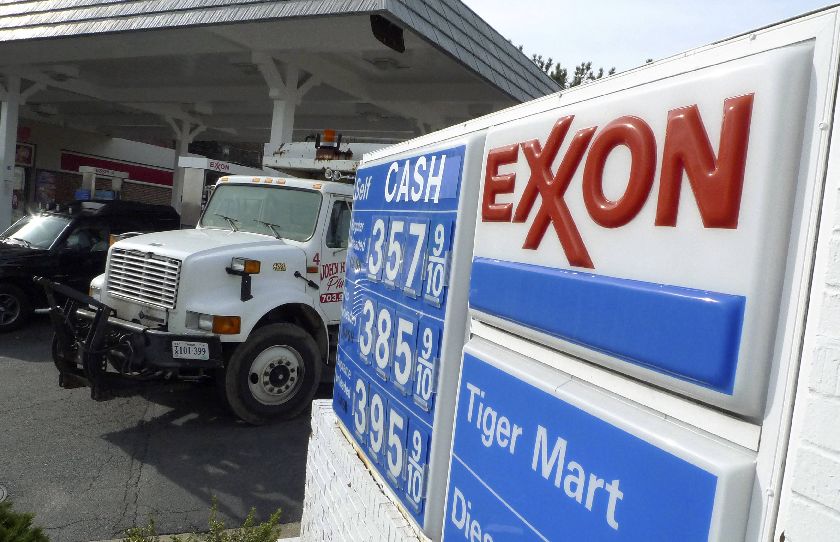
Oil prices ploughed new lows after losing more than half of their value since June 2014; multi-year-low commodity prices, besides excess productive capacity and sluggish demand, have driven consumer inflation below zero per cent in Europe.
Political uncertainty has increased in Europe with a far-left party assuming power in Greece with a mandate to renegotiate the country’s debt.
Despite all this uncertainty, we remain relatively constructive on global economic growth and asset prices.
The US economy is expected to accelerate in 2015 as the unusually harsh winter seen in Q1 2014 is unlikely to be repeated, while a strong job market fuels a consumer demand-driven expansion.
Europe and Japan are also likely to post slightly stronger growth on the back of record low borrowing costs and weaker currencies. The main growth concern is in China, which we expect to decelerate somewhat.
However, this means that the authorities in Beijing are focused on much-needed reforms to turn the world’s second-largest economy from an export and investment-driven engine to one powered by domestic consumption. And that naturally represents a trade-off between short-term and long-term growth.
The decline in oil prices should be a net benefit for the world economy — lower energy costs boost disposable income of households, increase corporate profits and keep inflation relatively benign.
Low inflation is allowing central banks to loosen monetary policy — more than a dozen have cut rates so far this year alone! Central bank action is helping to keep borrowing costs low for both consumers and companies.
Loose monetary policies are, in turn, investors’ best friends in relatively riskier assets such as stocks and higher-yielding bonds.
However, let’s be clear — it’s not going to be as easy a ride as the past six years, during which global stocks have more than doubled. Indeed, 2015 is likely to see traditional asset classes generate lower investment returns than in recent years.
Bond yields have discounted a lot of disinflationary pressures, which means any upside surprise on the growth/inflation front could undermine bond returns as well. Also, the first Fed rate hike of the cycle — expected sometime in the middle of the year — is normally a period associated with increased market volatility.
We do not think this is something to be too concerned about. The Fed is expected to raise rates only because the US economy has recovered significantly from the financial crisis of 2008-09. Indeed, US employers hired more workers in 2014 than in any year since 1999. The good news is that the Fed looks keen to err on the side of caution. Therefore, any rise in interest rates is likely to be gradual and well signalled.
Thus, we do not believe that we are near the end of the developed market-led bull rally in stocks. History teaches us that equity markets usually rise well into a rate hiking cycle — usually until the Fed’s focus shifts from supporting growth to combat inflation. We believe this transition is some quarters away. It is likely to be a 2016, or even 2017, topic rather than a 2015 issue.
However, lower returns and higher volatility will make investment gains feel much harder to achieve. It is against this backdrop that we believe investors need to widen their investment horizons to areas less travelled. A more conventional approach would be to buy developed market and Asian stocks on dips, a strategy we expect to remain profitable in 2015.
It also includes investments in a basket of income generating assets — such as high dividend paying stocks and some Asian local currency bond markets such as China and India. Finally, there are many alternative strategies (such as employing a "covered call" strategy) that we believe will generate a good risk-return profile in 2015, relative to the more traditional asset classes. However, this would require professional investment advice.
Overall, we remain constructive on risk assets, despite the ongoing volatility and the likelihood of the Fed hiking interest rates for the first time since 2006. However, we would recommend investors consider complementing global equity investments with less traditional sources of returns.
* Steve Brice is Chief Investment Strategist of Wealth Management Group for Standard Chartered.


