


GEORGE TOWN, July 14 — A RM500,000 coastal erosion mitigation project is underway at Batu Ferringhi as a temporary measure to protect the popular beach while awaiting a permanent solution.
State infrastructure, transport and digital committee chairman Zairil Khir Johari said the Department of Irrigation and Drainage (DID) has begun installing beach containers along the stretch in front of Lone Pine Hotel to reduce wave impact, slow erosion and protect the most critically affected section of the shoreline.
The works began on July 8 and are expected to be completed by August 10.
“Based on DID’s technical assessment, this mitigation measure is expected to be effective for around two to three years, depending on weather conditions, wave action, tidal movements and extreme weather events,” he said in a statement today.
He said the temporary measure will protect the beach until the implementation of a long-term coastal protection project approved under the 12th Malaysia Plan (12MP).
The long-term project is currently at the consultant appointment stage, where detailed designs will be prepared before construction begins.
“The proposed project will include coastal protection structures, outfall structures and beach nourishment, subject to the outcome of technical studies and the consultant’s final design,” he said.
He said the project would reduce erosion, stabilise the shoreline and protect public infrastructure, assets and tourism areas in Batu Ferringhi on a sustainable basis.
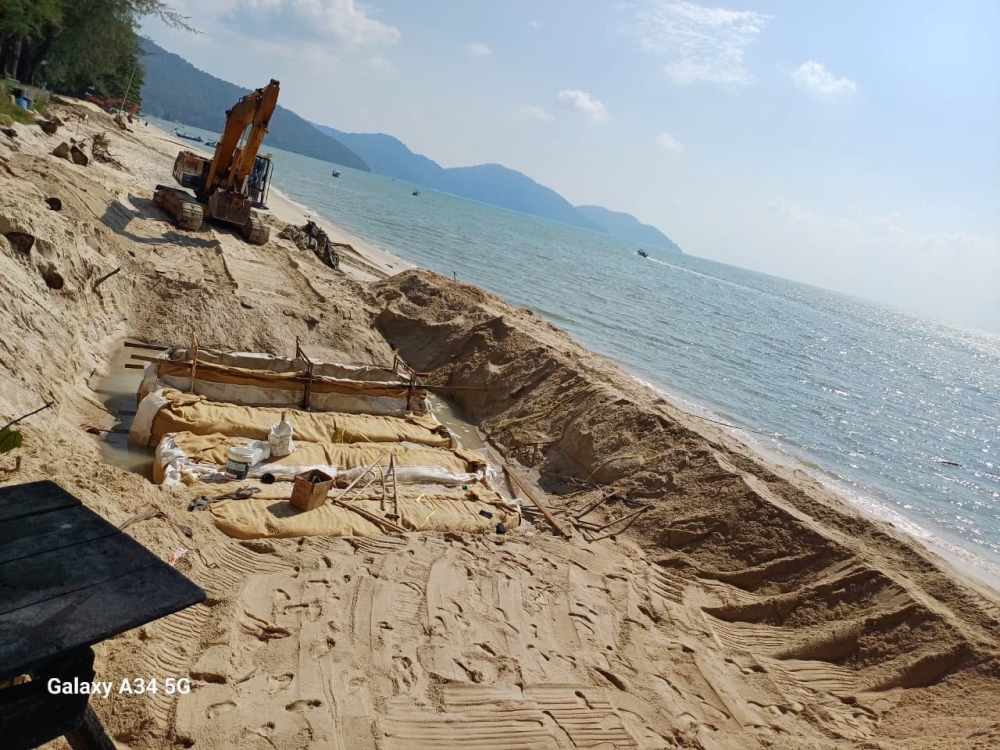
The current RM500,000 mitigation project involves site clearing, removal of fallen trees and the installation of 62 beach containers arranged in five layers to a height of about five metres.
The structures will protect a 44-metre stretch identified as the area most severely affected by coastal erosion.
Zairil said the mitigation works faced challenges including limited working hours due to tidal conditions, unpredictable weather such as heavy rain, strong winds and high waves, as well as the lack of direct access for heavy machinery to the beach.
He said the absence of a direct access route meant construction materials and debris had to be transported using double-handling methods, increasing the complexity and duration of the works.
“Erosion could worsen and spread further inland due to prolonged delays to the mitigation works and this could potentially affect permanent structures, public facilities and infrastructure near the coastline,” he said.
On concerns over safety and tourism impact, Zairil said the mitigation works were planned with visitor safety, tourism activities and environmental sustainability in mind.
“The use of beach containers was selected based on DID's technical assessment, taking into account Batu Ferringhi's status as one of Penang's premier tourist destinations,” he said.
He said DID will continue monitoring the project to ensure minimal impact on tourism and the environment.


