


KUALA LUMPUR, Aug 8 — A little more than a week has passed since nomination day, which marked the official start of campaigning for the state elections.
As dawn breaks on early voting today, let’s examine how campaigning has progressed in the six states involved in the polls and what politicians are offering to constituents.
Kedah: Big plans
A few days ago, Perikatan Nasional (PN) laid out 17 offerings for Kedah folks, as it seeks a fresh mandate to govern the state once again.
One of the offerings that stood out is the provision of 100,000 competitive job opportunities within 30 years through the proposed implementation of high-impact projects, including already planned ones, such as Kedah Rubber City (KRC), Kedah Aerotropolis and Kulim High Technology Park (KHTP).
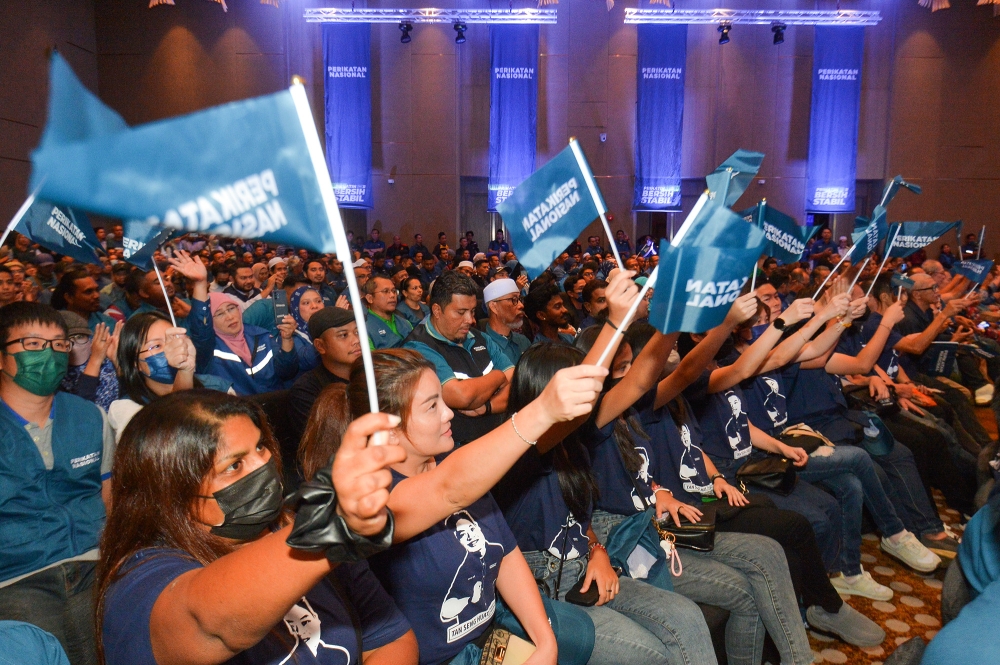
The coalition also pledged to ensure domestic and international investment commitments with various high-impact projects with a target of RM10 billion per year as outlined in the Kedah Plan 2035.
In addition to that, PN gave its commitment to provide affordable residential land lots for the low-income group as well as to process long-pending land title applications, while house repairs will also be carried out for 1,000 less fortunate households annually.
Its goal for housing will include making available low-cost and affordable houses through government and private initiatives for first-time home buyers, with the goal of providing 15,000 houses by 2030.
The coalition said it is also determined to resolve longstanding issues related to the supply of clean water in the state, in addition to reducing the rate of non-produced water (NRW) to 25 per cent by 2037.
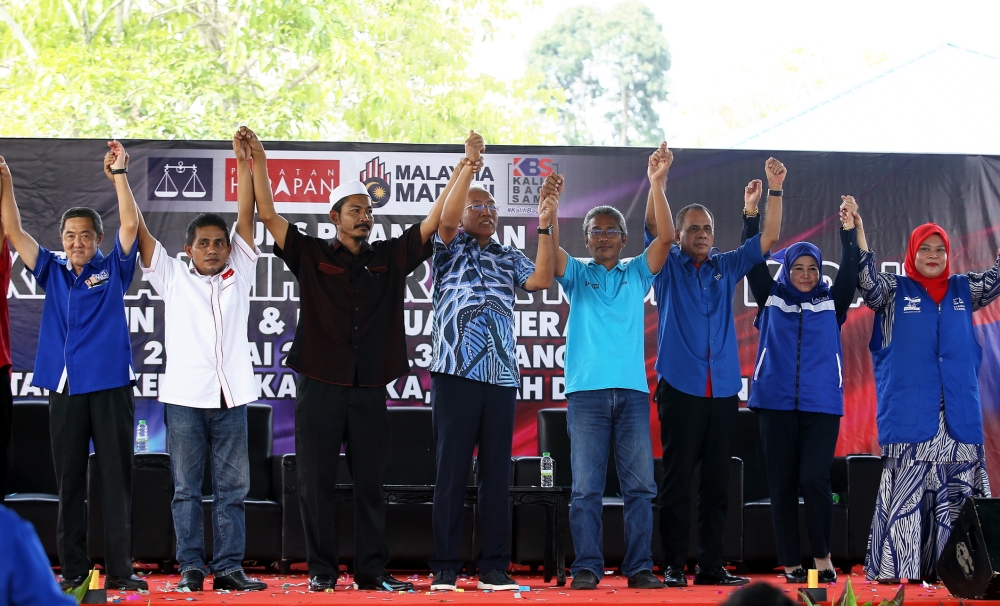
Pakatan Harapan-Barisan Nasional (PH-BN) Kedah in its unity government manifesto, on the other hand, has promised to include political reform and transparent management; progressive economic development and management; as well as harmonious social development and sustainable management of natural resources.
Co-chairman of the Kedah state unity leadership council, Datuk Seri Mahdzir Khalid, said the PH-BN manifesto is reasonable and capable of being implemented for the benefit of the people of Kedah.
He reportedly said, however, that PH-BN, when fulfilling its manifesto, should start with matters of integrity and good governance to ensure that the management of Kedah’s land products, which are the main source of its wealth, will be utilised best by its people.
Kedah continues to be in the limelight as the authorities investigate the alleged theft of rare earth elements (REE) by foreigners in Kedah.
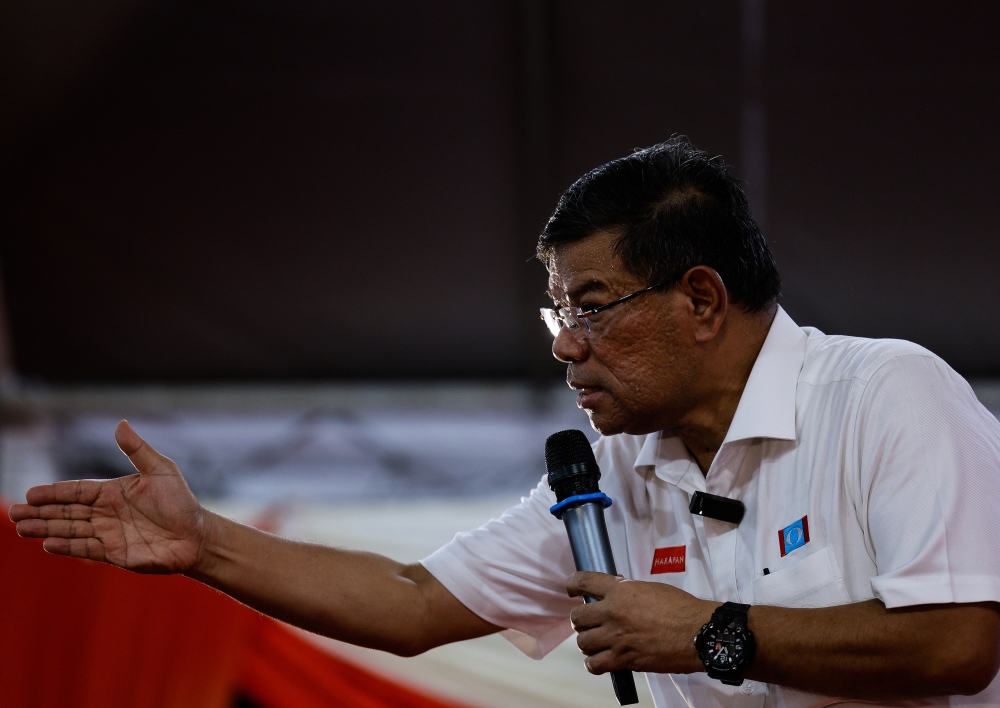
On July 30, Home Minister Datuk Seri Saifuddin Nasution Ismail said that caretaker Kedah menteri besar Datuk Muhammad Sanusi Md Nor’s purported incompetence in managing the Kedah government was the reason for the theft of REE in Bukit Enggang, Sik.
Saifuddin reportedly said that the matter not only affected the state government, but also the country’s image since the issue of human trafficking was also involved.
Prior to this, Sanusi was arrested last month and charged with two counts of sedition over remarks about the Selangor Sultan’s choice of Datuk Seri Amirudin Shari as his mentri besar.
Penang: Long-term goals
In Penang, PH-BN’s 50-item manifesto was also recently presented by Penang Unity Manifesto committee chairman Zairil Khir Johari, which spelled out the coalition’s pledge to uplift the state over the next five years if it were to win the state election.
Among the items offered in the manifesto to Penang folks are infrastructure development, balanced rural development, human capital development and housing for all.
A highlight was the setting up of a State Social Development Fund from medical health fees collected from foreigners to benefit the needy.
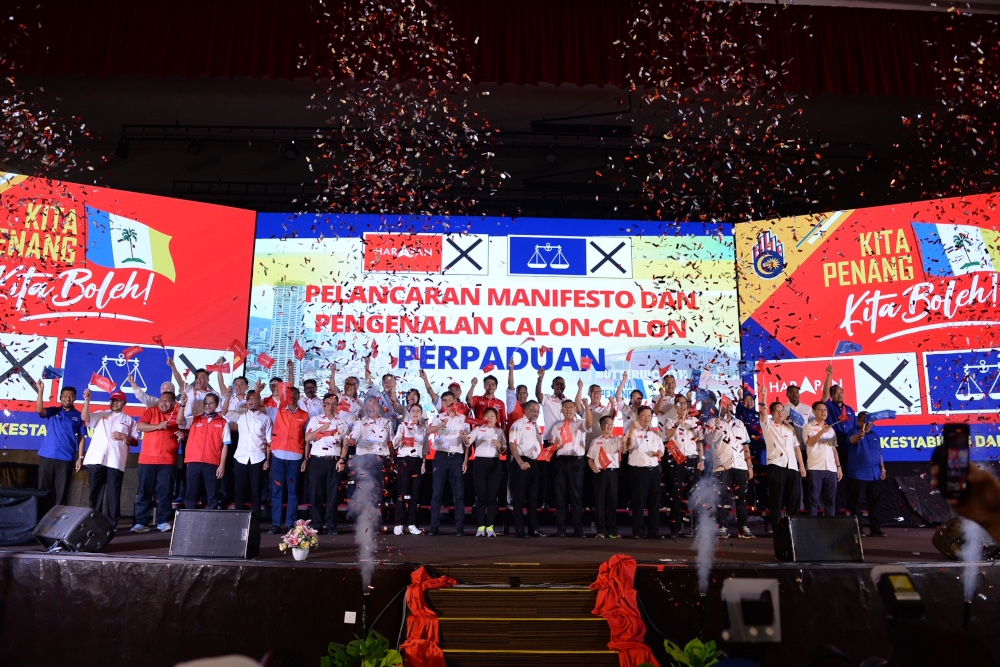
The manifesto also promised cash handouts to state residents, such as a one-off RM1,000 assistance to each Haj pilgrim from the B40 income group; RM600 annual assistance to e-hailing, taxi and school bus drivers and personal accident insurance for p-hailing (motorcycle) riders; and a one-off RM500 Golden Couple Programme for newly married couples.
Livelihood support for farmers and vegetable growers and assistance for fishermen will be provided, while B40 students who receive offers to public institutions of higher learning will be given free laptops.
There were also infrastructure projects, where the unity manifesto promised to develop a “Silicon Island” and a Meditech City to attract high-impact investments.
The manifesto also included pledges to construct the Tanjung Bungah-Teluk Bahang Dual Carriageway, a diverging diamond interchange at the Juru Interchange, and the Sungai Bakap Bypass Road, as well as to complete the construction of the Ayer Itam Bypass Road to the Tun Dr Lim Chong Eu Expressway.
The construction of the Penang Light Rail Transit (LRT) and the Bukit Bendera Cable Car will also commence.
There are, however, sentiments on the ground that are against the Silicon Island project.
Penang Forum, among others, has urged the politicians who are contesting the state election to talk about their policy ideas and solutions to the longstanding local and state issues and to stop greenwashing the issues.
The pressure group also questioned DAP’s three-term governance, which still has yet to address the public transport system in Penang.
With that unresolved, Penang Forum reminded that while Penang has been reduced from three islands to one, the island is still threatened with a very large reclamation project in the south of Penang Island.
Despite not presenting a manifesto, Penang PN chairman Datuk Dominic Lau said if the coalition takes over the state government of the island, they will stop the proposed sea reclamation project; thus, saving the livelihood of 6,000 fishermen in the state.

In June, PN chairman Tan Sri Muhyiddin Yassin said it was possible for the coalition to win nearly 20 seats in the state.
His remarks were supported by a PN research which found that 55 per cent of Penang Malays supported PN, while 28 per cent backed BN and 15 per cent stated their support for PH.
The coalition had also claimed that it only needed a small swing from Chinese and Indian voters to win the 20 seats.
In the 2018 general election, PH won 37 out of 40 state seats, while BN won two and PAS one.
Out of the 37 seats, Bersatu, when it was part of PH, won four seats — Bertam, Seberang Jaya, Sungai Acheh and Telum Bahang. However, the four seats fell vacant when the state’s anti-hopping law came into effect.
Negeri Sembilan: In need of development
Over in Negeri Sembilan, although it is a smaller state compared to the other five that are facing the state election, locals say that Seremban has been neglected ever since its rubber estates were converted to oil palm estates.
There were promises of bring light Industry to the state to help repopulate it once again; however, there has been little sign of this to date.
Many locals have given up, although they still hold out hope that the state will return to its former glory — whoever takes the state government next.
In pockets of the state, there are hidden gems like Bamboo Straw — whose founders are from an indigenous community in Semelai, Jempol — and specialty coffee founder Apacaba in Pekan Titi, Jelebu.
In Mambau, Seremban, Bengkel Seri Sembilan trains disabled persons and offer them jobs in an envelope-making process chain, that supplies envelopes to government departments, statutory bodies, local authorities and private companies.
However, one wonders if both PN and PH-BN are offering initiatives that could restore locals’ desire for development in state.
For PN, it announced its plans to empower mothers and youths if it wins Negeri Sembilan, by introducing an RM1 million incubator grant for female entrepreneurs, while also bringing a ‘inisiatif ibu prihatin Nismilan’ which comes with a 10 per cent subsidy (with a maximum cost of RM300) for giving birth. There are also plans for childcare facilities to help working families, and help women who have just lost their husbands or are newly separated.
For youths, PN is looking at raising “Nismilan Mudo” and “Tani Mudo” funds, with allocations as high as RM2 million yearly.
The youths in the state will also see an e-sports scene in each district, with an allocation of RM1 million a year.
On cost-of-living issues, PN said it would expand the “Bantuan Bakul Prihatin” while allowances for “community leaders” including imams and bilals will also see an increase in stages.
To help the locals, the coalition has plans to optimise the use abandoned customary land (tanah adat terbiar) for farming activities to help generate side income.
PN will also channel an additional RM5 million to a “TaNismilan” scheme while RM15 million will be invested to improve road safety and expand free Wi-fi coverage for the state.
On the PH-BN side, it offered 70 initiatives as its manifesto for the state election. Among others, the political pact has also placed its focus on youths with a promise to build 4,000 units of affordable homes for families and single youths.
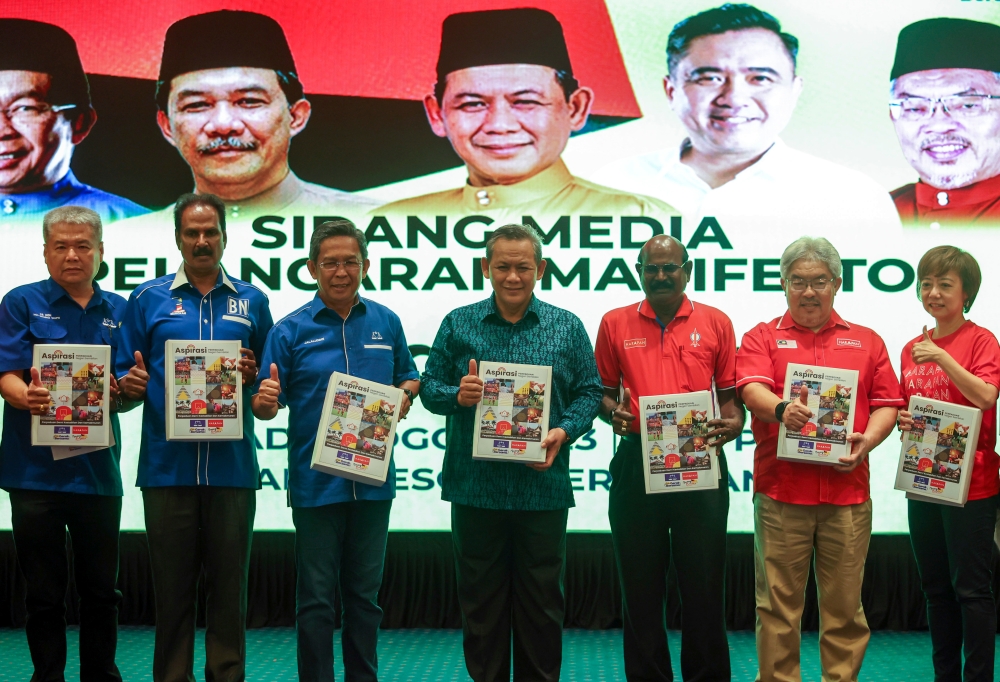
If they are given a renewed mandate, caretaker menteri besar Datuk Seri Aminuddin Harun said the political pact has pledged to provide up to RM1,000 in special aid for those seeking to pursue their bachelor’s degree.
Other initiatives offered by PH-BN include free hawker licences for the next five years, a special English language programme for students, RM1,000 cash incentive for students who score straight As in their SPM/STPM/STAM examinations and RM150 monthly allowance for university students who are from poor families.
Selangor: No more PJD Link
Among the offers PH-BN promised in Selangor, are TVET training to 10,000 Selangor youths through collaborative partnerships with high-tech companies like Apple, Siemens, Festo, and Dassault Systèmes; to expand the scope of Tuisyen Rakyat Selangor programme by providing free tuition to primary and secondary school students with a target of 200,000 participants; and to provide free language learning classes, such as Bahasa Melayu, English, Mandarin, Tamil, Japanese, and Korean; to provide RM1,500 per undergraduate student through Bantuan Mahasiswa Kita Selangor and internship opportunities with a monthly payment of RM1,500 for 2,000 Selangor youths.
Offering a sustainable, comfortable and liveable development, PH-BN is looking at making available 200,000 units of Kita Selangor Homes at a price of RM250,000 and below along with financial assistance through banking institutions.
But the icing on the cake is the cancellation of the proposed Petaling Jaya Dispersal Link (PJD Link) that was approved by the previous federal government under the prime ministership of Datuk Seri Ismail Sabri Yaakob in April last year.
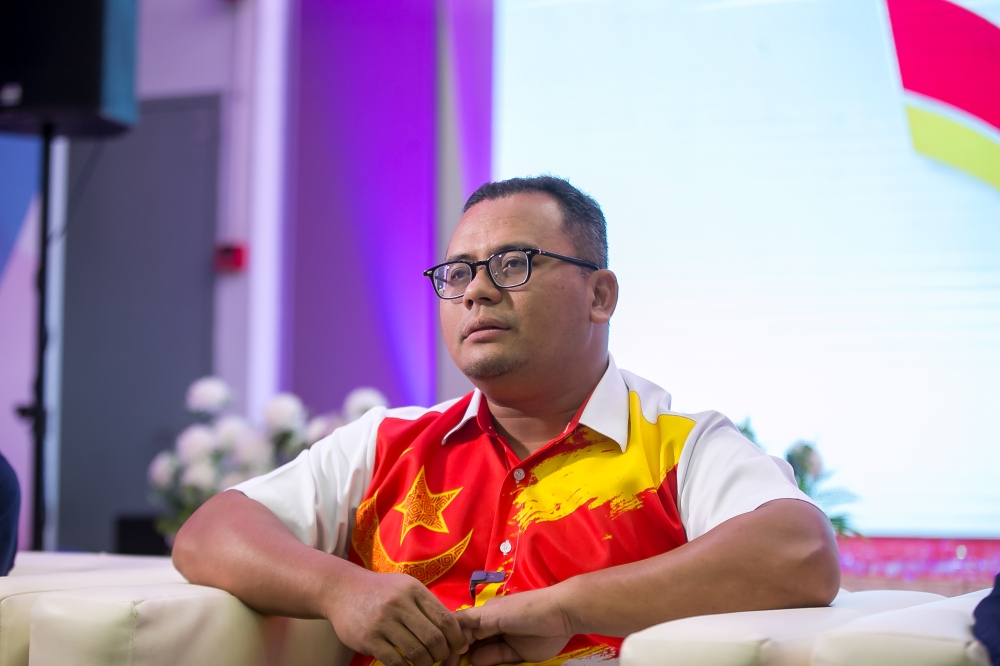
Caretaker Selangor menteri besar Datuk Seri Amirudin Shari, who is seeking another term in office, had on July 31 made this announcement, indicated earlier in the month proposed highway had only been given a conditional approval and would end up like the proposed Kinrara-Damansara Expressway (Kidex) project that was shelved in 2015, if it failed to meet certain requirements.
The PJD Link was a proposal to build a 34.3km dual-carriage expressway with four lanes and eight interchanges/ramps as an alternative to the heavily-trafficked Lebuhraya-Damansara Puchong (LDP) to connect various fast-growing townships with Bandar Utama at one end and Bukit Jalil at the other end.
A local residents group calling itself Say No to PJD Link was among many others who, opposed Kidex, filed a lawsuit in June against the Director General of the Department of Town and Country Planning, the Selangor State Director of the Department of Town and Country Planning, the Selangor State Government and the Malaysian Government to obtain classified documents after claiming a lack of transparency in the conditional approval.
Accused of a ‘copy and paste’ manifesto by Amirudin, PN has a similar manifesto for Selangor, but with an additional RM10 million allocation to non-governmental organisations (NGO) for implementation of programmes that could foster harmonious relationships among multi-racial communities and RM50 million to establish special state government agencies to improve the socioeconomic status of minority groups, particularly the Indian and Orang Asli communities.
It also sought to provide 20 cubic metres of free water for a household with an income below RM15,000, providing RM10 million as incentives for NGOs to implement an environment-sustainable programmes, and RM10 million for a Sustainable Nature initiative to cultivate water conservation practices.
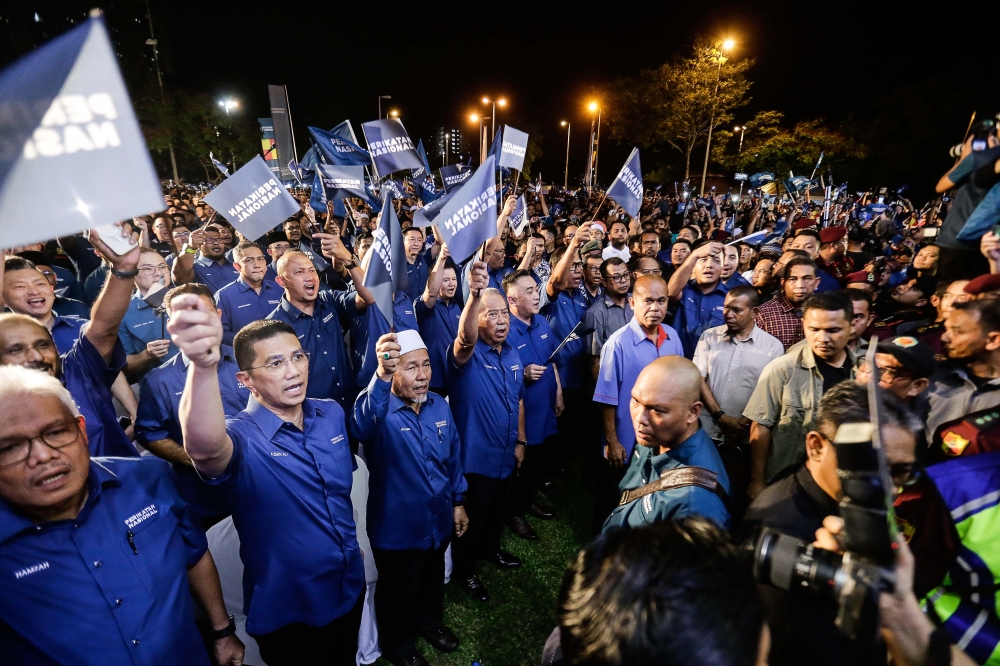
After PN released their manifesto, Amirudin said PN’s manifesto was worth more than RM2 billion, and was a result of ‘copying’ PH-BN’s manifesto.
While he reportedly said has not seen it yet, the Sungai Tua candidate said only the numbers are different. He cited a few examples, whereby PH-BN offered BINGKAS at RM300, PN did theirs at RM400, and PH-BN offered imam’s salary at RM1,600, PN raised theirs to RM1,700.
Kelatan and Terengganu: Elusive clean sweep
When talk started back in March that the six states will have their elections sometime this year, political analysts and along with politicians predicted that it will be a clean sweep for PAS in both Kelantan and Terengganu.
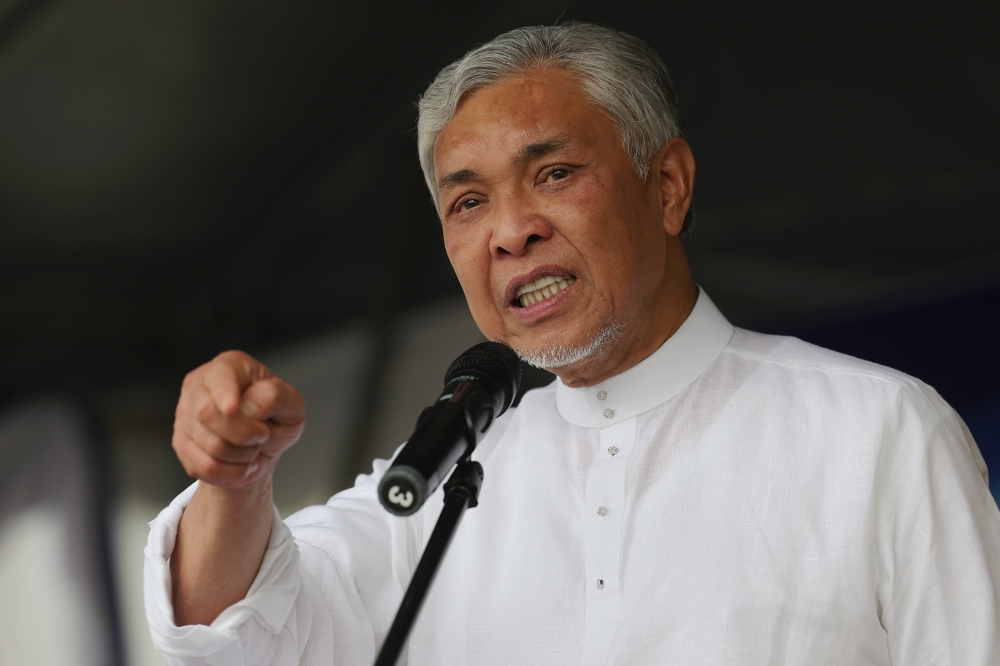
Regardless of predictions, BN chairman Datuk Seri Ahmad Zahid Hamidi has called on folks in Kelantan to close their chapter of support for PAS, which ran the state for 33 years, to hop on the unity government bandwagon.
Among the offers he made were removing water bill arrears and giving a 50 per cent discount on land premiums and border crossing charges.
Not staying complacent with their clean sweep in the 2022 general elections, in the Islamist party president’s latest remark regarding the state election, Tan Sri Abdul Hadi Awang made a call for all Muslims to vote from their own group in order to keep Muslims in power in the country.
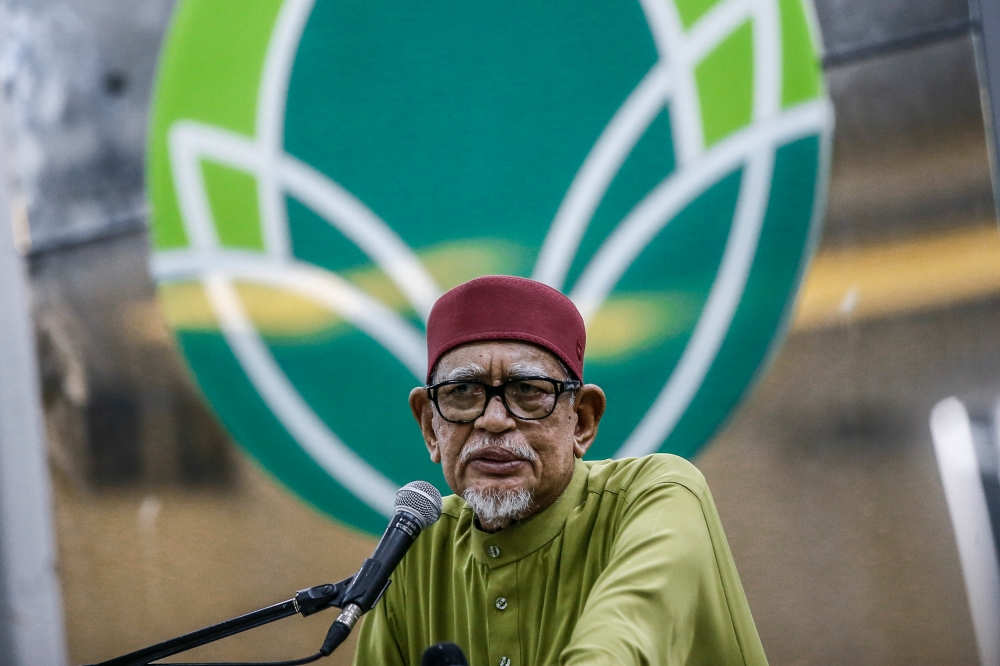
Hadi had claimed that Muslims are obligated to vote as it was akin to “jihad” or a holy struggle when other ethnic groups are threatening the political dominance of the majority group in the country.
He said also that when Muslims are in a position where they have to compete with other races that are clearly challenging the political force of Muslims, then voting is a fardhu ‘ain jihad that becomes mandatory for every Muslim to perform.


