

















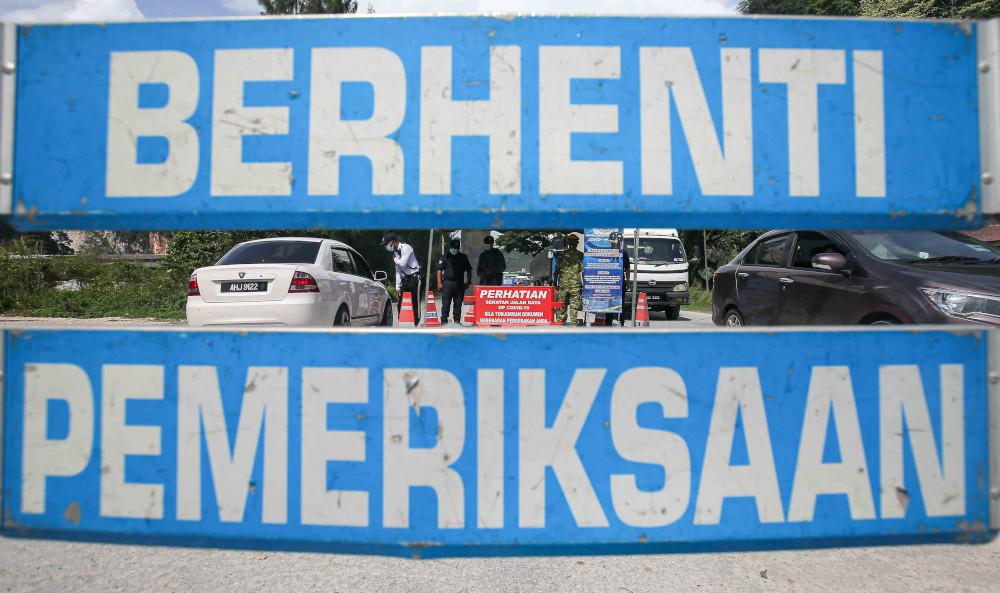


JELI, July 4 — Kelantan police foiled two cases of attempted smuggling of ketum leaves worth RM12,000 at a roadblock in Batu Melintang, here, on July 2 and 3.
Jeli district police chief, DSP Ahmad Arifin said in the first case at 1.30am on Friday, police found 100 black plastic packets containing one tonne of ketum leaves worth RM10,000.
He said a 28-year-old man attempted to smuggle the banned item by hiding it under oil palm saplings carried by a lorry.
“Police stopped the lorry which was driven by the suspect in a suspicious manner. Upon inspection of the lorry which came from Gerik, they found the ketum leaves, believed to be sold in several districts in Kelantan,” he told a press conference at the Jeli district police headquarters, here, today.
The suspect, who tested negative for drugs, was being remanded from July 2 until tomorrow, he said.
Meanwhile, in another case at the same roadblock, a 22-year-old man was detained at 1.30pm yesterday, after police found 20 black plastic bags containing ketum leaves weighing 200 kg and worth RM2,000.
He said the suspect, who was driving a car was crossing the state’s border without a permit and further inspection led to the discovery of the ketum leaves.
“The urine test on the suspect came back negative and he is being remanded from today until July 7,” Ahmad said, adding that both suspects were being investigated under Section 30(3) of the Poisons Act 1952.
The ketum leaves were obtained from the northern part of the peninsula to be marketed in the state. The suspects can be fined not exceeding RM10,000 or jailed for up to four years, if convicted.
Meanwhile, he said, six men including a Thai, were nabbed for possessing 513 methamphetamine pills, 12g of syabu, three kg of ketum leaves and 600 millimetres of processed ketum water, worth RM6,380.
All of them, aged between 30 and 50, were caught being under the influence of drugs, at a hut in Kampung Gemang Ayer Lanas, here, yesterday.
“They are being investigated under Sections 39B and 39(A)1 of the Dangerous Drugs Act 1952 and Section 30(3) of the Poisons Act,” he said. — Bernama


