


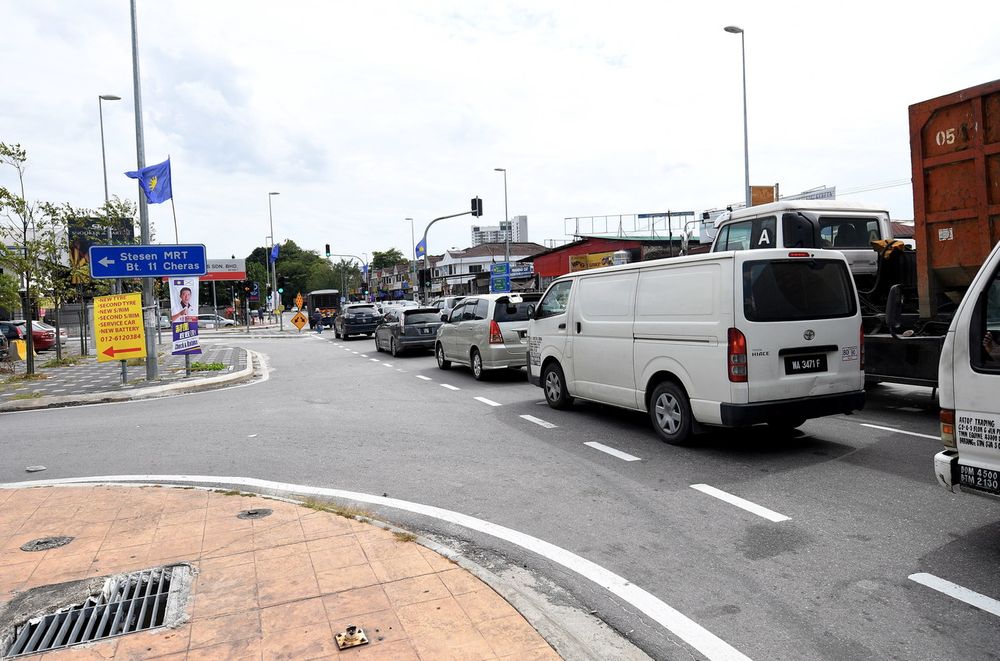


BALAKONG, Aug 25 — The Chinese settlements in Balakong have existed since the British colonisation era in Malaysia or known as that time as Malaya.
According to the village head of Kampung Baru Batu 11, Lim Chin Yuan, in the early 1940’s the British practised the ‘divide and rule’ policy and this included dividing the racially diverse nation according to ethnic qroups and placing them in segregated settlements.
As a result, he said there were five Chinese villages that still remained here until today.
Other than Kampung Baru Batu 11, the rest are Kampung Sungai Chua, Kampung Baru Balakong, Kampung Kwang Tung and Kampung Bukit Angkat.
“My village has about 300 houses,” he told Bernama.
The overall population of the five villages make up about 60 per cent of Chinese voters out of a total of 62,219 voters for the Balakong state seat which is having a by-election on Sept 8.
While the majority of the voters are Chinese, the Malays make up about 30 per cent of the total voters while the Indians voters nine per cent and the rest are others .
The by-election is being held following the death of its incumbent Eddie Ng Tien Chie in a road accident on July 20 and sees a straight fight between Pakatan Harapan (PH) candidate Wong Siew Ki, 32, and MCA candidate Tan Chee Teong, 40.
Lim said during British rule, all these villages were enclosed with fences and every movement of its residents was closely monitored.
“The British army did not want any villagers to discreetly feed the Japanese troops (during the Second World War). This is not in the history textbooks,” he chuckled.
Meanwhile, a third generation Kampung Baru Balakong resident Aw Fui Koon, 50, said her father Aw Wah, 81, the second generation of the Aw family, had been through the Japanese occupation and the communist insurgency.
“My father was about five years old at the time and his 21-year-old brother was killed by the communists for being a translator to a different party.
“He said the communist atrocities has no boundaries, even if you are a translator, you still could be killed if you are unlucky,” she said.
However, according to Aw, Kampung Baru Balakong has undergone many changes that turn it around 180 degrees from its existence since 1948.
“The village that I once knew is not there anymore, there is so much progress, even the houses are different now, we have a health clinic, a Chinese primary school and a public hall,” she said.
Responding to a question on social problems in the area, she said the percentage was low although petty theft and drug abuse still existed especially in abandoned houses.
Aw, who is also the Village Security and Development Committee chairman, said there were about 300 houses with 3,000 residents in the area. — Bernama


