


ALOR SETAR, April 29 — Water disruption has become part of a Kedahan’s life for the past few years due to more than 50 per cent leakages in the state’s pipelines.
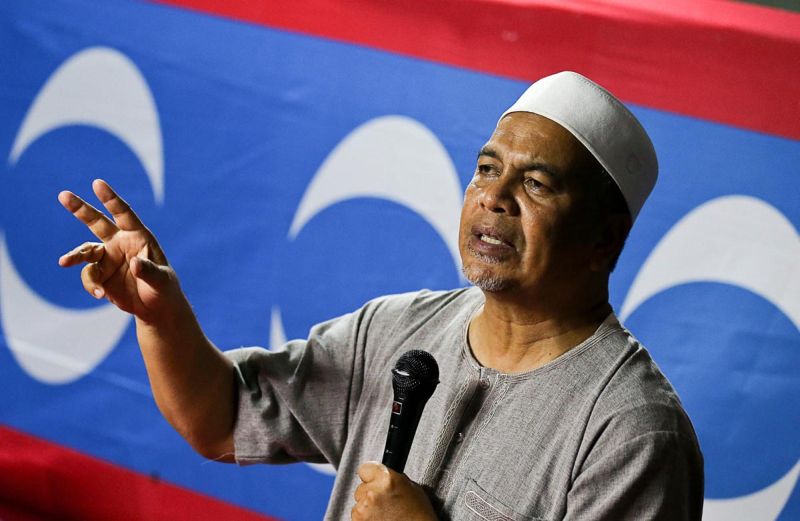
For one of Pakatan Harapan’s (PH) candidates Datuk Amiruddin Hamzah, part of the answer could lie in giving Kedah’s potable water production to state-owned Syarikat Air Darul Aman Sdn Bhd (Sada).
Speaking to Malay Mail, Amiruddin said that reducing non-revenue water (NRW) — water wasted because of leakages — is akin to killing two birds with one stone as it will naturally increase water supply without having to invest in new infrastructure such as treatment plants or new pipelines.
“Sada should be able to advise us on the best approach for us to take (regarding NRW). To minimise disruption during pipeline repair works, Sada will be able to study the pipeline’s alignment and reroute water supply along other pipelines.
“This way, water disruption is minimised and will only occur when you reconnect to the old but repaired system. However, the details on this matter will be with Sada,” said Amiruddin.
Data from the Energy, Green Technology and Water Ministry (Kettha) shows that currently Kedah has 32 water treatment plants with the capacity to produce 1,185 million litres per day (MLD). It has a total pipeline length of 14,644 kilometres, where half are leaking.
The ministry’s study in 2009 showed that back then it needed to replace 582 kilometres worth of pipes at an estimated cost of RM174.48 million. Association of Water and Energy Research Malaysia’s study showed that in 2013 the state lost RM179.1 million from NRW.
After a decade, the situation could now be worse.
The two major concessionaires responsible for water treatment in Malaysia’s rice-bowl state are Air Utara Indah Sdn Bhd (AUI) which operates five treatment plants and Taliworks Langkawi Sdn Bhd (Taliworks) which is responsible for Langkawi’s entire water supply.
Both concessionaires’ contracts end in 2020 and if PH takes the state, Amiruddin does not plan to renew them.
“AUI only treats the raw water and once the water flows out of their bulk metre (located almost immediately outside their treatment plants) it is already sold straight to the state government. That is the end of their problem, making NRW a state problem.
“They will get paid for every cubic metre of water they treat. When it comes to domestic water supply, the easiest part is the water treatment process. So why did the past and current administration privatise the easiest part of the whole process? It doesn’t make sense.
“That’s why we are of the view that the treatment process should be part of Sada’s responsibility instead of privatising it to others when the NRW is absorbed by the state and not the concessionaire,” said the Anak Bukit state seat candidate.
Amiruddin, who is contesting in the Kubang Pasu federal seat and the Anak Bukit state seat, also disagrees with how the concession agreement (CA) between Taliworks and the state government was negotiated.
Currently Taliworks services the entire chain in Langkawi up to the point of meter reading. It then sends the bill to the state and the state collects payment.
“The thing is, you collect RM14 million but you have to pay them RM36 million or RM37 million. What kind of a business model is this? You pay them more than 100 per cent of what you collected,” said Amiruddin.
He reflected that in 2001, four years before AUI’s contract was up for renewal the issue was already raised in the State Assembly. However, in 2002 then Barisan Nasional (BN) state government under Datuk Seri Syed Razak Syed Zain Barakhbah renewed the contract for another 15 years.
The former PAS Kuala Kedah division chief, now PPBM member, also said they have raised the matter again at the State Assembly but BN’s caretaker Mentri Besar Datuk Seri Ahmad Bashah Hanipah gave a “very general statement.”
“When we raised the matter of NRW and whether or not the state will continue AUI and Taliworks’ contracts, he did not give us a guarantee that the government will end the contracts. He only said they will do the best for the state — a very general statement,” he said.
Despite his unhappiness over the current deals between the concessionaires and the state government, Amiruddin is not against privatising the water scheme if it benefits the state and the public.
“If Sada can treat water at 18 sen per cubic metre and then ada third party claims they can treat at 15 sen per cubic metre, that is good for the state, so why not?
“We are open but the process must be transparent and all parties are invited to give their proposals. If it truly gives benefit to the state, we are open to it,” said Amiruddin.


