


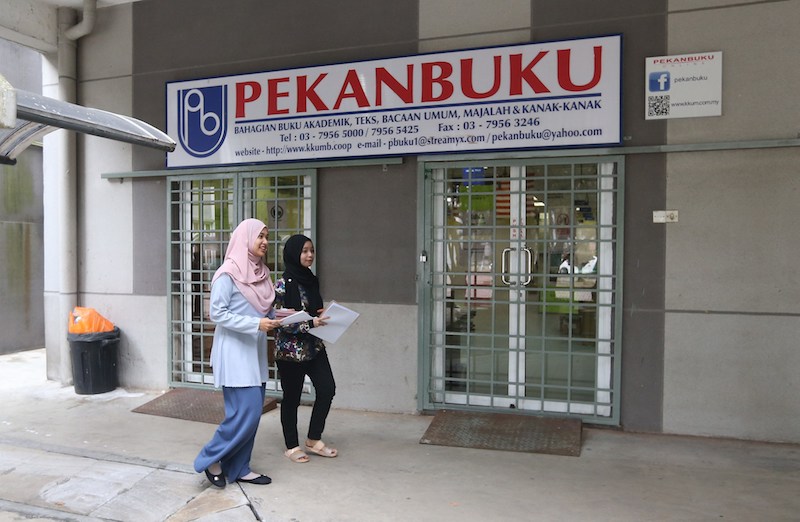


KUALA LUMPUR, March 30 ― The age of digital disruption has seen a change in reading habits, forcing book stores, including University of Malaya's (UM) iconic Pekan Buku to evolve and adapt in a sink or swim environment.
Its chairman, Associate Professor Ahmad Salihin Baba, told Malay Mail the 50-year-old book store was forced to undergo restructuring last December and had its doors closed temporarily in February.
It will be fully operational under a restructured business model by April 10. Although currently its doors are open, students can only purchase souvenirs and stationery items from the old stock.
“We had to seriously consider the restructuring when revenue started to drop in the early 2000s.
“The changes were slow but this option became mandatory in early 2017 when UM expressed interest in terminating the lease of one of the two big shoplots in Kompleks Perdanasiswa,” said Ahmad Salihin.
One of the major causes for the revenue loss is the fact that Pekan Buku (its corporate entity name is Koperasi Kedaibuku Universiti Malaya Berhad or KKUM) no longer attracted the same number of customers it used to back in the 1990s.
Ahmad Salihin said that students are no longer purchasing physical reading materials as they can access information online. The other common and more economic option is to photocopy existing books.
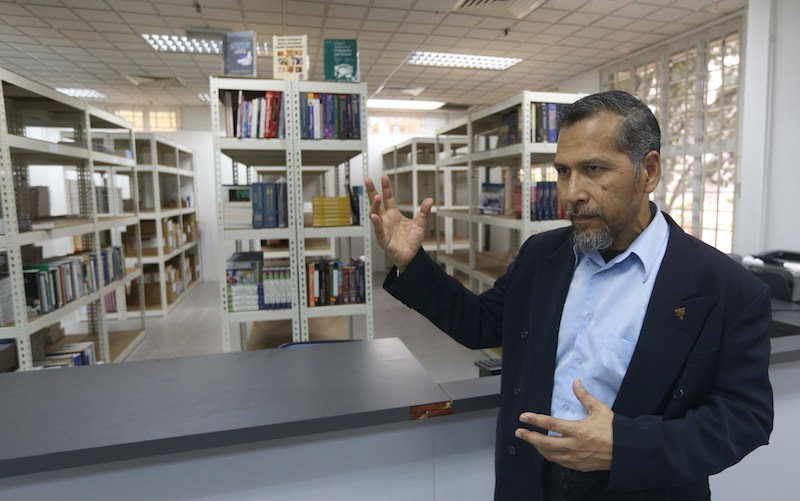
“KKUM used to buy and keep a stock of books but selling these is becoming a big challenge, and as a result we have many unsold books.
“Selling books in the usual manner is no longer profitable. Reading habits have also changed and this is evident from the number of students frequenting the main library and the way online studies (blended learning, flip classes) are implemented,” he explained.
In the end, the much-loved book store had too many books occupying shelf space and it was unable to justify the rental cost required to keep the books.
The loss was big enough to require a restructuring and it had to sell books via “consignment and according to order” to avoid renting a big showroom and employing many people to run the book store.
Once the doors re-open for its latest incarnation, Pekan Buku will take up less space; a little more than 50 per cent of the space will be allocated to book display and browsing while stationery and university souvenirs will take up the rest.
“Pekan Buku will be more compact… books on display will be those recommended by UM lecturers as well as those commonly used worldwide in various disciplines as per the recommendation of well-known book publishers.
“Students may browse these books physically at Pekan Buku or digitally over the internet and subsequently place their orders online,” said Ahmad Salihin.
As it began its restructuring and minimised its operations during a semester break in January this year, there was no negative impact on the student community wishing to purchase books.
With its new look and feel, Ahmad Salihin is confident that students will have much easier access to the books they want and he promised a faster ordering process.
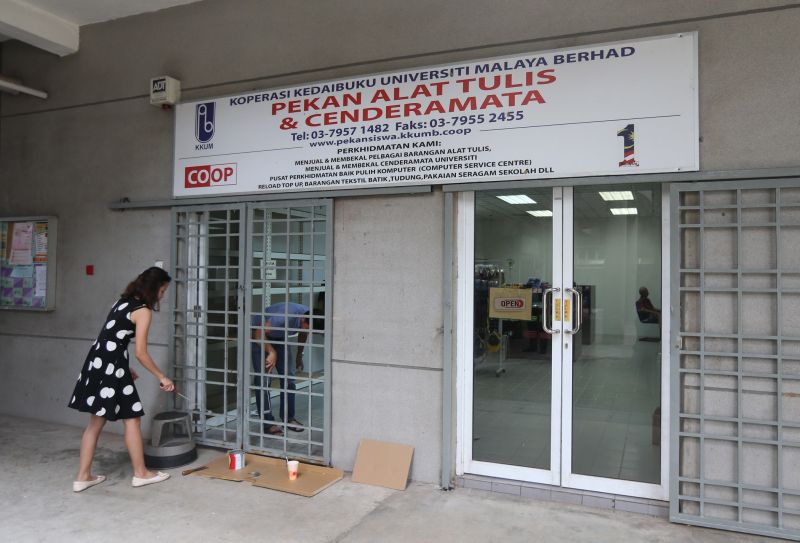
Pekan Buku's sales agents are expected to visit faculties regularly to get advice from lecturers in order to stock up on the most relevant and up-to-date books.
Ahmad Salihin, however, was nostalgic about the book store’s heritage and said the restructuring was a “hard decision to make.”
“Pekan Buku is synonymous with University of Malaya because it was founded by Royal Professor Ungku Aziz in 1968. Pekan Buku was the major book and stationery shop on campus, and a must-visit for visitors to the university.
“I must say that its best years were when Ungku Aziz chaired the Board of Directors because he truly understood the meaning of a co-operative business, the welfare of and benefits to KKUM’s members and the service (books etc) it needs to provide to the campus population in particular and Malaysian public in general,” said Ahmad Salihin.
“It was difficult when the management decided to restructure Pekan Buku to such an extent that it appeared that the shop was closed for good. But no, we are not closing down.”


