


KUALA LUMPUR, March 7 — Pakatan Harapan (PH) said today its election manifesto will be inclusive in nature and will serve as a continuation of the now defunct Pakatan Rakyat’s “Buku Jingga” manifesto.
The 200-paged manifesto, which will be launched tomorrow night at the Ideal Convention Centre in Shah Alam, will be centred on the five pillars and 60 promises to be fulfilled in five years under the PH-led government, should they win in the upcoming 14th general elections (GE14).
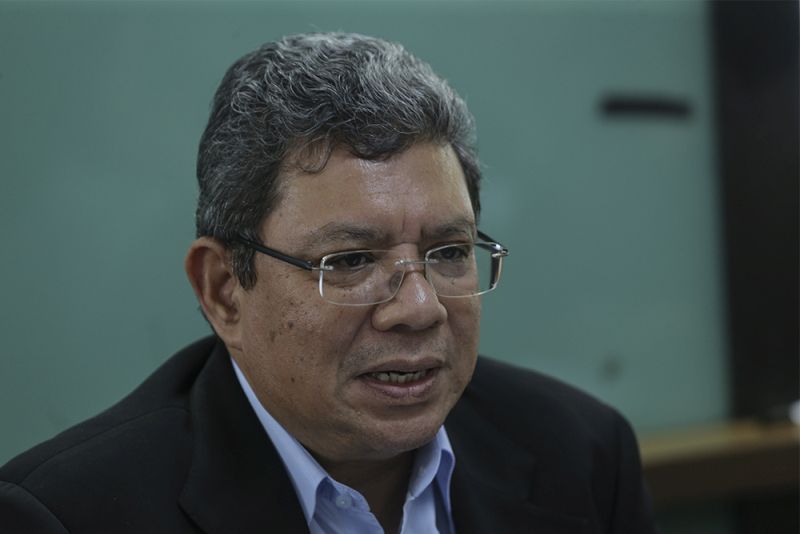
Its secretariat head Datuk Saifuddin Abdullah said the manifesto is different than Pakatan Rakyat’s ‘Buku Jingga’, as the new manifesto is more comprehensive and a continuation of the 31-paged ‘Buka Jingga’.
“The policies packed together in the manifesto are to respond to current challenges and it was put together by a team. The drafting was participatory in nature.
“The manifesto committee had worked tirelessly for the past six months, but the planning of the manifesto had begun as early as 15 months ago,” he told reporters at a press conference at the Opposition Head office, here.
Saifuddin said the final team involved in drafting the manifesto includes DAP MP Ong Kian Ming, Parti Keadilan Rakyat strategy director Sim Tze Tzin, Parti Amanah Negara (Amanah) strategic director Dzulkefly Ahmad, and Parti Pribumi Bersatu Malaysia strategist Rais Hussin.
Saifuddin said the five key areas of the manifesto would focusing on a people-centred economy to help reduce the financial burdens of the everyday Malaysian, the reformation of Malaysia’s political institution, the formation of a just and fair economy, fulfilling the Malaysia Agreement 1963 for decentralised power in Sabah and Sarawak, and to make Malaysia inclusive on the global platform.
When asked on the expected criticism to follow with the launch of the manifesto, Saifuddin said the party had thought through the planning to make it practical and inclusive.
“There were some populist move, but we know we cannot do it, so we did not include it in the manifesto. We are responsible.
“There are some where it may seem hard to execute, but because it was in the Malaysia Agreement 1963, so we had incorporated that in.
“And there are also some policies that people thought would have been impossible, but we had shown it to be a success in Selangor and Penang, so we put that in for other states as well with some adjustments,” he said.
Saifuddin said the philosophy behind the manifesto was very clear, which includes the implementation of the Maqasid Shariah (objectives of Islamic law), good governance and rule of law.
Meanwhile, Dzulkefly added that the implementation of Maqasid Shariah into the manifesto is to achieve a higher level of Shariah for the country’s development.
He revealed in page 10 of the manifesto includes a higher goal of Shariah that is fair to all.


