


KUALA LUMPUR, Sept 6 — Local facilities are adequate for the needs of the national diving team and meet international specifications, said the Amateur Swimming Union of Malaysia (Asum).
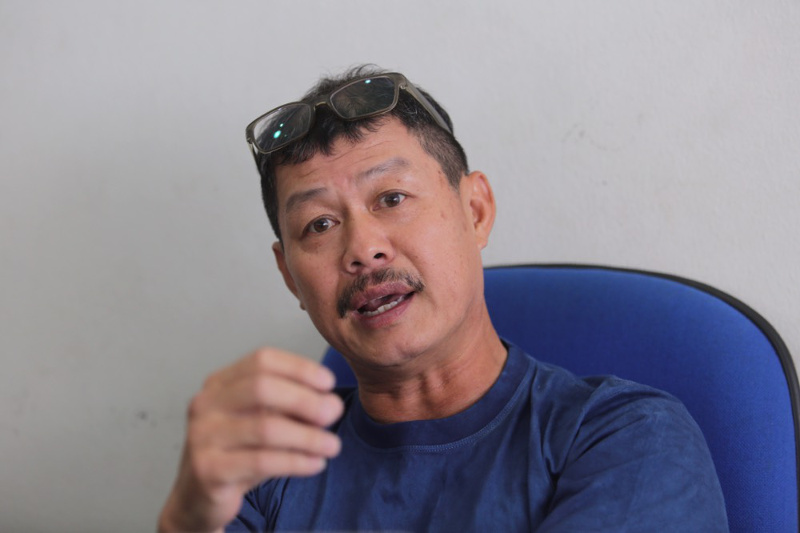
Rebutting national diving coach Yang Zhuliang’s claims of inadequate training facilities locally, Asum general manager Yan Kong Lee pointed out that national divers had trained at the Kuala Lumpur Swimming Complex in Cheras amid ongoing renovation works since last December on the National Aquatic Centre in Bukit Jalil.
“They have been training here whenever they are not in China. They have been training here since Bukit Jalil closed down for renovation. They use the dry gym here and also they will be using the fitness gym at the National Sports Council,” he told Malay Mail Online yesterday.
“Since closing down, our base — if it is in Malaysia — it is here or in China,” Yan said.
Asum is a national sports association that works together with the National Sports Council to develop aquatics sports in Malaysia.
Yan said local facilities that could accommodate national divers’ training are the Bukit Jalil facility prior to its renovation, the Cheras facility and the Sarawak Aquatics Centre.
On Sunday, the New Sunday Times reported Yang as saying that the national divers will have to forget about joining two upcoming international meets in October and November, owing to an alleged lack of proper training facilities and “world-class” facilities in Malaysia.
Yang had reportedly said the country’s best facilities for diving training at Bukit Jalil is still undergoing renovations until the SEA Games next July, while the springboards and platform at the pool of the Kuala Lumpur Swimming Complex in Cheras were allegedly too old for usage and the Sarawak Aquatics Centre’s dry gym was too small and its pool water required regular treatment.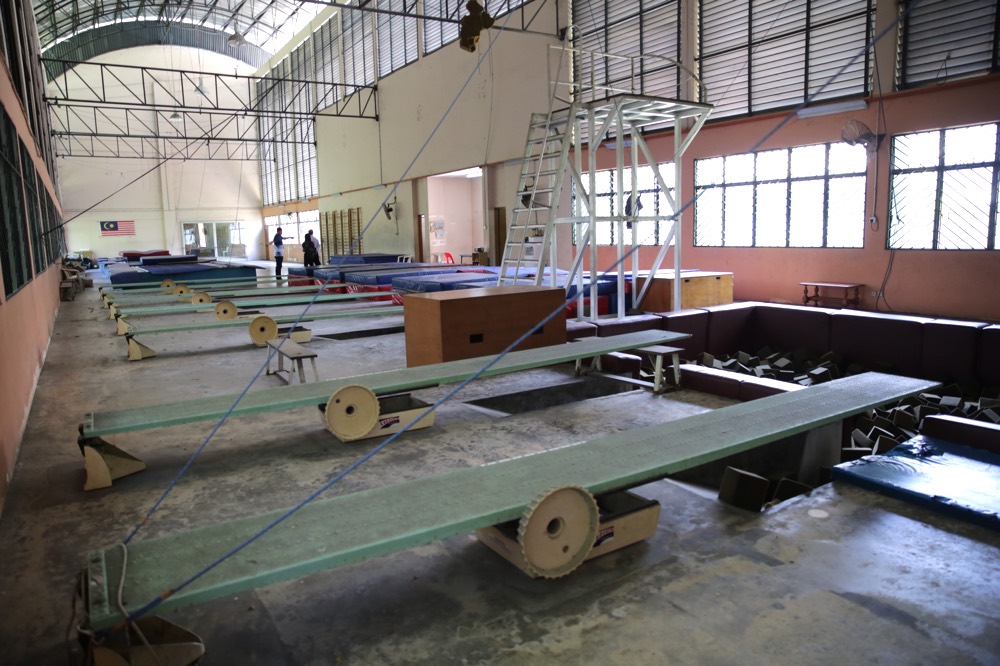
Upgrading works
According to Yan, the Kuala Lumpur Swimming Complex’s dry gym was upgraded in July, with the three trampolines there upgraded to the latest version while all springboards were replaced with those from Bukit Jalil’s dry gym.
“We have got a very nice gym here, well equipped. And we have all the platform and springboard (at the pool) but no denying that they are a bit outdated but they are still usable because it was built for the 2001 (Southeast Asian) SEA Games in Kuala Lumpur and we are also in the process of renovating it.
“In fact we just had a meeting with DBKL and the National Sports Council and we have already approved the budget and we are going to improve on the platform and springboard of the pool here,” he said, referring to the meeting last week between Asum, the KL Swimming Complex’s owner DBKL and funding provider NSC.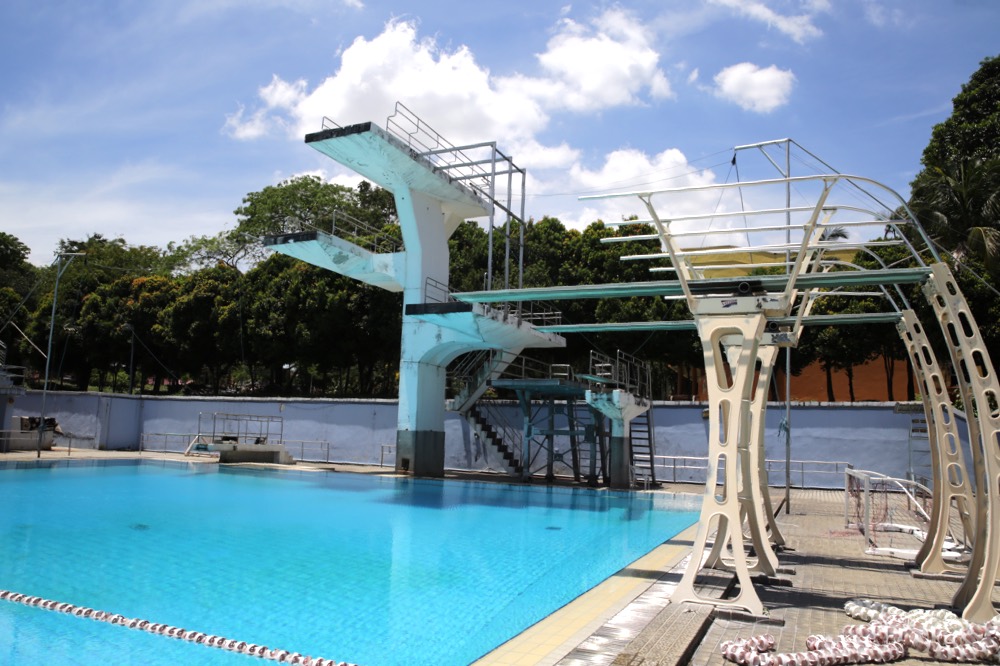
Yan said the springboards and platform at the KL Swimming Complex were safe, but required upgrades that are expected to commence in a week’s time.
“It is not unsafe, it is old, so it is time to change, that’s all,” he explained.
The springboards and platform at the Cheras facility are according to specifications, but the concrete platform now needs to be extended and widened to also cater for synchronised diving instead of individual events only, Yan said.
The complete overhaul and upgrade of the Cheras facility will be timed, however, to match the availability of the Bukit Jalil training facility and the athletes’ training schedule to ensure that the national divers will still have places to train at.
“We will make sure they will go away for competition or we send them to China for training when we do the final part, all the springboards, it can be done in one or two days. It’s only the platform where you need to extend it, you need concrete work. Other than that, it’s a very straightforward thing it’s not going to take months to do it,” he said, noting that the cement works will depend on the weather conditions.
The swimming complex at Cheras will be fully upgraded to international aquatics body Fina’s latest specifications and be one of the best training centres locally, but will not be considered “world-class” as it is small in size and will not have sufficient space to fully accommodate the requirements for a major global event except possibly the SEA Games, he said.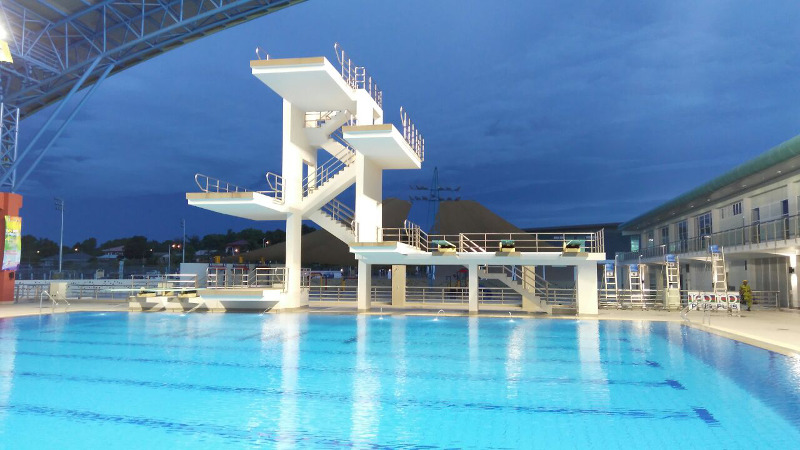
Best pool now
As for the Sarawak Aquatics Centre, Yan confirmed that it was ready to host the Fina Diving Grand Prix’s sixth leg this October 21 to 23, pointing out that it was designed and built specifically for aquatic sports and according to the latest specifications of Fina — the international governing body for aquatic sports.
“The water in Sarawak is crystal (clear) blue, no issue at all. Of course the water there is perfect, the water there is crystal blue for the previous Sukma Game (Malaysian Games),” he said when confirming that the facility was safe and suitable for the upcoming international meet.
“So the Sarawak pool is at the moment the best in the country,” he said, referring to the aquatics centre that caters to all five disciplines of the sports — diving, swimming, synchronised swimming, water polo and open water swimming.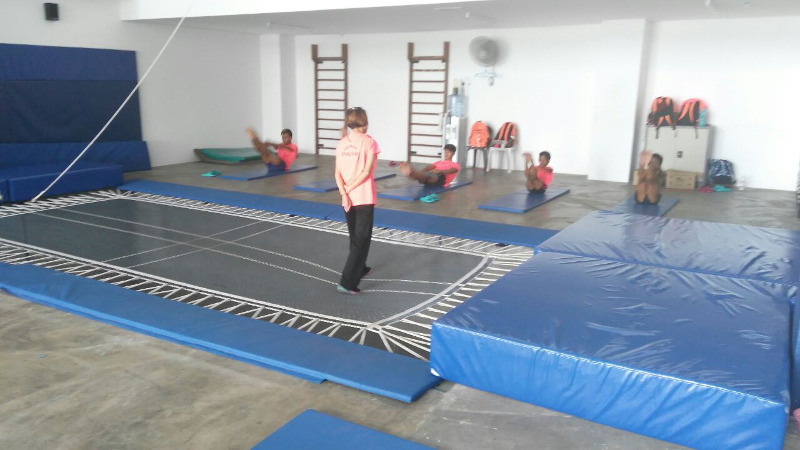
The equipment at the dry gym in the Sarawak facility is safe and fulfils all the requirements by Fina, but it is merely not as huge as dry gyms in other facilities including those in China and not dedicated specifically to diving only, he said.
Each state in Malaysia has its own centre of excellence for the training and development of aquatics sports save for Kelantan, with the equipment and facilities at the swimming complexes at Bukit Jalil, Sarawak, Shah Alam and Malacca being able to meet Fina’s criteria in order to hold Fina-sanctioned international events, he said.
“So it is very unfair to say we don’t have world-class (facilities); when you say world-class, ours is according to Fina specs, all our facilities in Malaysia, all the swimming complexes are according to Fina’s specs, when I say according to Fina’s specs, they are approved by Fina. Fina is the international controlling body, if they don’t approve, we cannot have any international events in Malaysia,” he said, acknowledging that the size of the local facilities’ dry gym would not be as big as China’s.
“Bukit Jalil is going to be a world-class facility, Sarawak is a world-class facility because it is designed and built, but when you say specifically for diving and training as a centre of excellence, then it (Sarawak) is not because you need a much bigger dry gym... but if you say want to do normal training for our national team there or our state development, it’s more than enough.”
World class venue
For the Bukit Jalil facility used by national divers prior to the renovation works, it was “world-class” then when it was built for the 1998 Commonwealth Games and will meet the latest global standards when its renovation works is complete.
“Once it is fully renovated, the diving pool, the swimming pool will of course be the latest, the dry gym will have everything brand new there,” he said, noting the Bukit Jalil facility is comparable to China’s facilities and uses the same equipment.
Where will national divers train for now?
Yan said there will be a discussion on whether there was a need for the national divers to be sent to China to train for the Fina Diving Grand Prix 2016 and the 10th Asian Swimming Championship in Tokyo, saying that this was the likely option but this would be subject to the coach’s decision. Yang is responsible for the coaching of the eight elite divers of the national diving team numbering around 20.
“In fact we are having a meeting tomorrow between Asum and the Podium (programme) and also the coaches, to decide whether they are going back, when they are going back to China. Of course if you are talking about world class facilities of course the best will be in China, not only the facilities there is good, there’s also no disturbance from everybody,” he said yesterday. “It will be more conducive for them to train in China because they won’t have disruptions.”
“The coach will have to propose and we have to work out the budget and the NSC will approve it, that’s all,” he added.
He said 12 and 10 national divers are expected to be sent for the Fina Diving Grand Prix’s sixth leg in Sarawak and seventh leg in Australia, while all eight elite divers and other national divers will likely be sent for the Asian Swimming Championship which will be held from November 14 to 20 in Tokyo.


