


KOTA KINABALU, Sept 6 — The Sabah Health Department has cleared 10 people who had come into contact with a Zika victim who died from heart complications here last week.
Sabah Health department director Dr Christina Rundi said that following the detection of the Zika infected Sabahan man here last Saturday, the department had identified 10 people who had contact with the victim and took blood and urine samples from them.
“All the tests returned negative for Zika,” she said in a statement here today.
Last Saturday, Health Director-General Datuk Dr Noor Hisham Abdullah said that a 61-year-old Dusun man in Kota Kinabalu was found to be infected with the virus and was hospitalised.
Hours later, he died from heart complications. The full results of his cause of death have yet to be determined.
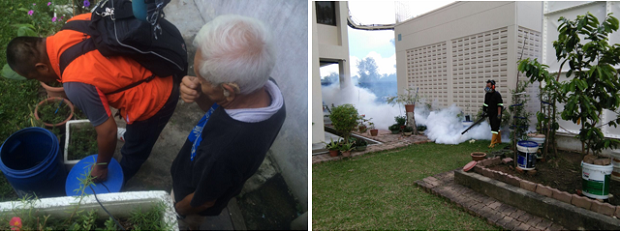
Dr Rundi said that the department has since inspected about 37 per cent of the houses within a 400m radius of the victim’s home in Taman Public Jaya, Likas, for mitigation measures.
“There are altogether 775 homes in a 400m radius and our team have visited 725. But only 280 were successfully inspected either because we were not allowed in, or there was nobody at home,” she said.
The department has taken steps to destroy the breeding grounds of the Aedes mosquito, a carrier of the Zika virus, by inspecting 814 containers, of which 11 were found to contain the Aedes larvae.
“As the Zika and Dengue viruses are borne by the same Aedes mosquito, the control and preventive measures are confined to destroying the mosquito,” she said.
Awareness campaigns were also held at the area, including two public announcements, 142 minor group discussions involving 423 people, individual advice to 141 people and the distribution of 141 leaflets.
The victim was believed to have contracted the Aedes mosquito-borne virus locally as he had not travelled abroad recently, unlike several other cases involving 11 Malaysian citizens who were infected while in Singapore.
He had allegedly suffered from coronary heart disease, hypertension, chronic kidney problems, gallstones and gout.


